Planner Guide
How to add pickleball to your event
Adding pickleball to a corporate event, conference, trade show, or brand activation comes down to six decisions: the outcome you want, the play format, the venue and surface, staffing and equipment, logistics, and branding. The simplest path is a turnkey activation — one vendor delivers, builds, staffs, and removes professional courts at your venue. Single-court, one-day builds typically begin around $10,000; multi-court conference and festival builds scale from there. Use this guide to scope the brief, then request a clear quote once your date and city are real.
Why planners add pickleball now
Pickleball works at events because the learning curve is short, doubles keep more people moving than singles sports, and a staffed court creates a visible line — which is often the traffic driver you actually want on a show floor or campus lawn. Unlike a seated workshop or a passive photo moment, guests leave having done something together. That is useful for team-building, client entertainment, booth dwell time, and sponsor storytelling in the same build.
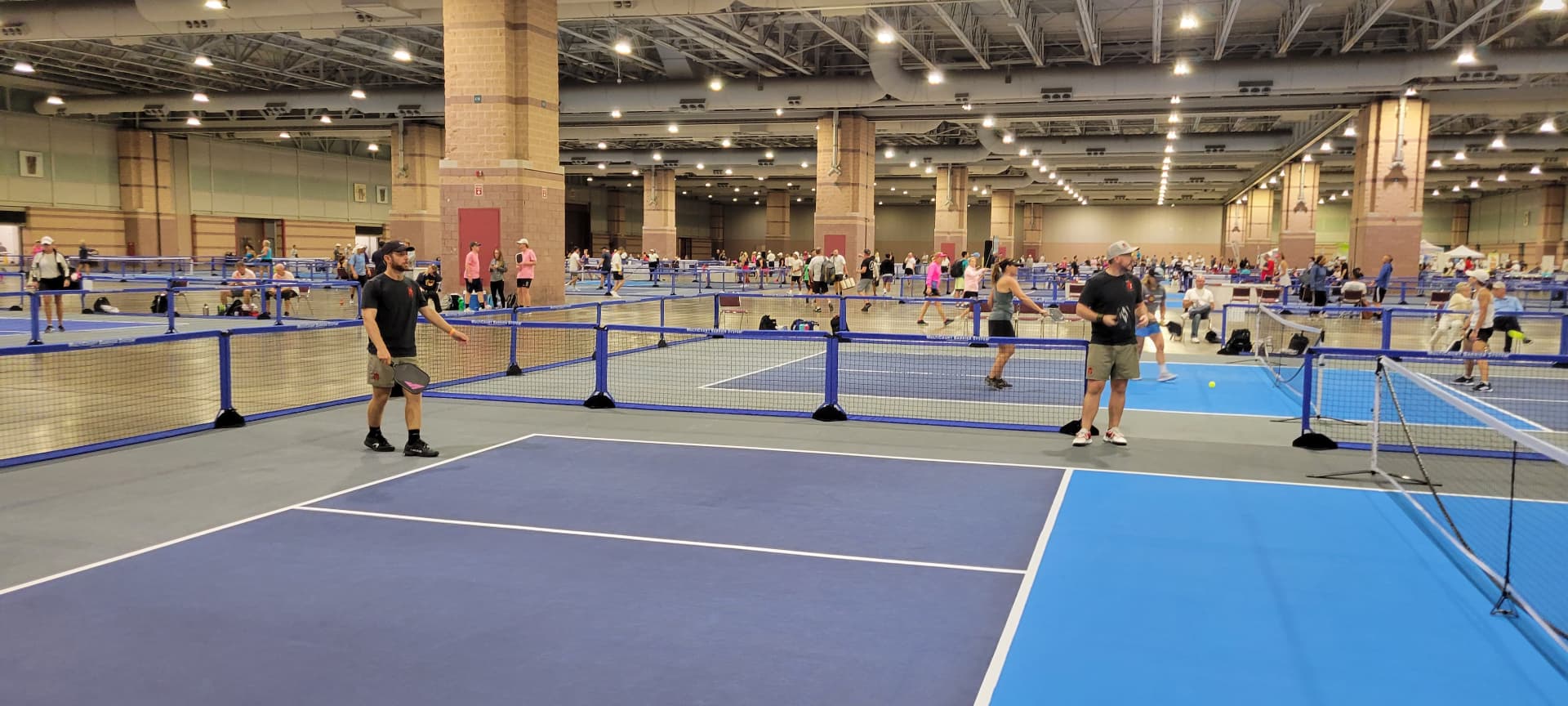
It is also portable. Rollout courts go where the event already is: the hotel lawn, the convention aisle, the parking deck, the apartment courtyard, the festival street. You do not need a permanent facility or a capital project to put a real court in front of your audience for a day or a week. For buying guides on portable and roll-out courts as a product category, see temporary pickleball court on PickleCourt USA — this page stays focused on the event activation you hire for a date.
Six steps to scope the activation
Start with the outcome, not the courts
Decide what pickleball is supposed to do for the day — draw booth traffic, build team chemistry, entertain VIPs, fill a reception gap, or generate shareable content — and scope the build to that outcome. A lead-capture trade-show court looks different from a private team-building afternoon, and both look different from a branded festival stage. Write the outcome in one sentence before you ask for a court count.
Match the format to the audience
Open play (drop in anytime), staffed beginner clinics, short round-robins, a bracketed tournament, or a pro exhibition each serve a different crowd. Mixed corporate and conference audiences almost always do better with staff running tight rotations so nobody stands around waiting for a court. Pure tournament formats work when your guest list already plays; they fail when most people are picking up a paddle for the first time.
Confirm the venue and surface early
Professional rollout courts install on convention floors, ballrooms, carpet, asphalt, parking decks, grass, and rooftops — but grass and uneven outdoor pads often need a subfloor so the court plays true. Share load-in doors, elevator size, union rules, and exact square footage before the quote is final. Surprises on surface or access are the main reason last-minute activations get expensive or shrink.
Plan staff and equipment as one package
Courts alone are not enough. You need nets, quality paddles, balls, and — critically — people who can teach a 90-second mini-clinic, keep rotations moving, and pull in guests who have never played. An unstaffed court gets used by the few attendees who already know the game; a staffed court becomes the line everyone walks past. If the budget is tight, cut a court before you cut the host running it.
Handle logistics — or hire them out
Delivery windows, install and teardown, convention-center union labor, certificates of insurance, and neighbor or noise rules all sit on the critical path. A turnkey vendor puts delivery, build, staffing, and removal on one invoice. Piecing courts, paddles, and freelance instructors yourself rarely saves money once you add trucking, floor protection, and the planner hours spent coordinating it.
Brand it like a media moment
Custom-wrapped courts, branded nets, and simple signage turn a fun amenity into a marketing asset that shows up in every photo and social post. Branding is optional on a private team day and almost required on a trade-show booth or sponsor activation. Decide the brand kit when you lock the court count so print and wrap lead times do not delay load-in.
Pick a format that fits the room
Format choice matters more than most planners expect. Open play feels easy to book and often under-delivers with mixed crowds. Short staffed round-robins feel busier and friendlier. Full brackets need a guest list that already plays — or a separate clinic track so beginners are not stuck watching. Use the vertical pages below when your event type is already known; use this guide when you are still writing the brief.
Staffed clinics and round-robins that get mixed skill levels playing in the first ten minutes — better than a silent icebreaker or another seated workshop block.
A branded booth or show-floor court for foot traffic and lead capture. For a single exhibitor footprint, pair this with the trade show booth activation guide.
Content-ready wrapped courts as the centerpiece of a launch, pop-up, or street activation — built to photograph, not just to fill time.
One staffed station among several outdoor activities, or a department-vs-department bracket sized for a full field-day schedule.
A casual indoor cocktail-hour court sized for guests in party clothes — short rotations, not athletic wear and brackets.
A physical, social break that runs beside HR benefits booths instead of competing with them for attention.
Orientation week, homecoming, and campus rec programming on quads and rec fields — high volume, short dwell, heavy staffing.
Welcome-party or rehearsal-day play sized for guests in dresses and dress shoes, not a full-day tournament.
Resident tournaments and beginner clinics that outdraw the clubhouse when the build is staffed and easy to join.
A pop-up amenity day for lease-ups and retention — temporary court, not a capital project on the property.
A community day booked as an event-line expense with no permanent court construction required.
Private backyard or venue courts for bar/bat mitzvahs, milestone birthdays, and family celebrations with exclusive guest-list play.
Scoping a booth footprint specifically? See the trade show booth activation guide. Running a scored team competition? See how to run a corporate pickleball tournament. Comparing formats for energy and dwell time? Read round-robin vs bracket vs open play. Once the format is locked, turn it into an actual clock with our event run of show template.
How many courts do you actually need?
Size the build to dwell time and how busy you want the space to feel — not to the raw guest list. A 500-person conference rarely needs five courts for a lively booth moment; one or two well-staffed courts running tight rotations often look more energetic than several courts with players trickling through. Over-building spreads the crowd thin and under-builds the sense of a line worth joining.
Best for a booth moment, small private party, or cocktail-hour add-on. With staff running short round-robins you can still cycle dozens of people through over a day — often 100+ at a busy booth — without looking empty.
The sweet spot for most corporate days, conferences, and mid-size festivals. Enough simultaneous play that the space feels lively, without spreading the crowd so thin that every court looks quiet.
Festivals, large brand tours, multi-day conferences, and national activations. Court count should follow dwell time and program goals, not headcount alone — over-building is the most common scoping mistake.
For footprints and run-off, use the court dimensions for events guide and how many pickleball courts do you need. Deciding indoor vs outdoor? See indoor vs outdoor pickleball court rental.
Ready to scope your event?
Tell us the date, city, venue type, and rough court count. We return clear, all-in pricing for a turnkey pickleball activation — usually within 24 hours — so you can put a real number in the budget, not a guess.
Get a quoteVenue, surface, and load-in realities
The court is only as good as the pad and the access path. Convention centers often have union labor rules that change who can push a cart and when. Hotels may limit overnight load-out. Rooftops need weight and clearance checks before the truck leaves. Grass and some hard outdoor surfaces need a subfloor so balls bounce true and ankles stay happy. Share photos, floor plans, and house rules early — that is how you avoid a change order the week of the show. Still deciding where to host at all? Our venue selection guide compares convention floors, hotel ballrooms and lawns, outdoor plazas, campuses, and rooftops before you assess a specific site.
For outdoor heat, hydration, and weather contingency, read heat safety and hydration planning and the weather contingency plan. For surface and subfloor requirements, see surface and subfloor requirements. For a walkthrough of what we check on-site, use the event site assessment guide. Evening or night play needs lighting — see glow-in-the-dark and night pickleball and power and lighting requirements.
Staffing is the difference between empty and electric
The second most common scoping mistake — after over-building court count — is treating staff as optional. An unstaffed court at a trade show gets used by the two or three attendees who already play. A staffed court with someone teaching a 90-second mini-clinic pulls in people who have never picked up a paddle, which is almost always the larger audience. Hosts also manage paddle hygiene, keep games short, and protect the brand experience so your team is not stuck refereeing instead of talking to customers.
Roles usually include court hosts, clinic instructors, and optional referees for scored brackets. Ratios depend on format and guest flow. Details live in the pickleball event staffing guide. Pair that with the equipment rental checklist so paddles, balls, nets, and spare parts are on the truck — not on a last-minute shopping list.
Budget: what turnkey activations actually cost
Pricing is project-based, not per-player. A turnkey pickleball activation starts in the five figures. A single-court, one-day corporate or private build typically begins around $10,000. Multi-court trade shows, conferences, and festivals move into the mid-five and six figures depending on court count, days on-site, staffing, travel, surface/subfloor, and branding. You are not charged per guest who plays — which is why a busy court can host hundreds of rotations in a day without a per-head line item.
Facility court-time rentals (self-service at someone else's venue) are a different product and a different price structure. If you need the detailed drivers and scenario bands, read the full pickleball court rental cost guide. For exclusive guest-list builds away from public facilities, see private pickleball event space.
Timeline: when to lock the vendor
Lock pickleball once the date and venue are confirmed — the same window you would lock AV or catering. Popular convention weeks and spring/fall outdoor seasons book trucks and crews first. Two weeks out can still work for a simple one-court build; it rarely works for multi-court branded tours or venues with strict union and overnight rules. Read how far in advance to book pickleball courts and the setup and teardown timeline before you promise a start time on the run-of-show.
What to ask any pickleball event vendor
Use this checklist in the RFP or discovery call. If a vendor cannot answer cleanly, keep shopping — the gaps show up as change orders and empty courts on event day. For a full procurement brief, see how to write an RFP for a pickleball event.
- Do you deliver, install, staff, and tear down on one invoice — or only drop courts?
- Can you install on our exact surface (carpet, grass, rooftop, asphalt, ballroom floor)?
- How do you price — per project, per day, or per hour — and what drives change orders?
- What branding options exist (court wraps, nets, signage) and what is the lead time?
- Do you carry insurance and provide a certificate of insurance (COI) for our venue?
- How do you handle union labor, load-in windows, and convention-center rules?
- Who is on-site during play, and what formats can staff run without our team refereeing?
- What happens if weather or a venue delay forces a reschedule or indoor move?
Also confirm insurance and COI needs with insurance and liability, permits with permits and permissions, accessibility with ADA accessibility for event courts, and neighbor constraints with noise levels and neighbor considerations. Vendor coordination checklist: pickleball event vendor checklist.
Where planners get the scope wrong
The most common mistake is sizing the build to the guest list instead of the dwell time you actually want. Over-building spreads your crowd thin. Under-staffing leaves courts looking like props. Treating pickleball as a last-minute amenity after the run-of-show is locked limits format and branding options even when a truck can still arrive.
Another failure mode: bolting a court onto a strictly seated, formal agenda with no natural break. Guests need unstructured time to walk over. If the program has no gaps, schedule a shorter cocktail-hour or reception court instead of a multi-hour tournament block that sits empty until the first break, then gets swarmed for ten minutes.
Weighing pickleball against other activations? Compare pickleball vs padel for corporate events and pickleball vs other team-building activities. For golf-outing replacements, see corporate golf outing alternative. For exclusive off-sites, see corporate retreats and offsites.
Put the brief on one page, then quote it
A clean internal brief answers: outcome, date and city, venue and surface, preferred format, rough court count, staffing yes/no, branding yes/no, and any union or permit constraints. With those eight lines filled in, a turnkey vendor can return all-in pricing quickly. Without them, every quote is a guess and every change order is predictable.
The Pickleball Events Co. delivers professional pickleball courts nationwide for corporate events, trade shows, brand activations, festivals, hotels, campuses, and private celebrations — set up, staffed, and removed so your planner stays focused on the rest of the show. Prefer a private exclusive build? Start with private pickleball event space. Prefer the hub for rentals? See pickleball court rental for events. Ready for numbers? Use the form below or get a quote.