Community Events · HOA & Neighborhoods
Pickleball for HOA and neighborhood community events
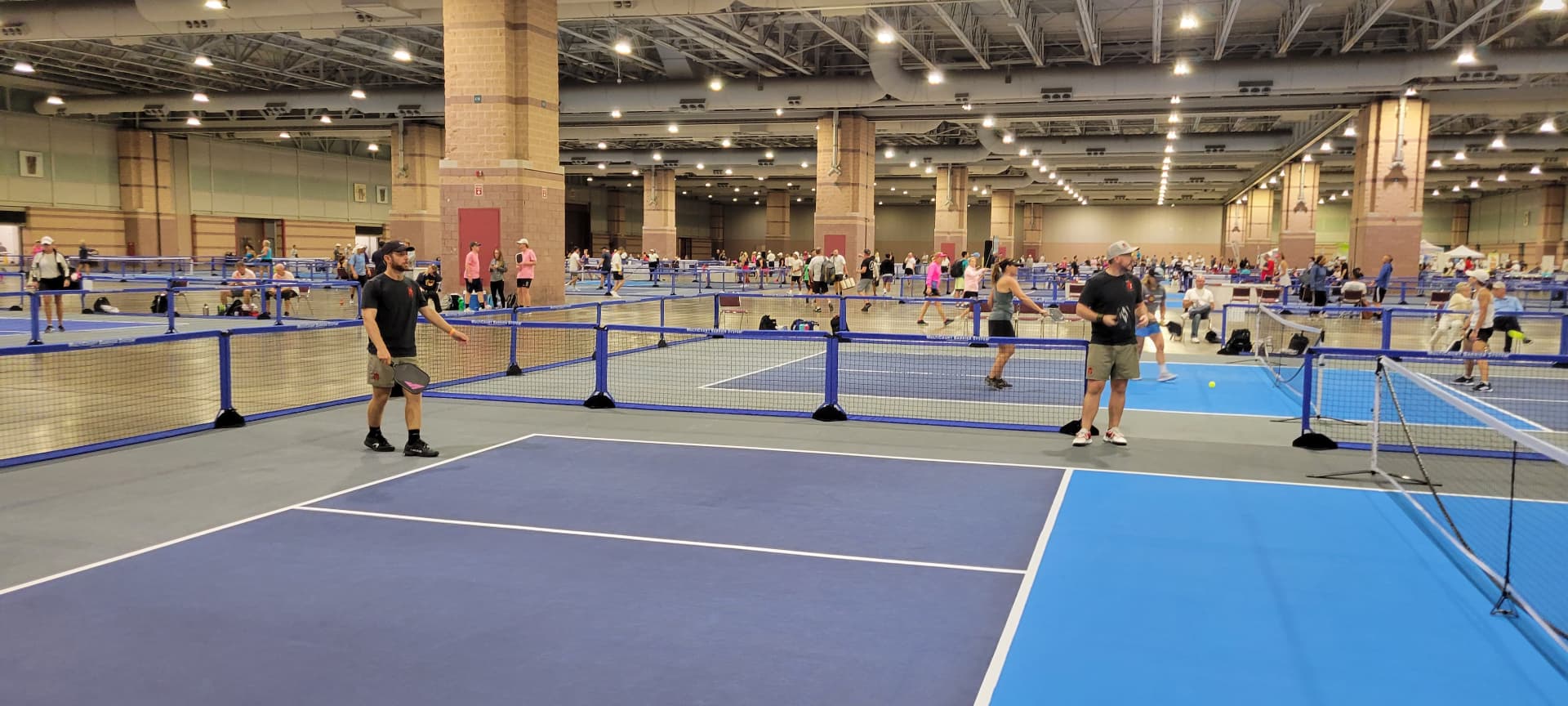
A turnkey pickleball event is one of the highest-turnout amenities an HOA or neighborhood association can run — courts delivered to your clubhouse lawn, existing tennis court, or common area, staffed for a round-robin or open-play format, and removed the same day. No board vote on a capital project, no striping, no permanent change to the property— it's booked as a single event-day expense, the same way a social committee books a DJ or a bounce house.
Why communities are adding it
Community-management publications that advise HOA boards on event planning — the kind of guidance property-management firms send their client associations — consistently list active-lifestyle programming like pickleball tournaments alongside food trucks and seasonal festivals as some of the most reliably well-attended events a community can run. The reasoning is straightforward: a potluck alone draws the residents who already come to things, but a court that people can watch from the sidewalk and walk over to try pulls in the ones who don't normally show up to HOA-sponsored anything.
It also solves a specific problem a lot of boards have: an existing tennis or multi-use court that residents barely use. A staffed event with beginner instruction is usually what it takes to get people onto a court they've been driving past for years — after which some communities find enough ongoing demand to justify striping permanent pickleball lines the next budget cycle, and some are happy leaving it as an occasional rental event instead.
Formats that work for a neighborhood
Community Olympics day
Pickleball as the anchor event inside a broader field day — cornhole, a kids' relay, maybe a pool component if your amenity has one — so every age group has something to do between matches.
Round-robin tournament + potluck
The most commonly recommended format in HOA event-planning guides: a casual doubles round-robin so nobody sits out for long, paired with a potluck, food truck, or catered lunch that turns a sports event into a social one.
National Night Out or seasonal kickoff
Many communities already run an annual National Night Out, spring kickoff, or fall festival. A staffed court slots in as the featured activity without displacing food trucks, a bounce house, or a DJ.
New-resident welcome day
A lower-key open-play session aimed at newer residents specifically — a low-pressure way to meet neighbors that a welcome committee can point to instead of just a mailed newsletter.
Why it works for a resident roster specifically
Community-management guides consistently flag pickleball and other active-lifestyle programming as some of the highest-turnout events an HOA can run — pair a round-robin with a potluck or food-truck lunch and the court becomes the reason people who never come to the annual meeting actually show up.
A typical HOA roster spans young families, retirees, and everyone between. Pickleball's low skill floor keeps a 12-year-old and a 70-year-old playing the same match, which is harder to pull off with a 5K or a kickball tournament.
Plenty of communities have an underused tennis or multi-use court sitting behind the clubhouse. A staffed event turns "there's a court back there somewhere" into residents actually using it — and gives the board a concrete answer when someone asks what their dues fund.
Striping a permanent court, adding fencing, or converting an existing tennis court is a capital decision that can take a full budget cycle to approve. A one-day rental is an event-line expense a social committee can typically greenlight on its own.
Planning an event for your community?
Tell us your neighborhood, date, and resident count — we'll scope a court setup that fits your amenity space and budget.
Who typically books this
HOA boards & social committees booking the community's summer kickoff, National Night Out, or fall festival and wanting a featured activity beyond food and a bounce house.
Community management companies sourcing an event vendor across several client associations at once, without owning or storing equipment year-round.
Lifestyle directors at master-planned communities building out an annual events calendar and looking for a new draw beyond the usual holiday party and pool-opening day.
Rental event vs. a permanent court
It's worth separating two different decisions a board might be weighing. A one-day event rental — what this page covers — is a staffed court for a single community day, priced and approved like any other event-day expense. A permanent court is a capital improvement: striping new lines on an existing tennis or multi-use court, or building a dedicated pickleball court from scratch, which typically needs a board vote and a line item in next year's budget. Plenty of communities run one or two rental events first to gauge real resident demand before committing to the capital project — our permanent court vs. event rental comparison breaks down the cost and decision math for both paths, and if your board does move toward a permanent build, we also handle court installation in a growing list of metro markets.
If your community is age-restricted, our active adult & 55+ communities guide covers resident programming, formats, and accessibility planning built specifically around that demographic. Managing an apartment or condo property instead of a single-family HOA? Our apartment & multifamily resident events guide covers lease-up and retention-focused formats for rental properties. And if the event is really a members-only day at a private club rather than an open-to-all-residents HOA event, see our country clubs & private clubs page instead. If your board's biggest hesitation is noise near homes bordering the court site, our event noise levels guide covers the real decibel numbers and how placement and scheduling manage it — worth reading before the board meeting where someone inevitably raises it.
Planning it around the property you actually have
- Most HOA events run on a clubhouse lawn, an existing tennis or multi-use court, or a parking area — our surface and subfloor guide covers what grass and asphalt each need under a rollout court.
- Size courts to how many residents will realistically play at once, not total household count — a neighborhood of 400 homes rarely needs more than one or two courts for a single event day.
- Pair it with food. Nearly every HOA event-planning guide agrees a potluck, food truck, or catered lunch alongside the tournament drives attendance far more than the court alone.
- Book with your community's peak-season calendar in mind — spring and early fall weekends fill up fast for HOA social committees, so lock a date a few months out where you can.
Budget and how to pitch it to your board
A single-court community event is one of the smaller builds we run — well below the multi-court, multi-day builds priced for trade shows and festivals — and it's approved the same way any other social-committee event is: as a line item in the community's events budget, not a capital request. See our cost guide for the drivers that move the number, and our booking timeline guide for how far ahead to lock a date once your board or committee signs off. If your association is also weighing whether to fundraise around the event — say, a small entry fee that benefits a community scholarship or a local cause — our charity fundraiser format covers how that structure typically works.