Event Planning · Venue Choice
Indoor vs. outdoor pickleball courts for events
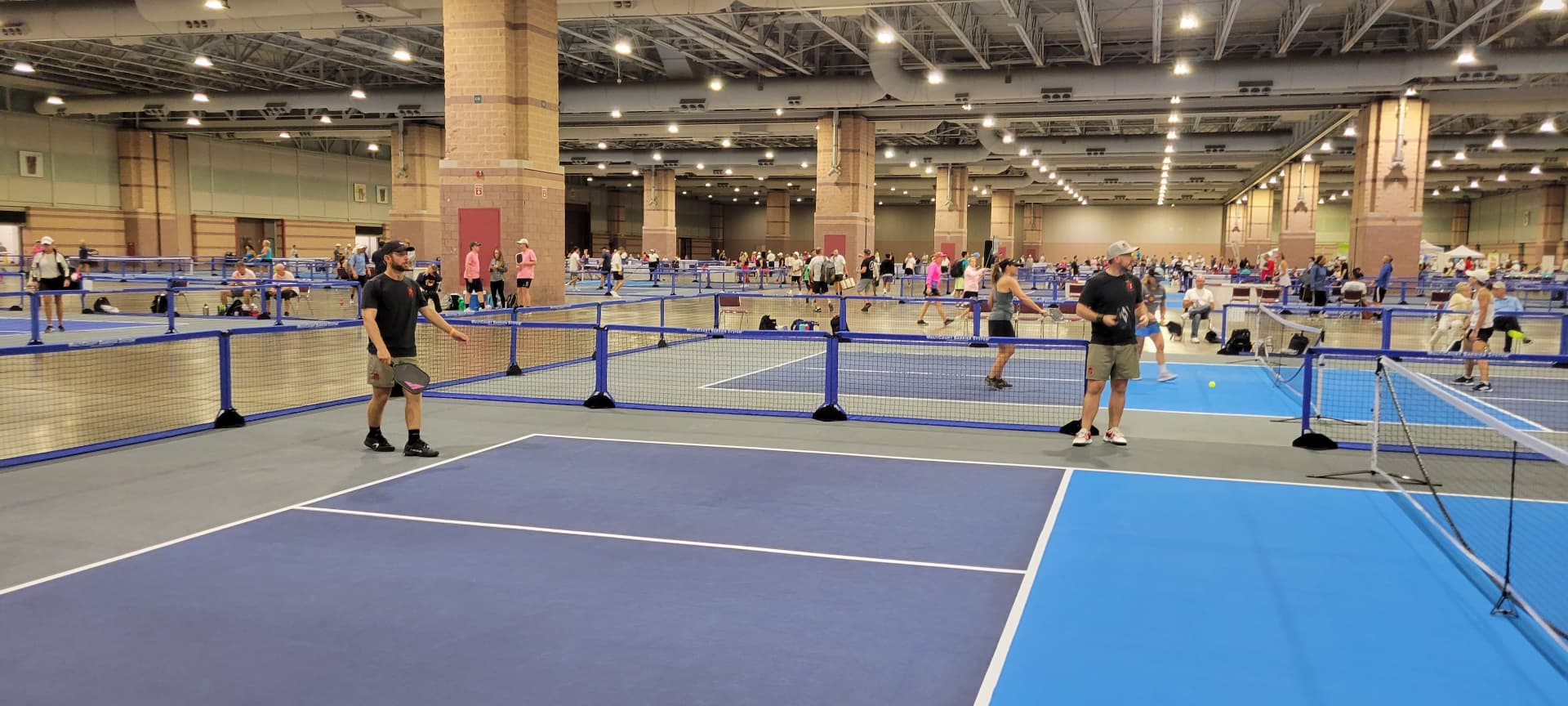
Choose indoor when you need weather certainty, climate control, and a polished look — conferences, galas, ballrooms, and winter programs. Choose outdoor when you want visibility, walk-up foot traffic, and a bigger footprint — festivals, resort lawns, plazas, and brand activations. Both use the same professional rollout courts; the real decision is ceiling height and load-in, surface and subfloor, weather contingency, lighting and power, noise near sessions or neighbors, and how those choices move the quote.
Indoor vs. outdoor at a glance
Planners rarely need a philosophical debate. They need a side-by-side of the factors that actually change the build. Use this table as a scoping checklist, then dig into the sections below for the details venue teams ask about on walkthroughs.
| Factor | Indoor | Outdoor |
|---|---|---|
| Weather risk | None — climate-controlled and rain-proof | Real; needs tent, indoor backup, or rain date locked early |
| Ceiling / vertical clearance | ~18–20 ft preferred for comfortable lobs and serves | Open sky; wind and sun become the variables instead |
| Footprint | Capped by room size, columns, and load-in paths | Usually larger — room for more courts and crowds |
| Visibility / foot traffic | Contained to attendees already in the room | High — passersby see it and get pulled in |
| Surface | Rollout over carpet or hard floor with floor protection | Asphalt/concrete direct; grass/turf usually need PickleDeck or subfloor |
| Lighting | Existing venue lighting, consistent for photos and video | Daylight, or rented towers/power for evening play |
| Noise | Echoes; matters near sessions, dinners, or guest rooms | Disperses outdoors; still matters near neighbors or villas |
| HVAC / comfort | Venue climate control; confirm airflow with doors propped for load-in | Heat, humidity, and shade drive player comfort and schedule |
| Best for | Conferences, galas, ballrooms, winter events, rain-proof programs | Festivals, brand activations, resorts, campus days, plazas |
Deeper indoor comparison: ceiling, load-in, HVAC, and floors
Indoor pickleball fails less often on the court product and more often on the room. The playing surface is a 20 × 44 ft rollout with a regulation net — the same system used outdoors. What changes indoors is everything above and around it.
Ceiling height is the first filter. Comfortable play wants roughly 18 to 20 feet of clear overhead so lobs and serves do not feel clipped. Measure to the lowest obstruction: beams, chandeliers, speaker clusters, pipe-and-drape headers, and HVAC drops. A ballroom marketed at 22 feet can still play short if a decorative soffit sits at 16. If the room is marginal, plan shorter programming (intro clinics and controlled open play) rather than pretending it is a gymnasium.
Load-in paths decide whether the build is routine or a scramble. Courts, subfloor panels, nets, and equipment need a clear route from dock or freight elevator to the room — width, turns, carpet protection, and timing against banquet resets all matter. A beautiful pre-function space that can only be reached through a guest corridor during peak check-in is a different project from an exhibit hall with a straight dock door.
HVAC and comfort are why indoor wins in shoulder season. Confirm the room can hold temperature with doors open during install, and that airflow is not blasting across the court in a way that moves light balls. Climate control is also why indoor photographs more consistently for brand and executive events: no wind, no glare swings, no wet courts.
Floor protection is non-negotiable for venues that care about carpet and finished hardscape. Professional installs use protection under the rollout so ballroom and hotel floors are not left with marks or crushed pile. That is parallel to outdoor subfloor thinking — different materials, same honesty about what sits under the court. Pair this section with our court dimensions for events guide for footprint math and our surface and subfloor requirements guide for what carpet, concrete, and hard floors typically need.
Outdoor surfaces: asphalt and concrete vs grass, turf, and soft ground
Outdoor sites look simple until someone asks what the court sits on. Asphalt and concrete pads — parking lots, plazas, sport courts, and many rooftop hardscapes — are usually the straightforward outdoor case: level enough, firm enough, and ready for a rollout with standard edge and runoff planning.
Grass, turf, lawns, and soft or uneven ground are a different story. Those bases typically need a PickleDeck or comparable subfloorso the playing surface stays true, level, and safe. "It looks flat" on a resort lawn is not the same as playable. Slope, soft spots, irrigation heads, and drainage all show up the moment players start moving laterally. Site photos help; a walkthrough is better when the lawn is the hero backdrop.
That surface call is one of the clearest outdoor quote drivers. A hard-pad plaza and a soft lawn can use the same nets and paddles while needing very different understructure and install time. Do not assume outdoor is automatically simpler than indoor ballroom carpet — they are different constraint sets. Details live in the surface and subfloor guide.
When indoor wins
Weather certainty is non-negotiable
A conference, gala, or sales kickoff cannot gamble on a wet forecast. Indoor keeps the program on the run-of-show even when outdoor plazas cancel.
The event is already indoors
Convention centers, ballrooms, expo halls, and hotel meeting levels already own the attendees. Bringing courts to that footprint beats asking people to walk outside between sessions.
You want a polished, controlled look
Consistent lighting, climate control, and a contained backdrop photograph and film more cleanly than a windy lawn — useful when brand creative or executive hosting is the point.
Cold, wet, or shoulder-season dates
Outdoor play that looks great in July can be miserable in January. Indoor is the default when guest comfort would otherwise kill participation.
When outdoor wins
Visibility and walk-up traffic matter
Festivals, downtown plazas, shopping-center activations, and brand pop-ups win when strangers can see the courts and join. Indoor rooms hide that energy.
You need more courts or a bigger spectator ring
Ballrooms and exhibit halls cap court count by columns and egress. Lawns, parking lots, and plazas usually give you more rectangle and more crowd room.
The setting is part of the sell
A resort lawn, rooftop, campus quad, or waterfront plaza is often the reason guests remember the activation. The backdrop is the product.
Public energy is the goal
City festivals, street fairs, and open brand days optimize for buzz and foot traffic. Outdoor is usually the right tool when the crowd is the deliverable.
Weather contingency: the outdoor mistake that cancels programs
The most common outdoor failure is not wind or heat — it is skipping the contingency until the forecast turns. An outdoor court with no backup is a single rainy morning away from a cancelled activation, and tents, backup rooms, and rain dates usually cannot be invented at 7 a.m. the day of.
Decide up front among the real options: a tented court, a same-venue indoor backup held on the banquet diagram, or a contracted rain date. Lock it when you book. That planning is cheap early and expensive late. Our weather contingency plan covers what actually stops play versus what is just a pause, and how those three backups trade off for corporate, festival, and hospitality calendars.
Indoor builds largely retire this risk — which is exactly why conference and gala planners default indoors when the run-of-show cannot flex. Hybrid weekends (outdoor primary + indoor hold) are common when the setting matters but the program cannot vanish.
Lighting and power for evening outdoor play
Daytime outdoor activations ride natural light. Evening resort mixers, rooftop parties, festival night blocks, and post-exhibit receptions need portable lighting and a realistic power plan so play stays safe and photographable after dusk.
Lighting is an outdoor-specific quote and logistics driver that indoor venues often already solve with house systems. Cable runs, generator vs house power, glare toward guest rooms, and how early towers can go up without blocking load-in all belong in the site plan. Read the power and lighting requirements guide before you assume "we'll just play until dark" on a September lawn.
Noise near sessions, guest rooms, and neighbors
Pickleball paddle impact is sharp and recognizable. Indoors, sound reflects — which matters when the court sits next to breakout sessions, a plated dinner, or hotel guest rooms above a ballroom. Outdoors, sound disperses more, but beach villas, courtyard rooms, downtown neighbors, and municipal quiet hours still constrain evening play.
Honest planning treats noise as an input: orientation, hours, court count, and whether the build belongs outdoors, indoors, or not in that slot at all. We will not invent a silent-court claim or a universal decibel guarantee for your site. Use our event noise levels and neighbor considerations guide when guest rooms, HOA rules, or adjacent programming are part of the indoor-vs-outdoor calculus.
Scoping indoor vs outdoor for your date?
Share venue photos, preferred footprint, and whether weather certainty or visibility matters more — we'll recommend the setup and quote a turnkey build, typically within 24 hours.
When hospitality, resort, conference, and festival use cases tip the choice
Hotels and resorts often want the lawn or terrace for guest photos and group energy — until quiet hours, wind, or a wedding ceremony diagram push the mixer indoors. Hospitality teams should read the setting against the calendar, not against a brand preference for "outdoor vibes." Our hotels and resorts guide covers guest pop-ups, wedding weekends, and conference socials on property.
Conferences and corporate programs usually tip indoor when sessions cannot slip and attendees are already inside the convention level. Outdoor tips when the brief is a campus day, summer picnic, or visible brand moment between buildings. Networking receptions sometimes split the difference: terrace for daylight, ballroom hold for weather.
Festivals, street fairs, and downtown activations almost always want outdoor visibility — the passersby are the audience. Indoor only enters as weather backup or as a ticketed indoor annex. Shopping-center and plaza builds follow the same logic: if strangers cannot see the courts, much of the activation value disappears.
None of those verticals have a universal rule. Date, forecast risk, footprint, noise rules, and whether the deliverable is controlled hospitality or public buzz decide the call. When you are ready to map that to a real site, start from how to add pickleball to your event.
How indoor vs outdoor affects quote drivers
Pricing is quoted per project. A single-court one-day turnkey activation typically begins around $10,000; multi-court and multi-day builds move into the mid-five and six figures depending on scope. We do not invent facility hourly rental bands on this page. What does change with indoor vs outdoor is which line items show up:
Distance to the venue, overnight crew needs, and how many install/teardown windows the schedule requires all move the quote. Indoor ballrooms and outdoor plazas can differ mainly in load-in complexity, not in the court product itself.
Asphalt and concrete outdoor pads are usually simpler. Grass, turf, and soft outdoor ground typically need a PickleDeck or comparable subfloor so the rollout plays true. Indoors, floor protection over carpet or finished hardscape is the parallel line item — not an optional nicety for venues that care about their floors.
Daytime outdoor builds ride natural light. Evening resort mixers, rooftop parties, and festival programming past sunset need portable lighting and a realistic power plan. That is an outdoor-specific driver indoor venues often already cover with house lighting.
A tented court, a same-venue indoor backup hold, or a contracted rain date adds planning and sometimes cost — but it is cheaper than cancelling on the morning of. Outdoor quotes should name the contingency; indoor quotes usually do not need one.
One court for a single afternoon is a different project from multi-court, multi-day hospitality or festival builds. Court count and duration are the biggest structural drivers either indoors or outdoors.
Clinics, open play, and short social brackets need on-site staff. Quiet-hour rules, neighbor buffers, and session adjacency can force shorter play windows or an indoor placement — which changes crew hours even when the court count stays the same.
For a fuller cost frame — still without fake à-la-carte menus — see the pickleball court rental cost guide. When you have dates and a footprint, request a quote so numbers reflect your site rather than a generic indoor-or-outdoor stereotype.
A practical decision path
Start with the non-negotiable. If weather certainty is mandatory, begin indoors and only reopen outdoor if the venue has a credible backup. If visibility and walk-up traffic are the brief, begin outdoors and price the contingency honestly. Then check ceiling height or surface, then noise and hours, then lighting if the program runs past dusk. Footprint math from the dimensions guide usually ends the debate faster than a preference poll in the planning Slack.
Same-weekend hybrids are normal: outdoor morning clinics with an indoor evening mixer, or outdoor primary with an indoor weather hold. That is one project with two footprints — flag both spaces early so crew and timing are scoped together rather than bolted on later.
What we will not do on this page: invent facility dollar-per-hour rates, fake case studies, named client wins, or a claim that one setting is always cheaper. Indoor and outdoor are the same court product in different logistics envelopes. Choose the envelope that protects the program you actually sold to stakeholders.