Corporate Events · Seasonal
Pickleball for corporate holiday parties
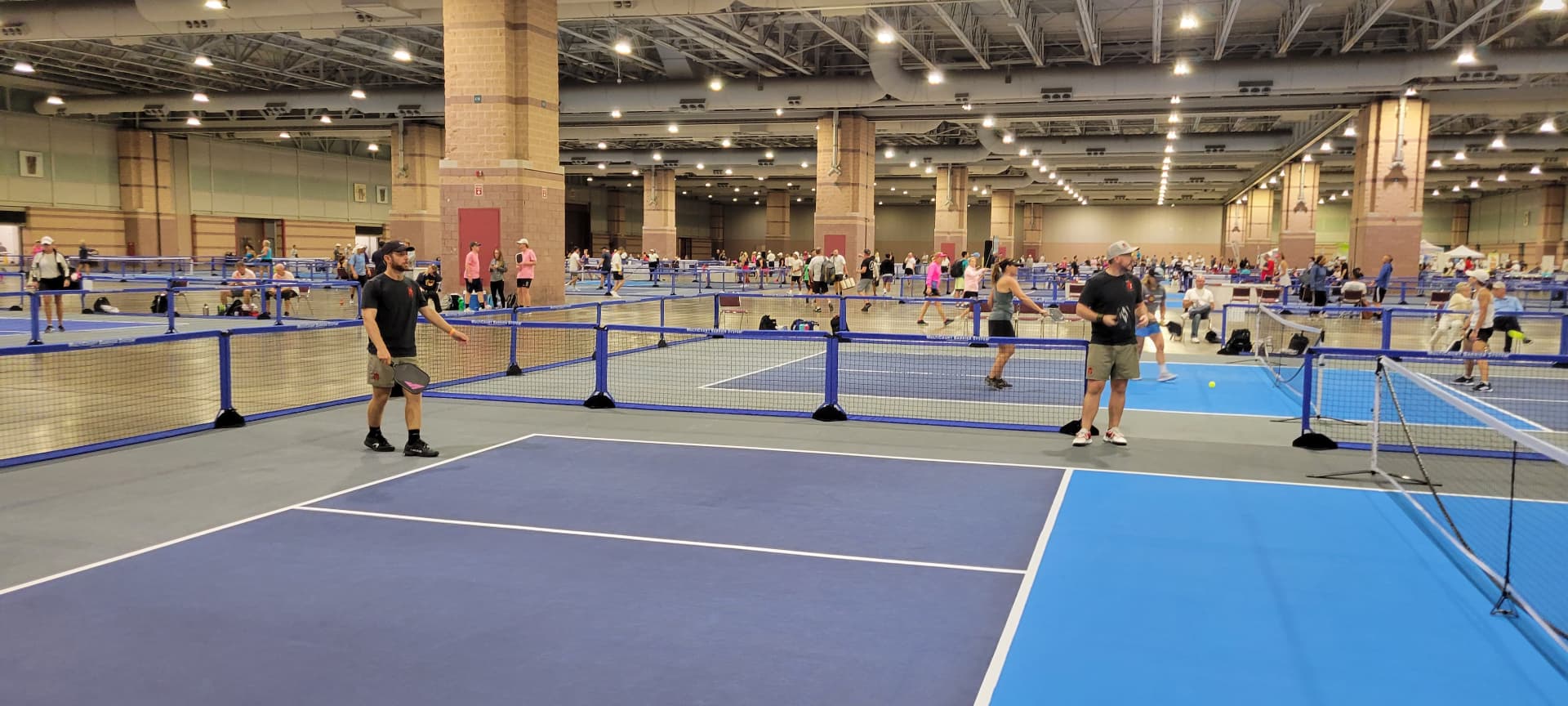
A pickleball activation works at a company holiday party as a 60–90 minute cocktail-hour moment— a staffed indoor court running short, casual rallies near the bar or lounge, not a full bracket. It is built for guests in party clothes, not athletic wear, and it gives people something to do together beyond dinner and a program. That shared activity matches what employees show up for: according to ezCater's 2025 Workplace Holiday Party Trends Report, 83% say holiday celebrations help them bond with coworkers, and 80% say these events are more important than ever for hybrid and remote connection.
Why it fits the holiday party moment
Holiday parties are back in force. ezCater's 2025 Workplace Holiday Party Trends Report (national survey of 1,002 full-time employees and 603 decision-makers) is the clearest recent read on RSVPs and budgets — and it is why planners are looking past dinner-only run-of-shows.
ezCater's 2025 Workplace Holiday Party Trends Report found 82% of employees plan to attend their company's holiday celebration (up from about 70% the prior year). Fifty-one percent of businesses are increasing party budgets, and 92% of decision-makers plan to spend the same or more.
The same report found 83% of employees say holiday celebrations help them bond with coworkers, and 80% say these events are more important than ever for building connections in hybrid and remote workplaces — a shared activity does more for that than a seated dinner alone.
You do not need a full afternoon. A staffed court running short, low-stakes rallies works as a 60–90 minute cocktail-hour or reception activity before dinner or awards — not a bracket that eats the whole evening.
A branded or lit court is one of the more shareable moments of a holiday party. Guests in party clothes taking a quick rally make better photo and social content than another step-and-repeat backdrop.
Cocktail-hour vs post-dinner: pick the format first
The biggest scoping mistake is copying a daytime tournament into an evening party. Start with when guests have unstructured time, then choose a format that respects attire, food service, and the awards program.
Run the activation for 60–90 minutes while guests arrive, get drinks, and mingle — then clear or quiet the court when dinner, awards, or a program starts. Staff keep rotations short so people can play, laugh, and return to the bar without committing the whole night. This is the default for hotel ballrooms and restaurant private rooms.
Some planners open the court after the plated course or buffet, when energy dips and people do not want to sit through another speech. Keep the format even lighter: open play, quick beginner walkthroughs, and photo moments. Do not launch a scored bracket after a three-course meal.
If the party runs late or the room goes dark for awards, glow paddles and balls under string lights or UV accents read well in photos and give the court a holiday-party feel without competing with the program. Pair with our glow-in-the-dark guide when lighting is part of the brief.
For a broader build-vs-outcome framework — not just holiday parties — see how to add pickleball to your event. If your team actually wants scored heats and standings, that is a different product: our corporate tournament guide.
Indoor ballroom and hotel load-in
Indoor is the default for a December party. Weather is off the critical path, the court sits inside the same social room as dinner, and hotels already understand temporary flooring builds. What trips planners is freight logistics, not the sport.
- Ballrooms, hotel event floors, and convention carpet all take professional rollout courts without damaging the finish when the build is planned with the house.
- Confirm load-in doors, elevator size, freight path, and whether the venue requires union labor before the quote is final — holiday weeks are busy and windows get tight.
- Measure the real pad you can give the court (about 30 × 60 ft per court with run-off is comfortable), not brochure square footage that includes stages, bars, and buffet lines.
- Floor protection, net anchors, and a clear teardown path should be on the vendor's checklist so the overnight turnover for the next event stays clean.
Space math and surface choices are covered in our court dimensions for events guide and indoor vs. outdoor rental comparison. Hotels running recurring guest programming can also look at pickleball for hotels and resorts.
Attire, shoes, staffing, and court placement
A holiday-party court succeeds or fails on social design. Guests will not change into court shoes. Staff have to make the first rally feel safe, short, and optional — especially for Gen Z attendees who, per the same ezCater report, are more likely than other generations to feel stressed about standing alone at a work holiday party.
Most guests arrive in dresses, heels, loafers, or dress shoes. Staff should expect beginners who will not change into sneakers. Keep rallies short, soft, and optional — never pressure someone in formalwear onto a competitive point.
Hosts run a 60–90 second walkthrough (grip, soft serve, kitchen rule in plain language), then rotate pairs so nobody waits awkwardly. An unstaffed court becomes a prop for the three people who already play; a staffed court becomes the line everyone walks past between drinks.
The court works best as something people wander into — not a separate destination they have to choose over the party. Tuck it beside the lounge, cocktail tables, or bar sightline so curiosity does the marketing for you.
Planning this year's holiday party?
Tell us your venue and headcount — we'll scope a court and staffing that fits the evening, not takes it over. Clear quotes usually within 24 hours.
Lighting, glow options, branding, and photo moments
Holiday parties often dim the house lights for speeches, dessert, or a playlist. If the court stays up past cocktail hour, plan lighting with the room — not against it. Soft string lights, branded backdrop panels, or glow paddles and balls keep the court readable in photos without flooding the awards stage. Power draws and fixture placement belong in the same conversation as AV; see pickleball event power and lighting requirements and glow-in-the-dark pickleball for events.
Branding turns the court into a media moment: company colors on the wrap, a simple logo on the net band, and a clear photo angle from the lounge. You do not need a full sponsor kit for an internal holiday party — but if leadership wants the night to show up in the company newsletter and Slack, decide the brand kit when you lock the court count so print lead times do not collide with December freight windows.
How it sits next to dinner and awards
Think of the court as parallel entertainment during unstructured time — not competing theater. The cleanest run-of-show is: doors / cocktails / court open → court winds down → dinner or buffet → awards or remarks → optional soft reopen for photos. Announce once from the host mic that the court is open for short, beginner-friendly rallies, then let staff do the rest. Do not schedule scored championship points during the CEO remarks.
Food still matters — ezCater's report notes planners and employees both put food at the center of holiday social interaction — so keep the court off the buffet path and out of the plated-service lanes. The lounge edge is almost always better than the dance-floor center.
Headcount to court count (intuition, not a formula)
One court supports four players at a time. Throughput comes from short rotations, not from painting more lines. For a holiday cocktail window, err toward fewer courts with better hosts.
The holiday-party default. With staff running short rotations you can cycle a steady stream of guests through a 60–90 minute cocktail window without looking empty or overwhelming the room.
Makes sense for larger headcounts, split lounge layouts, or when you want simultaneous beginner and casual open-play lanes. Still keep the format soft — two casual courts beat one competitive bracket.
Rare for a seated holiday dinner. More common when the holiday gathering is a daytime celebration, multi-department mixer, or hotel takeover with long reception blocks. Quote from the real dwell time, not the invite list.
For multi-activity daytime builds, compare corporate field days. Warm-weather counterpart to this casual format: company summer picnic. Recognition-first occasion closer to March than December: Employee Appreciation Day.
Timeline, venue paperwork, and insurance
Treat the court like AV or catering, not a last-minute party favor. Once date and venue are locked, get the activation on the hold list — popular December weekends and hotel ballrooms book out first. Short-notice builds can still work, but they limit branding, court count, and preferred load-in windows.
Share a floor plan or photos early: bar placement, stage, buffet, dance floor, and the pad you can actually give the court. Surprises on surface, ceiling clearance, or freight path are what shrink an activation the week of the party.
Most hotels and event venues require a certificate of insurance naming them as additionally insured. A turnkey vendor should carry coverage and issue the COI to the venue on your timeline — confirm that requirement in writing when you book the room.
What not to do
- Do not run a full tournament bracket in heels and cocktail attire — it stalls the room and leaves half the guest list watching from the sidelines.
- Do not hide the court in a back foyer with no foot traffic; empty courts photograph poorly and feel like a forgotten add-on.
- Do not skip venue COI and load-in confirmation because the date is "just a holiday party" — hotels still need insurance paperwork and freight windows.
- Do not size court count to headcount alone. A 200-person party with a 75-minute cocktail window often needs one well-staffed court, not four quiet ones.
- Do not invent a scored awards-night championship that conflicts with the actual awards program — keep pickleball parallel entertainment, not competing theater.
Planning ranges (honest pricing)
A single-court, one-day turnkey activation typically begins around $10,000. Multi-court and multi-day builds move into the mid-five and six figures based on court count, staffing, travel, surface, branding, and venue rules (including union labor). Those are planning bands, not a menu — every holiday party is quoted individually, usually within 24 hours. Deeper cost drivers live in our pickleball court rental cost guide.
Where this fits next to related activations
This is a lighter-weight cousin of our wedding and rehearsal-dinner activations — same idea of a casual, beginner-friendly court sized for a party rather than a bracket, just for a company crowd. Sales kickoff or multi-day hotel takeover? See pickleball for sales kickoffs. Prefer the step-by-step vendor brief? Start with how to add pickleball to your event.
The Pickleball Events Co. delivers professional pickleball courts nationwide for corporate holiday parties, field days, tournaments, and hotel events — set up, staffed, and removed so your planner stays focused on dinner, awards, and the guest experience. Ready for numbers? Get a clear quote — usually within 24 hours.