Event Planning · Equipment
Pickleball event equipment rental checklist: what's included?
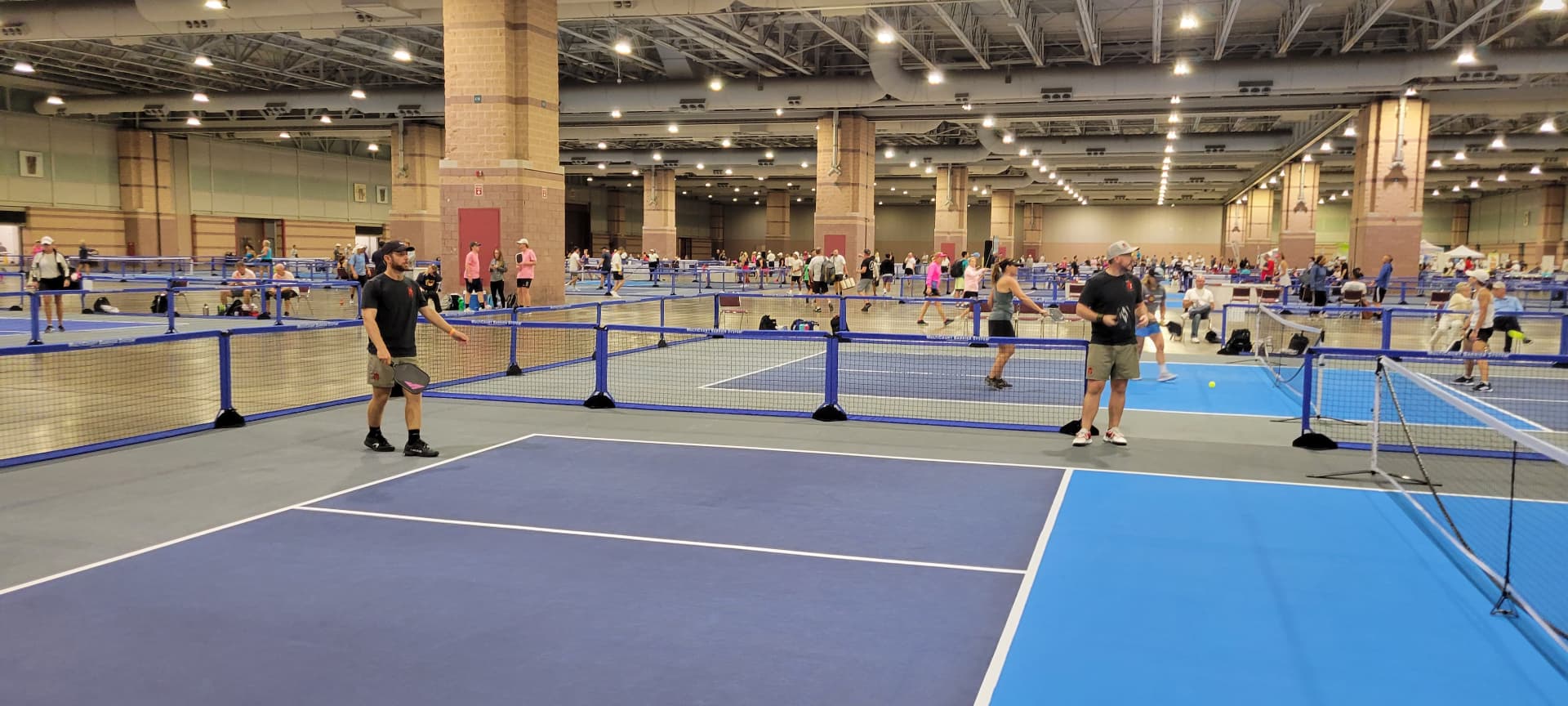
A standard turnkey rental includes the court system, nets and posts, demo paddles, balls matched to your surface, boundary markings, and basic signage — everything a guest needs to walk up and play. Scoreboards, custom branding, lighting, windscreen, sound equipment, and ball machines are optional add-ons, scoped to your format and site rather than bundled into every quote. This page is a planner checklist, not a price sheet: we do not publish invented package rates here.
Why the checklist matters before you book
Planners searching for a pickleball event equipment rental checklist are usually trying to avoid two failures: paying for a "full package" that still leaves guests without paddles, or assuming the venue will magically supply nets, balls, and scoreboards. A turnkey activation vendor should arrive with playable courts and the shared gear guests need. A truck that drops panels without staffing, paddles, or surface-matched balls is a different product — and it shows up in the guest experience within the first ten minutes.
Use this list to brief internal stakeholders and to compare vendors honestly. Ask every bidder to mark each line as included, optional, or not offered. Then map those answers to your format: open play, clinic stations, or a corporate tournament. Equipment that looks identical on a brochure behaves differently when forty first-timers rotate through two courts versus a scored bracket on four.
What's standard on every build
Regulation-size portable courts built to USA Pickleball play dimensions (20' × 44' of play) that install on concrete, asphalt, indoor flooring, or — with a subfloor system — grass and many rooftops.
Regulation-height nets on portable posts, set and tensioned by the crew as part of the build — not left for your team to assemble from a bag.
A shared set of demo paddles sized for adults and, on request, juniors so first-time players who did not bring gear can still walk up and play.
Indoor or outdoor balls chosen for your build, not a one-size-fits-all box. The indoor vs outdoor difference below is operational, not trivia.
Lines built into the rollout surface so there is no separate chalk or tape step at your venue.
Court and wayfinding signage so guests know where to go and how to rotate onto a court.
Indoor balls vs outdoor balls — the difference that matters
USA Pickleball publishes ball specifications (diameter, weight, and hole count ranges). Within those rules, indoor and outdoor balls are still built differently. Outdoor balls use a firmer plastic, run slightly heavier, and typically carry more, smaller holes so they hold a line in wind and survive asphalt or rollout outdoor surfaces. Indoor balls are softer and lighter with fewer, larger holes for predictable flight on gym floors and convention halls where wind is not the problem.
Using the wrong ball does not cancel the event, but first-time players notice when bounce and flight feel "off." Matching balls to the build is part of a serious rental — not an afterthought you discover after photos are already circulating. If you are still choosing between indoor and outdoor court rental, decide the surface first; the ball decision follows.
Optional add-ons
These scale to your goals. Most events add one or two — not the whole menu.
Digital or manual scoreboards for tournament and round-robin play — most requested for corporate brackets and trade-show competitions.
Logo and color wraps on the court surface, nets, and surrounding signage for a content-ready activation.
For evening play or a glow format — see our night-play guide and power and lighting requirements before you assume a wall outlet covers towers and scoreboards.
Perimeter windscreen for exposed outdoor sites, plus soft fencing to keep foot traffic off the court between rounds.
Mic and speaker setup for an emcee or bracket announcements — scoped separately from the court build.
For skills stations where guests want reps without a rally partner — useful for onboarding days, not standard on a typical happy-hour build.
Need a scoped equipment list?
Tell us venue, guest count, format, and indoor vs outdoor — we'll mark standard vs add-on gear and come back with clear pricing for your build.
Request an equipment-inclusive quote
City, dates, surface, and format are enough to start. We'll return a checklist-style scope — not a vague "full package" line.
Planner checks before you lock the list
Open play needs fewer scoreboards and more loaner paddles. Bracket play flips that — timers, standings boards, and clear court assignment matter more than extra demo paddles.
A mixed skill room with many first-timers needs a deeper loaner pool than a club-night crowd that already owns paddles. Ask for juniors only if kids or teens are invited.
Rooftops, open lots, and waterfront plazas often need windscreen even when the court system itself is fine. Flag exposure in the site brief so it is planned, not improvised on build day.
Grass, turf, and many rooftops need a subfloor under the rollout court. Indoor gym vs outdoor asphalt also decides which ball you should put in guests' hands.
How equipment ties to surface and court count
Equipment choices are not independent of the site. A rooftop or grass build usually needs the subfloor system under the court before nets and lines go down. Court count drives how many nets, paddle pools, and ball cases you need — see how many courts you need before you freeze headcount-only math. More guests on too few courts creates lines; more courts than your staffing plan can rotate creates idle panels and unused gear.
Setup and teardown time also scale with equipment complexity. Branded wraps, lighting towers, and PA add load-in steps beyond a daylight open-play court. If your run of show is tight, keep the first draft of the checklist lean, then add branding and production only where they earn their slot. The setup and teardown timeline is the right companion doc once the gear list is drafted.
What is usually not included
Clarity here prevents awkward day-of gaps. Confirm ownership of each line in writing:
- Personal takeaway paddles as swag (loaners stay with the activation; branded giveaways are a separate add-on).
- Venue permits, insurance certificates, or city noise/power approvals — those sit with the planner or venue unless your contract says otherwise.
- Catering, bar, furniture, or photo-booth packages — pickleball gear does not substitute for a full event production list.
- Guaranteed live pricing in this article — equipment is scoped to court count, city, surface, and add-ons on a real quote.
How to use this checklist with vendors
Copy the standard and add-on lists into your RFP or email brief. Ask each vendor to reply line by line, then attach site photos, floor plans, and power notes. "What equipment is actually included" is one of the questions that separates a real turnkey operator from a gear drop — which is why it sits on our vendor checklist and in how to write an RFP for a pickleball event.
When you compare quotes, normalize court count and staffing hours first. A cheaper line that omits paddles, outdoor balls, or net setup is not cheaper once you rent those pieces elsewhere. For how equipment sits beside travel, staffing, and branding in a full activation budget, use the court rental cost guide — and treat any third-party "average package price" tables as unverified unless you can source them yourself.
A simple briefing template you can paste
Event: date(s), city, indoor or outdoor, venue name, surface (concrete / asphalt / gym / grass / rooftop).
Play format: open play, clinic stations, round robin, or bracket tournament; approximate guest count and peak concurrent players.
Court target: preferred court count and whether you need help sizing from headcount.
Must-include gear: loaner paddles (adult / junior), indoor or outdoor balls, scoreboards yes/no, branding yes/no, evening lighting yes/no, windscreen if exposed, PA if emcee.
Site constraints: load-in path, elevator or stairs, power access, quiet-hours, neighbor or HOA notes.
Ask back: itemized standard vs add-on list, crew count, setup/teardown window, and what the venue must still provide.
When you are ready, request a quote with that brief. We will return an equipment-inclusive scope for your site — courts, nets, paddles, balls, and the add-ons your format actually needs — without asking you to guess from a generic package name.