Event Planning · Logistics
Do you need a permit for a pop-up pickleball court?
It depends on where the court goes, not on the fact that it's pickleball. A court on private property — a hotel ballroom, a corporate campus, a private lot — usually needs only the venue's own internal approval. A court on a public street, park, or plaza almost always needs a temporary-use or special-event permit from the city, and amplified sound or a tent can each trigger their own separate sign-off on top of that.
The four things that actually trigger a permit
The most common trigger. Closing a street lane, using a public park, or setting up on a city-owned plaza almost always requires a temporary-use or special-event permit from the local parks or public-works department, applied for well ahead of the date.
A DJ, emcee mic, or PA system for a tournament bracket announcement often needs its own noise or sound permit, separate from the event-use permit — and it applies at private venues with noise ordinances, not just public space.
A tent over a court, especially anything with sides or exceeding a size threshold, can trigger a fire marshal review for occupancy, egress, and fire-lane clearance — this is a building and fire code question, not a parks-department one.
If your activation sits next to a bar, beer garden, or catered reception, that service typically needs its own separate license or permit, and some jurisdictions restrict alcohol near an area with amplified sound or public access.
Private venue vs. public space
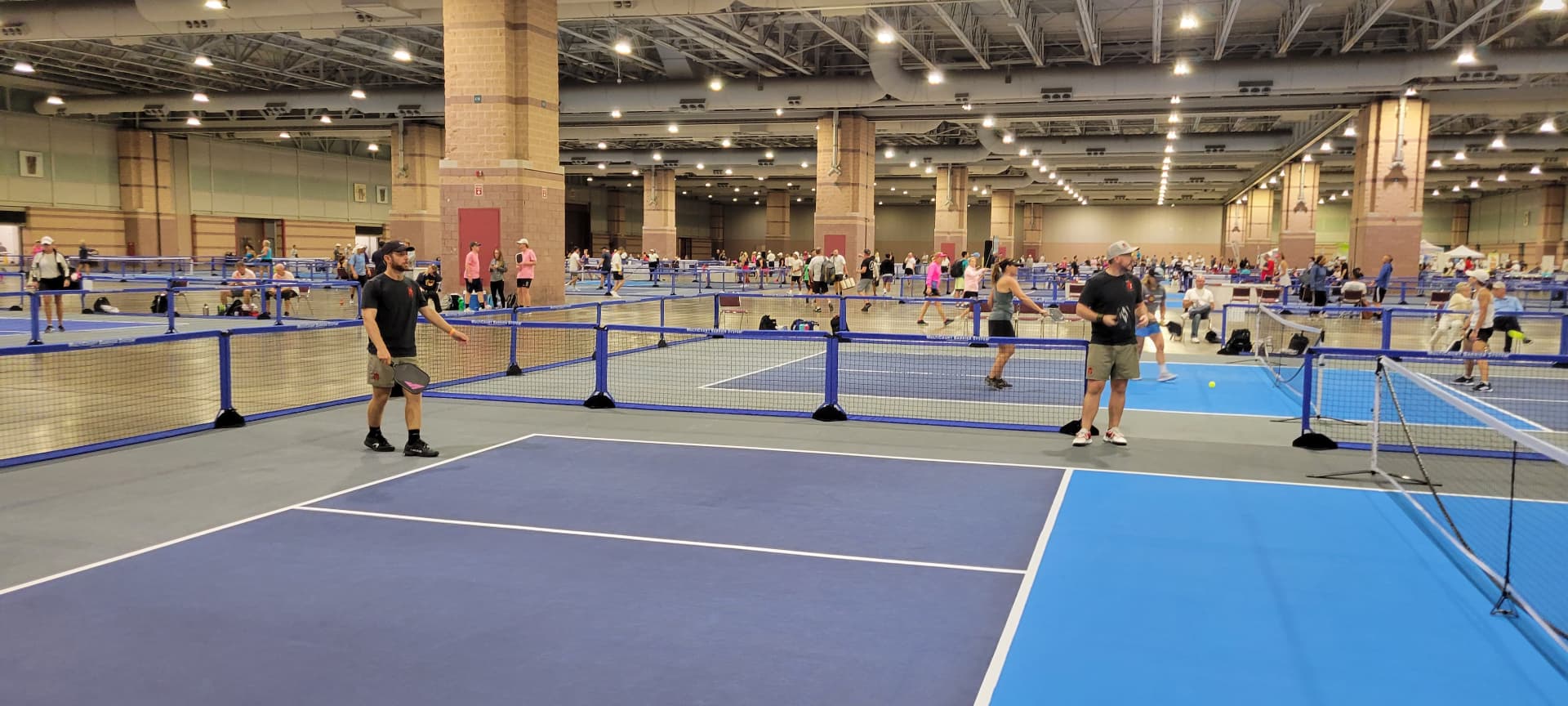
A hotel ballroom, a corporate campus, a convention center floor, or a private parking lot — the venue's own event-approval process usually governs the court, and a city permit typically isn't triggered unless you're closing a public street for load-in or affecting public sidewalks.
A downtown street closure, a public park lawn, or a city plaza almost always needs a permit from the city, separate from whatever internal approval a nearby business or BID gives you. Budget real lead time — these applications often run 30 to 90 days depending on the city and event size.
Building on public space or unsure which applies?
Tell us your venue when you request a quote — we'll flag what a permit application usually needs from us early, not after the timeline is already tight.
Who's actually responsible for pulling it
- For a private-venue event, the venue's events or facilities team usually owns internal sign-off, and we coordinate directly with them on load-in windows and any equipment questions.
- For a public-space activation, the event organizer — you, or your agency — typically holds the permit of record, since the city issues it to the entity legally responsible for the event, not the vendor building one piece of it.
- We support either path with what a permit application usually needs from us: equipment specs, a certificate of insurance naming the right parties, and a site plan showing the court footprint — but we don't file the application on your behalf unless that's specifically scoped into your quote.
This is a different conversation from your insurance and liability paperwork, even though the two often land on a planner's desk at the same time — a permit clears you to use the space, a certificate of insurance protects the venue or city if something goes wrong once you're using it. Most events need both, from different contacts, on different timelines. It's also worth separating amplified sound from the sound of the game itself — the paddle-on-ball noise that draws most neighbor complaints is a site-planning question, not usually a permit trigger on its own; see our event noise levels guide for the actual decibel numbers and how court placement manages it.
Common mistakes that cost time
- Assuming a private parking lot or lawn needs no permit at all, without checking whether load-in trucks will block a public street or sidewalk during setup.
- Booking a DJ or exhibition emcee without confirming the venue's noise ordinance or sound-permit requirement — this catches festival and brewery activations most often.
- Adding a tent to the plan after the permit is already filed, which can retrigger a fire marshal review late in the timeline.
- Treating the city permit and the venue's insurance requirement as the same conversation — they're usually separate approvals with separate contacts and separate lead times.
A rough timeline for when to start
| Lead time | What to have moving |
|---|---|
| 90+ days out | Confirm public vs. private space, and if public, file the special-event or temporary-use application — this is the step most likely to blow a timeline if it starts late. |
| 60–90 days out | Apply for any separate sound permit if amplified audio is planned, and flag a tent to the fire marshal review if one is part of the build. |
| 30–60 days out | Line up the certificate of insurance naming the right parties and finalize the site plan showing the court footprint — most permit offices ask for both before final approval. |
| Under 30 days | Still possible for a private-venue event with no public-space trigger. For a public permit this close to the date, call the city office directly — some jurisdictions offer expedited review, most don't. |
These windows vary by city and event size — treat them as a planning backbone, not a guarantee. A downtown street closure in a major metro and a small-town park permit rarely run on the same clock.
Permitting is a timeline question as much as a paperwork one — see our booking lead-time guide for when to start the public-space conversation alongside your court reservation. If your build is outdoors, check the weather contingency guide too — a rain-date or indoor-swap plan can itself affect what a permit covers. And if you're comparing activation vendors, our vendor checklist covers the other paperwork questions worth asking before you sign. Planning a street, park, or festival footprint specifically? See our festivals & community events page for how that format typically comes together. A public-space permit application often asks about accessible routes too — see our ADA accessibility guide for what that actually requires on-site. This comes up most often for a storefront or lot-based build — see our grand openings and ribbon-cuttings guide for how a sidewalk closure or plaza activation typically clears permitting.