Event Playbook · Summer Camps & Youth Programs
Pickleball for summer camps, youth programs, and sports-camp activations
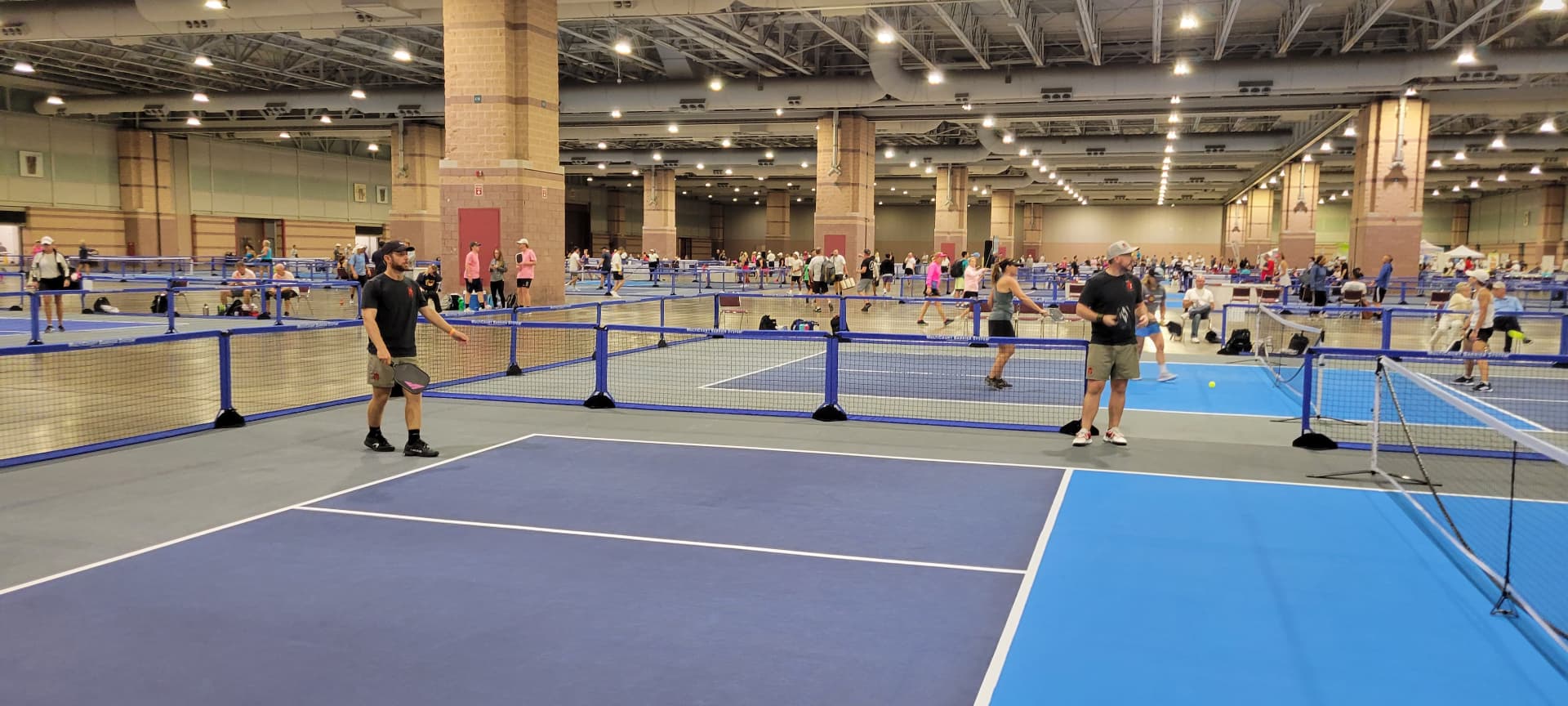
A turnkey pickleball activation gives a summer camp or youth program a physical, social recreation block — typically as a day-camp or overnight session court, a YMCA/JCC or church youth-week activation, a sports-camp specialty clinic, or a parent-night / open-house install. Courts are delivered, built, staffed, and removed so program directors and facilities leads do not become equipment operators. Rollout courts install indoors in gyms, multipurpose halls, and fellowship spaces, or outdoors on parking lots and camp plazas when the surface and counselor sightlines allow — so the activation sits in the program flow, not behind the maintenance shed.
Why camp directors and youth-program leads add a court
Camp and youth campuses are already full: waterfront, arts, faith blocks, sports rotations, and evening programs. The activities that improve belonging are the ones where mixed ages actually meet — not only sit through another lecture-style station. A staffed pickleball court is one practical way to create those informal minutes on purpose, without asking every cabin to leave campus for a half-day outing or forcing a tournament format onto a recreation fair.
Facilities, risk, and program teams already juggle vendor COIs, floor protection, ratios, and parking. The value of a turnkey court package is that it arrives as a production vendor: freight, staffing, paddles, balls, nets, and teardown are in one scope. That is the same operating model camps already use for other experiential vendors — not a DIY kit dropped on the gym floor.
Camp weeks pack kids from first-time beginners to competitive athletes into the same recreation block. A staffed pickleball court gives counselors a shared activity that scales across age groups without sorting every camper by league rating — short hosted rotations beat a free-for-all on a borrowed tennis court.
Day camps, overnight cabins, and sports-camp pods rarely share informal minutes outside meals and evening programs. Hosted court rotations create those minutes on purpose: kids talk between rallies, not only in the lunch line. Useful when program directors want engagement that does not feel like another circle time.
Camps and youth programs need experiential inventory for parent nights, open houses, and end-of-session showcases. A branded court is a concrete activation unit for a title sponsor, church partner, or local business — more memorable than a logo on a flyer alone.
Camp directors and facilities teams already juggle ratios, waterfront schedules, dining, and vendor COIs. A turnkey court package arrives as production: freight, build, staffing, paddles, balls, nets, and teardown in one scope — so recreation leads do not become DIY court operators during peak enrollment week.
Where a court fits a camp or youth-program run-of-show
Do not copy a corporate tournament into a quiet cabin devotion and hope for the best. Pick the recreation or family-night window first, then choose a format that respects ages, heat, counselor ratios, and your camp's tone.
Run a staffed court during a daytime recreation block, specialty sports week, or rotating activity stations. Short hosted rotations beat a full bracket when campers cycle through every 20–30 minutes. Site the court near shade, water, and counselor sightlines so kids can play between stations without a long unsupervised walk across campus.
Leave courts down for several days of a session when the pad is secure and weather allows — morning clinics, afternoon open play, and evening cabin challenges. Keep formats friendly for mixed ages and mobility; pair with a sponsor wrap if a local partner underwrites the activation.
Evening or weekend court time for YMCA and JCC youth programs, church VBS or youth weeks, and faith-community family nights. Competitive heat is optional — most youth briefs want connection and energy, not a tournament trophy. One or two courts with strong hosting usually outperform an unstaffed free-for-all.
Many sports camps already host specialty clinics on multipurpose fields, gym floors, or parking pads. Outdoor rollout courts work when surface and weather allow; indoor gym or multipurpose-hall installs are the weather-proof default. Keep the court in the program flow, not exiled behind maintenance sheds.
Some camps want the same activation language for camper recreation and a Friday family night. Scope each window separately for staffing and surface — then keep branding and hosting consistent so parents recognize one program. Multi-week tours and single open-house days use the same production model with different travel math.
If the brief is closer to a faith-community fellowship night than a sports camp, compare our churches and faith communities guide. Neighborhood and HOA family-day framing shares logistics with HOA and neighborhood events. Fitness-club member programming that sits adjacent to youth briefs lives in fitness clubs and gyms. For a general add-pickleball framework that is not camp-specific, see how to add pickleball to your event.
Planning a summer-camp or youth-program week?
Tell us the camp site, dates, and approximate enrollment window — we'll scope courts, staffing, and branding that fit the recreation block, not take over waterfront or dining operations.
What to do (and what to skip) when you brief the activation
Do
- Scope court count to concurrent campers in the recreation window — not total enrollment. A 400-camper session does not need six courts if only 20–40 kids rotate through at once.
- Put the court on the social edge: near shade, water stations, and counselor sightlines — not blocking emergency vehicle lanes, dining egress, or the evening-program stage.
- Brief staff to run a two-minute beginner walkthrough every rotation. Many campers have never played; that intro keeps the format from stalling between age groups.
- Loop facilities, risk, and program directors early on floor protection, parking closures, vendor COIs, counselor ratios, and whether the gym or multipurpose hall is already booked for dance or crafts.
- Decide branding (camp identity, youth-program name, or sponsor wrap) when you lock dates so print and freight lead times do not collide with load-in.
Don't
- Do not drop a scored adult tournament into a quiet rest hour, cabin devotion, or formal parent dinner without a clear recreation window.
- Do not assume outdoor-only — summer heat, rain, and evening darkness kill unstaffed parking-lot courts fast without shade, hydration, and a contingency.
- Do not invent published per-camper pricing on the brochure; quote the activation as a turnkey line item with court count and staffing clear.
- Do not leave the court unstaffed. Unhosted open play at a camp fair turns into equipment chaos and uneven wait times.
- Do not promise credentials, insurance coverage levels, or campus permits you have not confirmed for your specific camp or youth site.
Logistics camp facilities and risk teams ask about first
The sport is the easy part. The hard parts are freight, floor protection, counselor sightlines, heat and hydration, and making sure the court does not fight the dining path, the evening stage, or emergency access. Treat the activation like any other production vendor on the session rider.
Gym floors, multipurpose halls, parking lots, tennis overlays, and camp plazas each behave differently. Confirm clear dimensions for the playing area plus sideline buffer, freight path from the lot or loading dock, and whether the court sits on carpet, gym hardwood, concrete, asphalt, or temporary event flooring. USA Pickleball defines the regulation playing area as 20×44 feet; recommended minimum total play area is about 30×60 feet, with a preferred envelope around 34×64 feet when space allows.
Summer sessions, specialty sports weeks, VBS, and family nights lock dates around enrollment, counselor training, and blackout windows. Book the court activation as soon as the session window and surface are firm — ideally weeks to a couple of months out — so load-in, staffing, and any sponsor brand production are locked before facilities is already overcommitted.
Expect risk and facilities to ask for a certificate of insurance naming the camp, YMCA/JCC, church, or landlord. Build that into the vendor checklist alongside floor protection, counselor sightlines, and teardown windows. Treat the court like any other experiential vendor — not a borrowed net from the sports closet.
If a local business or church partner underwrites the court, decide whether the wrap is camp-only, program-forward, or co-branded. Keep hierarchy clear so families see the camp or youth program first and any partner second — especially important when multiple vendors want presence near the activation.
Deeper references: court dimensions for events, indoor vs outdoor rental, insurance and liability, heat safety and hydration planning, event staffing, and how far in advance to book. Space math from USA Pickleball's construction guidance (regulation playing area 20×44; recommended minimum total play area about 30×60, preferred about 34×64) is also summarized in our dimensions guide — always confirm the live campus drawings with facilities.
Enrollment to court count
One court supports four players at a time. Camp and open-house throughput comes from short hosted rotations, not from matching court count to every camper on the roster. Size to the concurrent players you want active during the window — not the full session census.
One court with strong hosting is often enough. Prioritize beginner walkthroughs and a consistent look with your camp or youth-program brand.
1–2 courts for a mid-day or outdoor window is a common working range when the court is one of several stations. Scale only if you want simultaneous tournament energy.
2–3 courts can support denser fair traffic, but size to concurrent players — not every camper will play at once. Staffing quality matters more than stacking unused nets.
For a fuller sizing walkthrough, see how many pickleball courts you need. General rental framing for event pads lives in pickleball court rental for events. Format choices (round robin vs bracket vs open play) live in event format options.
Family nights and open houses without fighting the program
Parent nights and end-of-session showcases often sell sponsor packages weeks before load-in. A court is easiest to place when it is written into the prospectus as a named experiential unit — not bolted on the week before as leftover inventory. Keep the court adjacent to the social program (family picnic lane, outdoor festival area) rather than competing with silent auction browsing unless the sponsor specifically wants aisle engagement. Related sponsorship framing lives in our event sponsorship packages guide.
Inclusive programming across ages and skill levels
Camps still need an active option that works across ages without athletic credentials. A staffed pickleball block — short clinic, then hosted open play — fits that brief better than another passive booth for groups that want movement and conversation between stations. Site it on campus when possible so cabins do not need a long transfer off-site. If your session already packages recreation stations, the court becomes one line item in that program rather than a separate production silo.
Outdoor parking lot vs indoor gym or multipurpose hall
Outdoor parking-lot and plaza installs look great in marketing photos and keep ball noise out of concurrent indoor programs — but they add weather contingency, surface assessment, heat and hydration planning, and sometimes neighbor considerations. Indoor gym or multipurpose-hall installs are the weather-proof default and usually easier to lock with facilities and risk. Hybrid plans work well: primary indoor court for the must-run window, optional outdoor court if the lot and forecast cooperate. Compare surface and contingency planning in indoor vs outdoor rental, surface and subfloor requirements, heat safety and hydration, and weather contingency planning.
Pricing honesty for camp and youth-program planners
We quote turnkey activations as a scoped line item — not a fake per-camper menu. A single-court one-day activation typically begins around $10,000; multi-court and multi-day programs commonly land in the mid-five to six figures depending on court count, staffing hours, sponsor brand production, travel, venue rules, and whether you need a single recreation window or multi-week coverage. Compare the drivers that move a quote up or down in our pickleball court rental cost guide, then request a quote with camp site, dates, and enrollment window. If you are weighing a temporary activation against pouring permanent amenity courts for a camp recreation pad, read permanent court vs event rental.
How to brief us (what we need in the first email)
A clean first brief shortens quote turnaround. Send the items below and we can usually return a scoped option set quickly — without forcing you through a vague discovery call first.
- Camp or youth-program city, site name, and whether the activation is indoor gym/multipurpose hall or outdoor parking lot/plaza.
- Session dates, the exact recreation or family-night window(s), and whether dining egress, emergency lanes, or an evening stage must stay clear of the court.
- Approximate enrollment and the concurrent players you want active (not the same number).
- Whether this is a day camp, overnight session, YMCA/JCC youth week, church youth program, sports camp, parent night, or a mix.
- Brand standards: camp-only wrap vs youth-program or session sponsor presence.
- Any known floor type, vendor COI rules, parking closures, heat plans, or counselor-ratio constraints facilities already flag.
If you are writing a formal RFP for camp or association procurement, use how to write an RFP for a pickleball event. Run-of-show timing templates live in event run-of-show template.
What success looks like after the session
The court is a means, not the KPI. Camp and youth-program success shows up in camper feedback, parent communications, enrollment stories, and whether cohorts leave with people they actually mixed with. Use the activation the same way — collect photo and video assets for family updates, note which age groups mixed on court, and give the development or sponsorship team a concrete hospitality story. For brand-activation briefs that sit outside a membership or youth meeting, see brand activations and product launches.