Event Playbook · Sponsorship
How to sell sponsorships for a pickleball tournament
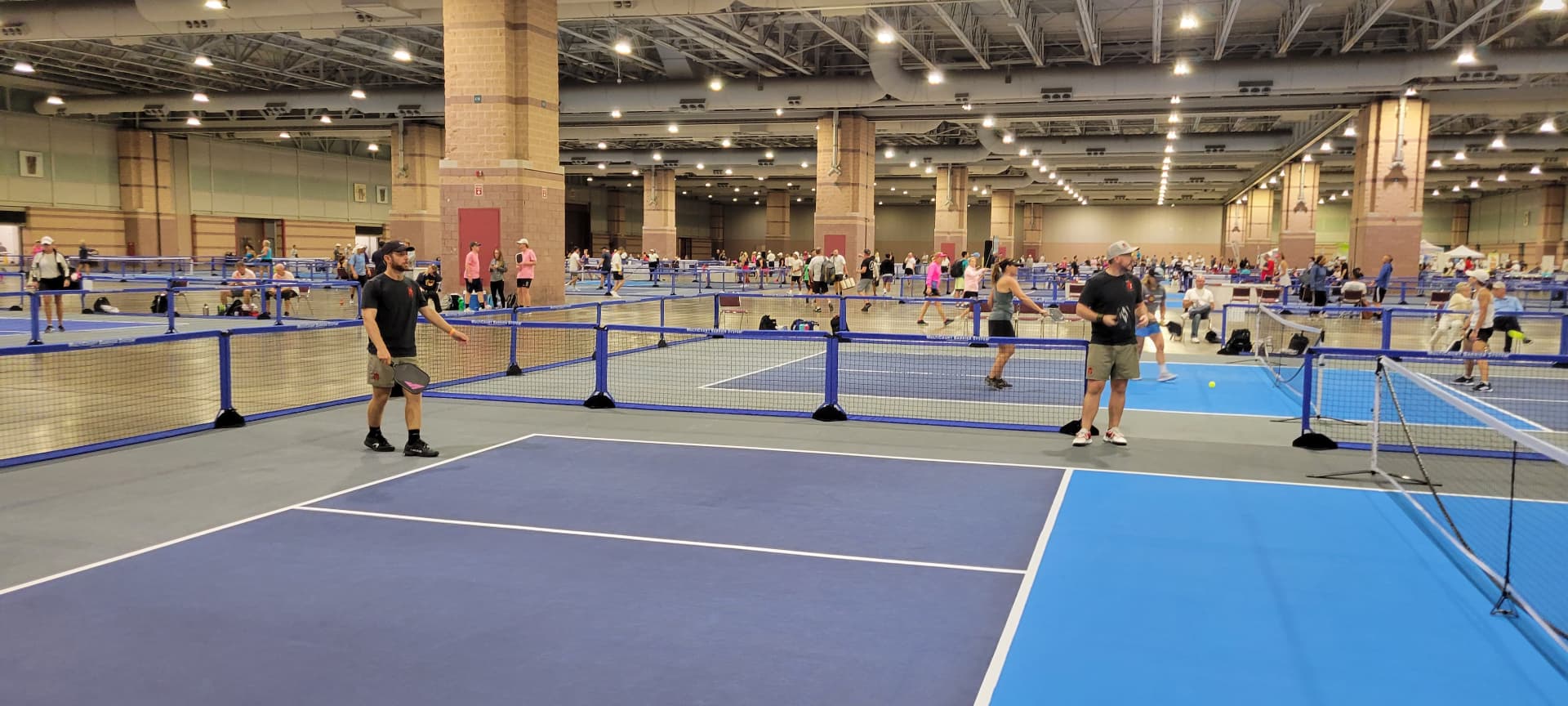
Sponsorship packages for a pickleball tournament or activation typically run three to four tiers — a title/presenting sponsor, a court-level sponsor, a supporting sponsor, and often a separate in-kind track for product or service trades. Each tier is priced around what it actually delivers: court wraps and event naming rights at the top, shared signage and program mentions lower down. The court itself — wrapped, branded, and the visual centerpiece of the event — is usually the single highest-value asset a sponsor is buying, which is why building the deliverables list before setting a price gets you a pitch sponsors actually say yes to.
Who adds sponsors to a pickleball event, and why
Sponsorship isn't limited to charity events. It shows up anywhere an organizer wants to offset cost, expand the program, or give a partner visibility with an audience that's already assembled and paying attention.
Sponsorships are frequently the majority of a fundraiser's revenue — entry fees alone rarely cover a professional build. A sponsor deck built around courts, branding, and guest visibility gives your development team something concrete to sell beyond a logo on a step-and-repeat.
Some internal company tournaments bring in outside vendors or partners as sponsors to offset the activation cost, especially at franchise conferences, sales kickoffs, or industry association events where exhibitors already expect to pay for visibility.
A festival or downtown pop-up often carries multiple sponsors stacked by tier — a title sponsor for the whole footprint, plus smaller local or product sponsors layered underneath. The court itself becomes the shared asset all of them are buying visibility around.
Local businesses — a physical therapy practice, a real estate team, a restaurant — often sponsor a member or guest-day tournament in exchange for name recognition with a captive, relevant local audience, without needing a full activation budget of their own.
This page is written for the event organizer building the sponsorship pitch — a nonprofit development director, an HR or events team, a country club activities director, or a festival producer. If you're the sponsor evaluating whether a branded activation is worth the spend, our guide to measuring activation ROI is the better starting point.
What sponsors actually want to see in a pitch
A vague promise of "visibility" doesn't sell. Sponsors respond to a specific, itemized list of what their money buys — and the more concrete the deliverable, the easier it is to justify internally on their end too.
The highest-visibility asset at the event — a sponsor's logo on the playing surface itself, visible in every photo and video the day produces.
Court-side banners, entrance signage, and step-and-repeat backdrops for photos. Cheaper to produce than a court wrap and useful for lower tiers.
Verbal recognition during bracket announcements, awards, and between-round breaks — works well at tournaments with a live host running the format.
Physical space adjacent to the court for a sponsor to hand out samples, collect leads, or demo a product to a captive, dwelling crowd.
Attendee contact information collected at check-in or the sponsor's own table, shared per your event's privacy policy and the sponsor's agreement — a common ask from sponsors chasing pipeline, not just brand awareness.
A reserved viewing area, a pro exhibition match, or a meet-and-greet slot for top-tier sponsors — the kind of perk that justifies a title-sponsor price point beyond signage alone.
A sample tier structure
Use this as a starting template, not a fixed menu — adjust tier count and deliverables to your court count, guest list, and how much revenue you actually need the sponsorship program to raise.
| Tier | Price level | What they get |
|---|---|---|
| Title / Presenting sponsor | Highest tier | Event name ("[Sponsor] Pickleball Classic"), primary court wrap, top signage placement, PA mentions throughout, VIP access, first right of refusal for next year. |
| Court sponsor | Mid tier | One branded court (wrap or signage), a table or booth near that court, mentions when matches on that court are announced. |
| Supporting sponsor | Lower tier | Logo on shared signage and event materials (program, website, email), a table in a shared sponsor row, no dedicated court. |
| In-kind sponsor | No cash, trade value | Provides product or service (drinks, paddles, prizes, printing) instead of cash, recognized alongside cash sponsors at a comparable value tier. |
Cap the number of court-level and title sponsorships to the number of courts you're actually building — see our court-count guide before you finalize how many top-tier slots to sell.
Building sponsor branding into your activation?
Tell us your court count and which tiers need wraps or signage — we'll scope the branded build and production lead time alongside your quote.
What to put in the sponsorship prospectus
A one-page or short-deck prospectus does most of the selling before a phone call ever happens. Include the event date, venue, and expected attendance; who attends (demographics, company size, or membership profile if relevant); the tier structure with pricing and deliverables spelled out line by line; a visual — a photo or rendering of a branded court, since sponsors are buying a visual asset as much as an audience; and a clear deadline and contact for signing, since sponsorship decisions often sit in a marketing budget that closes on its own calendar, not yours.
If the event is a charity fundraiser, pair the prospectus with the fundraising structure covered in our nonprofit fundraiser guide — sponsorship and peer-to-peer or entry-fee revenue usually get pitched together, not as separate asks. If you're running this through a formal internal or procurement process, our RFP guide covers how to get comparable quotes from vendors once sponsorship revenue is helping fund the build.
The market context, without inventing your own number
Sponsorship as a revenue line has real momentum industry-wide right now — one 2025 event-industry survey found that 75% of event organizers saw at least 5% sponsorship revenue growth year over year, a signal that brands are putting more budget toward live, participatory activations rather than pulling back. That's useful context for your pitch (sponsors are already spending more in this category, broadly), but it isn't a promise about what your specific event will raise. What actually moves the number is how clearly you've defined deliverables, how relevant your audience is to the sponsor's customers, and whether last year's sponsors got a recap that made renewing an easy yes.
Mistakes that cost sponsorship revenue
A sponsor asked to pay a flat number for vague "visibility" will negotiate down or walk. Build the deliverables list first — signage, mentions, data, hospitality — then price the tier around what it actually costs you to produce and what comparable local sponsorships go for.
If you're running four courts, you have four wrap slots — not eight. Oversubscribing branded court space either dilutes each sponsor's visibility or forces an awkward renegotiation close to the event.
Sponsors renew based on results, not goodwill. A short recap — photos, attendance estimate, any lead or impression numbers you tracked — is the single easiest thing that turns a one-time sponsor into a repeat one.
In-kind trade (product instead of cash) is valuable, but it should be pitched and valued explicitly against a comparable cash tier, not bundled in as if it covers the same production cost.
How the court build supports the sponsorship pitch
A wrapped, branded court is the physical asset most of this sponsorship structure is built around — it is what shows up in every photo, every social post, and every recap email you send sponsors afterward. Custom court and net wraps have their own production lead time, separate from the standard court build, so lock sponsor branding as soon as a tier is sold rather than waiting until the event is fully staffed and scoped. See our cost guide for how branding factors into a quote, and our corporate tournament guide for how a sponsored bracket format typically runs on the day.
Comparing vendors for a sponsored build specifically? Run our vendor checklist and ask directly whether a vendor has produced branded wraps and signage before, not just whether they own courts — sponsor-facing builds have a different bar for how the branding actually looks in photos than an unbranded corporate event day.