Venue Events · State & County Fairs
Pickleball for state and county fairs
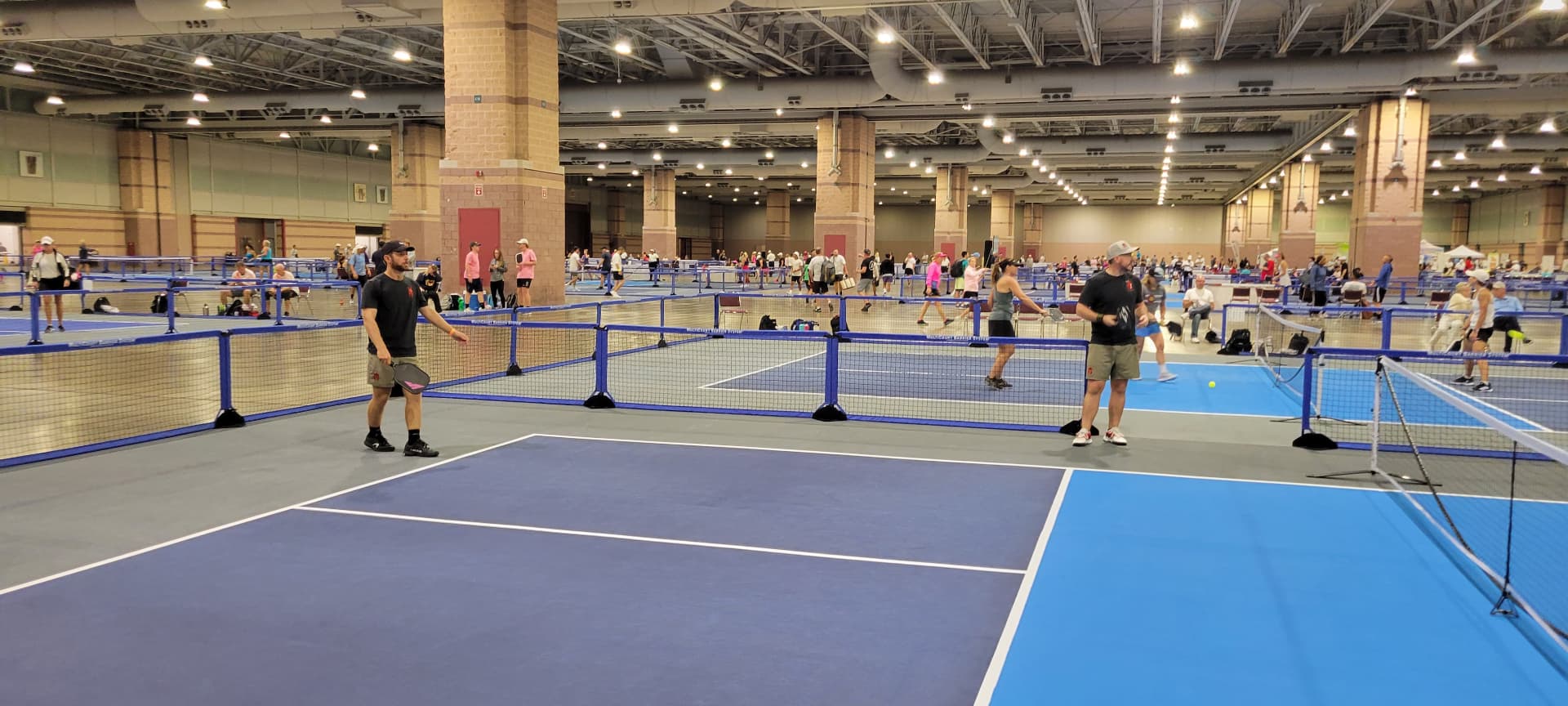
State fairs and county fairs can add pickleball as a staffed open-play activation on an approved hardscape pad — asphalt lot, exposition apron, or closed parking hardstand — usually one or two courts for midway stations, sponsor villages, youth-program blocks, and pre-concert amenities. This is turnkey court rental for fair marketing teams and the agencies that buy fairground footprints, not a permanent recreation pour through the midway.
Why fairgrounds add a physical event block
Fair calendars already mix agriculture, entertainment, food, and sponsorship. Guests move from barns to rides to grandstands — and event managers still look for one activity that feels active without competing with the midway for soft ground. Pickleball fits when the learning curve stays short and the court sits on a pad fairgrounds ops has already approved for temporary structures.
That is also why experiential agencies and presenting sponsors brief fairgrounds: the venue draws multi-day foot traffic, the photo backdrop is strong, and a reversible court activation does not require the fair to pour a slab. State fairgrounds routinely rent parking lots, exposition buildings, and outdoor hardstands for sporting and temporary events outside the fair itself — the same pad logic applies when pickleball is the activity inside a fair week.
If your project is really a one-afternoon downtown street fair rather than a multi-day fairgrounds program, start with city festivals and street fairs. For music festival pads with stage and camping adjacency, see music festivals and concert activations. Farmers-market plazas that share outdoor vendor patterns sit on farmers markets and public markets.
Where it fits on a fair calendar
Midway / family-zone station
Daytime open play beside rides and kids attractions — high throughput rotations, not a seed bracket that traps the same eight players all afternoon.
Sponsor village / presenting-sponsor footprint
A branded court inside a contracted sponsor zone with sampling and giveaways — creative locked early so wraps arrive before fair open.
Ag education / youth-program block
A timed morning or afternoon clinic for 4-H, FFA, or school groups on an approved hard pad away from livestock barns when the fair wants a physical education moment.
Evening concert / grandstand adjacent amenity
Pre-show open play that clears before gates and sound checks reclaim the apron — short window, clear teardown clock.
Why the format works for fair audiences
Fairs already stack rides, livestock, concerts, and sponsor booths. A staffed open-play block gives families and teens a shared activity that holds attention longer than a photo wall alone.
State and county fairs often run for a week or more. A court that stays down across fair days is a different ops brief than a one-afternoon street closure — freight, overnight security, and morning reopen all matter.
Fair marketing teams, presenting sponsors, and experiential agencies already buy footprints in sponsor villages. A court is a scoped activation on a hard pad the fairgrounds already use for tents and stages.
One court serves a busy midway station. Two courts or a skills-plus-open-play pair fit larger sponsor villages when simultaneous players justify the footprint.
Planning a fairground activation?
Share the approved pad, fair dates, leave-down vs daily teardown, and expected simultaneous players — we'll scope a court block that respects freight and overnight rules.
Site care comes before the sponsor deck
- Get written approval from the unit that owns the pad — fairgrounds ops, sponsorship, or event services — before promoting the court in fair marketing.
- Prefer asphalt lots, exposition aprons, and closed parking hardstands over soft midway grass and livestock barn edges.
- Map curb → gate → pad with fair freight rules: many grounds limit truck hours around livestock moves, concert load-in, and overnight security.
- Confirm overnight leave-down vs daily teardown — multi-day fairs often prefer leave-down with morning reopen checks.
- Name weather and dust plans early — fairgrounds cancel outdoor blocks for storms and sometimes for high winds that affect tents and rides.
- Decide whether play is free to fair ticket holders, timed-ticket, or sponsor-guest-only; that choice changes staffing and queue design.
Sequence approvals with our site assessment guide and permits and permissions guide. Surface and subfloor choices for lots versus soft midways are in surface and subfloor requirements. Heat and hydration for summer fair days sit in heat safety and hydration planning. Weather contingency planning is in weather contingency plan.
Pads that usually work (and ones that usually do not)
Closed parking hardstands, exposition-building aprons, asphalt lots already used for tents, and sponsor-village plazas are the common yes pads when flat and stable. Soft midway grass, livestock barn edges, steep crowns, and paths too narrow for freight are the common no pads — or they need an explicit base conversation the fair has already priced. Measure the clear rectangle after vendor stakes, ride egress, and emergency vehicle access, not the full fairgrounds acreage on a visitor map.
Venue tradeoffs for large outdoor sites overlap event venue selection. If the activation is really a stadium fan zone rather than a fairgrounds pad, see sporting events and fan activations and stadium and arena plazas.
A sample fair day with a court built in
Pre-fair or early morning: truck arrives during the fairgrounds' approved freight window; courts build on the asphalt apron before public hours. Mid-day: staffed open play for peak family traffic while barns, rides, and food service continue elsewhere; paddles handed out, short demos for first-timers, no seed bracket. Evening: either leave-down under overnight security for the next fair day, or teardown before a grandstand load-in reclaims the apron. Sponsor villages often run the same footprint for the full fair week with morning reopen checks instead of a full daily rebuild.
That build is closer to a multi-day festival leave-down than a corporate campus happy hour. Court count follows peak simultaneous play — see how many pickleball courts do you need — and staffing follows drop-in ratios in our staffing guide. Setup and teardown windows are in setup and teardown timeline.
Sponsors, agencies, and fair marketing teams
Presenting-sponsor footprints and agency-hosted villages are often the cleanest fair briefs: a known pad, a contracted window, and a single creative approval path. Fair-owned marketing stations need clearer queue rules and sometimes a fair-ticket scan at the court entrance. Youth-program blocks should stay timed and low-pressure so barn schedules and school buses stay intact — think amenity station, not tournament.
Agencies white-labeling a fair activation for a brand client should also read white-label for event agencies and brand activations and product launches. Theme-park and amusement pads that share high-throughput guest flow sit near theme parks and amusement parks.
Mistakes that flatten a fair court activation
Promising a court on soft midway grass
Marketing maps love green polygons between rides. Soft grass and uneven midways usually need a subfloor or a different pad. Start with hardstands the fair already uses for tents.
Ignoring livestock and concert freight windows
A court that fits the apron still fails if load-in crosses a barn move or blocks grandstand truck paths. Walk the freight path with fairgrounds ops before the sponsor deck goes out.
Sizing courts to total fair attendance
A fair can draw huge daily attendance while one court still serves a station. Size to simultaneous players in the peak hour, not gate count.
Treating a week-long fair like a two-hour street festival
Daily reopen, overnight security, dust, and morning cleaning are real. Leave-down briefs need different staffing and inspection than a same-day street fair teardown.
What to send in the first quote request
- Fairgrounds name, city, and exact pad (lot name, expo apron, sponsor village zone)
- Fair dates, daily open hours, and load-in / leave-down / teardown windows
- Court count and format (open play, skills, youth clinic, hospitality)
- Surface photos, approximate clear dimensions, and slope/drainage notes
- Branding: none, fair marks, or sponsor wraps (and art deadlines)
- Overnight security contact and any house labor or vendor rules
- Weather plan and whether an indoor expo fallback exists
- Who signs the contract and who is on-site day-of
Cost drivers without fake package prices sit in our court rental cost guide. Then request a quote with the brief above so numbers match your fairgrounds instead of a generic blog figure.
Turnkey activation vs owning a portable fair amenity
A dated fair activation is usually temporary and staffed, then torn down after the fair week. Owning a portable court is a recurring fairgrounds amenity with storage between seasons and off-season event reuse. Say which job you need on the quote request. For portable court buys and fairground pad ownership questions, see PickleCourt USA's festival and fairground pickleball court guide.
Who typically books this
Fair marketing and sponsorship directors, presenting-sponsor brand teams, experiential agencies and DMCs buying fairground footprints, and fairgrounds event-services leads coordinating multi-day leave-downs. We scope for whoever owns the pad and the credential list. We do not cold-target pickleball brands, clubs, or shops as the customer.