Agency & DMC Partners
White-label pickleball activations for event agencies
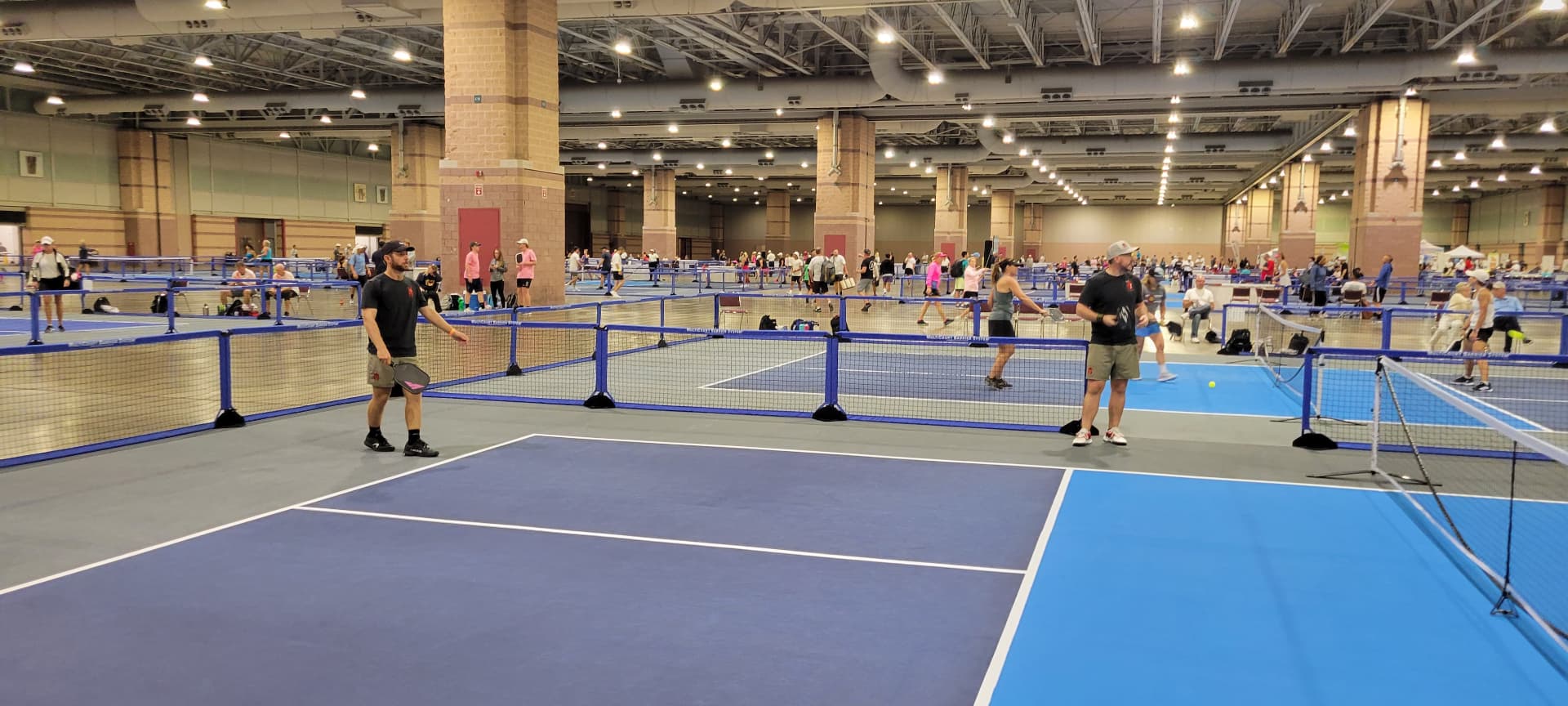
Event agencies, DMCs, and experiential shops can white-label turnkey pickleball court activations — your brand on the client brief, our courts, crew, and teardown in the background. A single-court one-day activation typically begins around $10,000; multi-court and multi-day programs move into mid-five and six figures and are quoted from scope, not a flat per-guest menu. This page is for producers who already own the relationship and need a specialty partner who will not compete for the credit.
Why agencies white-label pickleball instead of building it in-house
Pickleball is showing up in corporate RFPs, brand activations, and incentive programs because guests can learn it in minutes and it photographs well. That demand does not mean every agency should invent a sports division. Court systems, surface protection, pro hosts, and clean strikes are a specialty trade — the same way you already subcontract staging, catering, or specialty fabricators when the brief needs them.
White-label works when the client experience should feel like your activation. Guests remember the agency that hosted them, the brand that sponsored the plaza, or the DMC that made the destination feel effortless. They do not need a fourth logo on the barrier wrap. Industry partnerships in the pickleball experiential space already follow this pattern: portable court providers pair with marketing and production partners so brands get a complete experience without assembling vendors from scratch.
This is not a consumer "find a court" page and it is not a software white-label for leagues or scoring apps. It is a B2B partner model for adding pickleball to an event when you already sell the larger program.
Who this partner page is for
If you are the end client looking for a direct booking, start on our quote form or a vertical page that matches your event type. This URL is for the agencies and destination partners who sit between us and the brand.
You already own the client relationship, creative, and F&B — you need a reliable court build, pro staffing, and a clean strike so pickleball does not become your team's side project.
Incentive travel and multi-city programs need local execution that shows up on time in markets you do not staff yourself. White-label keeps your destination brand front and center.
You sell the concept and the brand moment; you need a court system that can live inside a larger footprint without competing for the client's attention as a named vendor.
Clients ask for something guests can do between sessions. A white-label court package lets you expand the SOW without inventing a sports division overnight.
What we carry so your producers do not have to
The point of a white-label partner is that pickleball stops being an unpaid science project for your account team. You keep creative, client communication, and the overall show. We bring the pieces that are easy to underestimate until load-in day.
Single-court hospitality builds through multi-court plaza and convention footprints. Indoor and outdoor packages, nets, barriers, and surface protection matched to the venue — not a one-size kit forced into every space.
Install, play hosts, and strike staff who take direction from your showcaller. Badging, radio channels, and call times follow your run of show — not a parallel operation.
Your agency or your client's marks on wraps and photo moments. We do not need a logo wall unless the brief asks for it. The guest experience should feel like your activation.
Once the partnership model is set, repeating cities and tours reuse the same scope language, insurance package, and load-in checklist. See also our national multi-city activation tour guide.
Staffing detail lives on our event staffing guide. Surface and subfloor constraints are covered in surface and subfloor requirements. Use those when your technical director needs specifics; use this page when the commercial question is partnership structure.
Engagement models that keep you prime
There is no single "white-label" contract. The right model depends on how you sell, how the client buys, and whether pickleball is a line item you already promised or an additive idea mid-planning.
- Silent subcontractor
You hold the client contract. We appear on your vendor list and invoices as a specialty build partner. Guests never see our brand unless you want them to.
- Co-bid on named RFPs
When the client already knows pickleball is required, we help you price the court line items accurately so you are not guessing from blog averages. You stay prime.
- Preferred partner rate card
For agencies that book repeatedly, we lock a clear scoping framework (court count, staffing ratios, travel bands) so your producers can estimate earlier in the sales cycle.
For incentive travel and destination work specifically, pair this model with incentive travel and DMC programs. For brand-led experiential briefs, brand activations and product launches covers the guest-facing creative angles your team will still own.
Scoping a partner activation?
Tell us you are an agency or DMC, the client vertical, court count, and city — we will price a silent build that fits your SOW.
When white-label is the right call — and when it is not
Partnership language is useless if the brief is wrong. Use the lists below as a producer gut-check before you add pickleball to a deck.
- You already won the client and need a specialty partner who will not pitch around you.
- The activation must feel owned by your agency brand or the end client's brand — not a third logo fighting for credit.
- Load-in windows are tight and you need a crew that has done plaza, rooftop, ballroom, and convention floors before.
- You are selling a season or a multi-city tour and cannot rebuild a court vendor relationship in every market from scratch.
- The client wants a permanent poured court or a construction project — that is a different category of work.
- You need only a portable net and tape for a backyard birthday — consumer kits are outside this B2B partner model.
- The brief is actually a league platform, registration software, or white-label scoring app — we build physical court activations, not SaaS.
- Nobody on the agency side can own site access, permits, or F&B adjacency — we need a clear point of contact at the venue.
How pricing works on partner jobs (without inventing menu rates)
Agencies need early estimates to win work, and they also need honesty about what moves the number. We publish one public anchor so decks stay grounded: a single-court one-day activation typically begins around $10,000. Multi-court and multi-day builds move into the mid-five figures; larger hospitality programs and national tours can reach six figures. Everything else is quoted from the brief.
The usual drivers are court count, indoor versus outdoor surface packages, staffing ratios (hospitality hosting costs more per guest than open-play refereeing), travel and lodging for crew, branding wraps, overnight staging, and venue access friction. Our court rental cost guide walks through those drivers for any buyer. On partner jobs we also align margin language with how you mark up specialty vendors — so your internal estimate and our quote do not fight each other in the client meeting.
Do not paste invented per-guest averages from random blogs into an RFP response. If the client asks for a number before site photos exist, give a range tied to court count and flag what still needs a site assessment — see event site assessment and how to write an RFP for a pickleball event.
Run-of-show integration: your call sheets, our crew
The fastest way a specialty vendor creates chaos is by inventing a parallel production track. We work the opposite way. Your showcaller owns the day. Our leads take call times, radio assignments, meal breaks, and badge rules from your packet. Install windows are negotiated against the same load-in map your staging and catering teams already use.
Practically, that means we need a few artifacts early: floor plans with the court footprint marked, power and lighting notes if play runs past dusk, neighbor or noise constraints for outdoor plazas, and a clear decision on whether the court is open play, hosted clinic, or VIP-only. Our run of show template and setup and teardown timeline give your producers a starting structure to paste into the larger show bible.
Producer tip: put the court strike on the same critical path as soft-goods and catering teardown. Courts that "can come up later" are how plazas miss overnight reset windows.
Branding, insurance, and client communication
Silent branding is the default for white-label work: barrier wraps, paddle demos, and photo backdrops carry your client's marks (or none). If a case study later requires a credit line, we agree on language after the event — never by surprising the guest with a competing logo on site.
Insurance follows the prime contract. We issue certificates naming your agency and the venue as additional insureds when the venue packet requires it, and we carry the liability categories typical for temporary sports builds. Your legal team should still review the mutual indemnity language the way you would for any specialty subcontractor — pickleball is not exempt from the same diligence you apply to staging vendors.
Client communication stays on your letterhead. We can join technical calls as "the court partner" when your producer wants depth on bounce, runoff, or ADA circulation — see ADA accessibility for event courts — but we do not send unsolicited decks to your account.
Trust rule: if a conflict of interest appears (same brand, competing agency), we flag it before we accept the work. Protecting the partner channel matters more than one opportunistic booking.
Verticals agencies commonly white-label with us
The court kit is similar; the guest brief is not. Agencies usually arrive from one of these lanes:
- Corporate hospitality and client entertainment — small curated lists, hosted formats; see client entertainment and hospitality.
- Conference and trade environments — booth add-ons and networking receptions; see trade show booth activation and conference networking reception.
- Stadium, festival, and fan activations — higher volume, tighter credentialing; see stadium and arena plazas and city festivals and street fairs.
- Multi-day conference programming and national tours — cadence and freight matter as much as the first install; see multi-day conference programming and national multi-city activation tour.
Scope checklist before you send the partner brief
Copy this into your internal kickoff note. Missing answers are what turn a clean white-label job into a week of clarification emails.
- Who is prime with the client (you) and who is silent (us) — written in the SOW.
- Court count, indoor vs outdoor, and whether barriers / wraps are required.
- Guest profile: open play for hundreds, hosted clinic for VIPs, or mixed.
- Load-in / strike windows and any overnight staging rules.
- Insurance certificates naming your agency and the venue as additional insureds.
- Branding rules: silent, co-branded, or client-only marks.
- Whether this is a one-off or the first date of a tour / recurring series.
- Who owns weather contingency and cancellation language with the client.
What success looks like for an agency partner
Measure the specialty vendor the way you measure a good caterer or staging house: on time, on brief, invisible to the guest as a competing brand, and easy to rebook. Your account team should spend their energy on the client relationship — not on teaching themselves court tape chemistry at 11 p.m.
Soft signals that the partnership is working: your producers reuse the same scope language on the next job, the client asks to "do the pickleball thing again" without naming a third-party vendor, and strike clears the venue packet without a damage claim. Hard signals to fix fast: crew that ignores your showcaller, branding that arrives with the wrong marks, or quotes that cannot explain what moved the number.
When you are ready to put a real city and court count on paper, start with get a quote and note that you are an agency or DMC partner in the message. We will reply with a partner-shaped scope, not a consumer pitch.