Bridal Expos & Wedding Shows
Pickleball for bridal expos and wedding shows
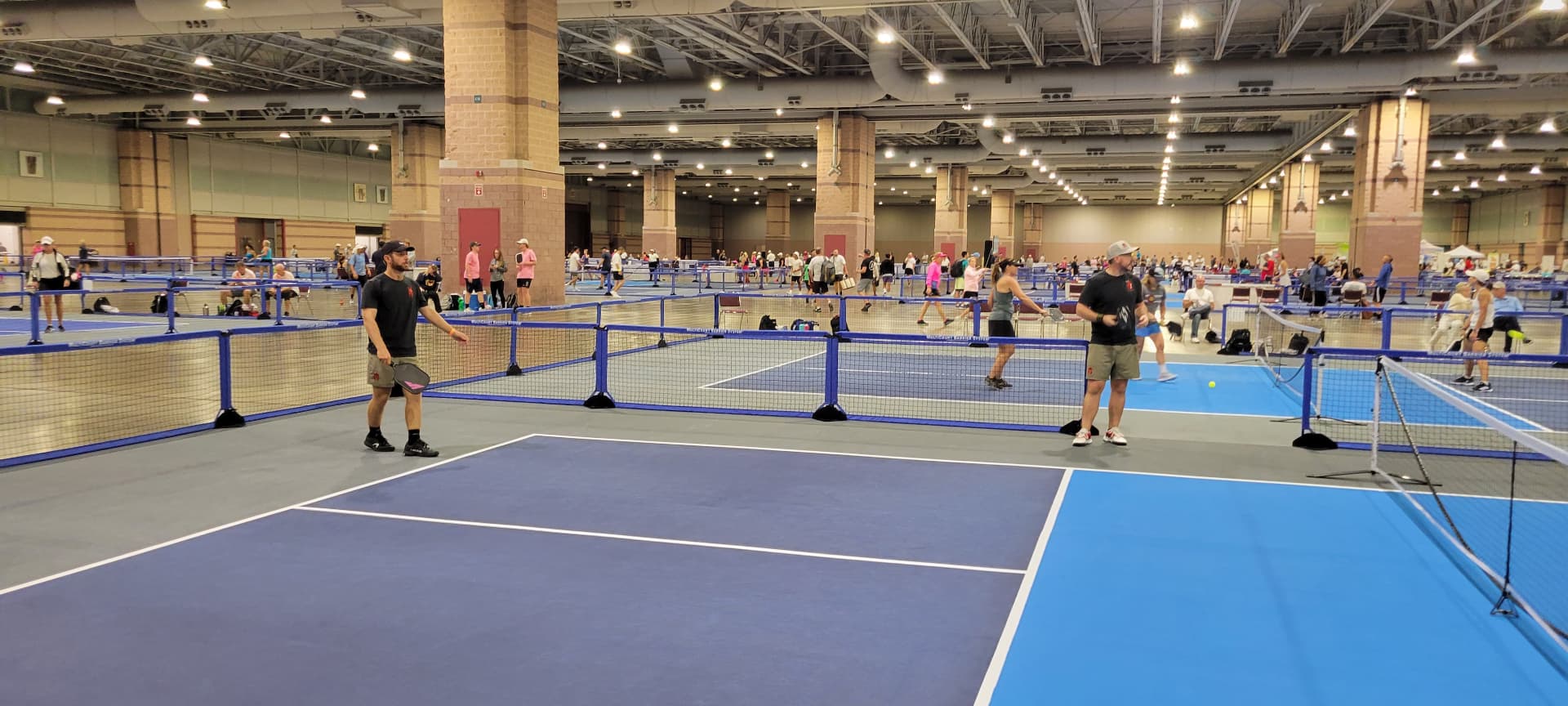
A turnkey pickleball activation gives a bridal expo or wedding show a physical stop couples actually use — courts delivered, built, staffed, and removedso producers and agencies do not become equipment operators. Rollout courts install on hotel ballrooms, convention aisles, prefunction foyers, tented plazas, and overflow lots when the site allows. This page is for show producers, experiential agencies, DMCs, and meeting planners. It is not a directory of public courts, and it is not the couple's wedding-day or rehearsal-dinner booking.
Why a wedding show is a different brief from a wedding
Couples who buy a ticket to a bridal expo are shopping. They walk a floor of venues, photographers, planners, florists, bands, and caterers, usually with a parent or a partner, usually in the shoes they wore to the hotel. The producer's job is dwell: keep that couple on the floor long enough that vendors earn the booth fee. A seated fashion show does some of that work. A cake station does some of it. A staffed court does a job those stops do not — two people play together for a few minutes, then go back to the aisle with a photo and a reason to mention the sponsor who put the net up.
That is not the same job as putting a court on a ceremony lawn or beside a rehearsal dinner. Those bookings belong to a private guest list, a fixed timeline, and a planner who already owns the room. Wedding-show bookings belong to the exposition: ticket hours, exhibitor credentials, a fashion runway that cannot be blocked, and a hotel that wants its ballroom back for a breakfast the next morning. If you are scoping the celebration itself, say so on the quote form and we will treat it as a private event. If you are scoping the show, stay on this page.
Why bridal expos are a strong fit
A shared activity for couples who came to shop, not to spectate
Bridal expos already pack venues, photographers, planners, and florists into aisles. A staffed court gives engaged couples something they do together between booth visits — short rotations that photograph like a date, not a carnival game parked in a fire lane.
Works for first-timers in dress shoes and parents walking the floor
Wedding-show crowds mix couples, parents, and wedding parties. A sport playable in the first few minutes keeps that mix on one pad instead of splitting the zone into athletes and watchers. Hosts set the pace; nobody needs a club membership to pick up a paddle.
Installs on pads that were never built as courts
Hotel ballrooms, convention-hall aisles, tented plazas, and parking hardscape are event floors — not sport surfaces. A rollout court with the right subfloor and floor protection plays on those pads, then clears so the next seminar, fashion segment, or load-out can reclaim the rectangle.
Reads as wedding experiential, not a random sports rental
Branded nets, hosts running a short beginner clinic, and a timed open-play window match how agencies already brief consumer shows. Show producers and venue sponsors are judged on dwell and photos couples actually post — not only on whether equipment arrived.
Program slots that match a wedding-show calendar
Producers already own the ticket calendar, the runway, and the sponsor deck. What they usually lack is a participatory block that does not fight booth traffic or turn the ballroom into a sports club. These are the slots we see on bridal expos:
Main-aisle open play during public show hours
Producers already program fashion segments, cake tastings, and planner seminars to hold traffic. A staffed court beside a high-traffic aisle gives ticket holders a participatory stop that still clears for the next programmed block — timed open play, not a seeded bracket that scares casual couples off the pad.
Venue and hotel sponsor hospitality
Ballrooms, country clubs, and hotels buy booths and sometimes title sponsorship at bridal expos to book tours. A court on an adjacent prefunction pad or branded plaza gives those sponsors a reason for a couple to stay: a short walkthrough, then timed play while the hospitality window runs.
Photo and content blocks for vendor partners
Photographers, planners, and publications already shoot lifestyle frames on the show floor. A short clinic beside that zone gives couples a shared activity on camera — then the court clears so the next vendor demo reclaims the space. We do not invent engagement metrics for those frames.
VIP couple evenings and trade-preview hours
Some wedding shows split public ticket hours from a planner or vendor preview. A court on a closed aisle or hotel terrace keeps that smaller group engaged between appointments. Hours, credentials, and who is allowed on the pad belong in the brief.
Tented plaza and parking-lot overflow when the ballroom is full
Spring shows often spill outside the hotel or hall. A branded court on stable hardscape gives the producer a second engagement zone that still rolls up when the outdoor block closes. Soft lawn and loose gravel need a different base conversation.
Multi-city wedding-show tours with standing vendor language
Regional producers and venue brands running a season of expos often need the same activation language city to city. Standing specs, a consistent court count, and repeatable load-in windows keep the story identical without reinventing logistics at each hotel.
Scope a bridal expo or wedding-show activation
Pad, show hours, guest mix, and branding — we handle delivery, build, staffing, and teardown.
What to put in the brief
A clean brief prevents the two failures we see on consumer wedding shows: a court that blocks a runway, fire lane, or load-out door, and a hospitality block that looks like a sports rental dropped into a ballroom. Send these six items with the first quote request:
Program goal in one sentence
Aisle dwell, venue-sponsor hospitality, a photo block, a VIP couple evening, an outdoor overflow pad, or a multi-city tour stop — the format follows the goal. Write the outcome before you ask for a court count.
Pad photos and clear dimensions after show ops
Ballroom, expo aisle, prefunction foyer, tented plaza, or overflow lot. Photos plus the clear rectangle after booths, fashion runways, fire lanes, ADA paths, and load-out routes prevent a change order the week of the show.
Show hours, fashion segments, and reset windows
Which hours the court is live relative to public tickets, vendor preview, and any stage program that needs quiet or a clear sightline. Exclusive pad versus shared with a tasting station. Adjacency belongs in the brief.
Credentials, union rules, and docks
Public floor versus exhibitor credentials, who sponsors vendor badging, union load-in if the hall has it, dock windows, and floor protection on finished ballroom or convention floors. We will not invent a credential we do not have.
Guest mix and footwear
Couples, parents, planners, and media share the floor. Most guests arrive in street shoes or dress shoes, not court shoes. That drives host count and rotation length more than raw ticket counts.
COI, facilities contacts, and floor protection
Hotel or hall contacts, certificate of insurance and additional-insured language the venue requires, floor protection on carpet or finished wood versus outdoor asphalt, overnight storage if the show is multi-day, and a rain backup if any play is outside.
Ops pages that usually sit beside a wedding-show brief: site assessment, surface and subfloor requirements, vendor checklist, and run-of-show template.
Wedding show versus the wedding day
Planners sometimes paste a wedding-day court into a show RFP, or the reverse. The product family overlaps. The buyer and the floor do not. Use this comparison before you write the scope:
| Decision | Bridal expo / wedding show | Wedding or rehearsal dinner |
|---|---|---|
| What the booking is | A consumer wedding show or bridal expo: vendors selling services to couples on a ticketed floor. | The wedding day, rehearsal dinner, or welcome party itself — a private celebration, not a vendor exposition. |
| Who usually buys | Show producers, experiential agencies, DMCs, meeting planners, and venue sponsors. | The couple, a wedding planner, or a private-event host at the celebration site. |
| What the pad has to do next | Return to booths, a fashion segment, a seminar, or overnight reset. | Return to dinner, dancing, or a ceremony lawn the same evening. |
| How guests show up | Street clothes, shopping bags, and short attention between booths. | Wedding attire, a fixed guest list, and a host who already knows the room. |
Closely related show verticals, not substitutes for this page: trade shows and expos, home and garden shows, convention centers and trade halls, and hotels and resorts. Agencies packaging the show inside a larger destination program should also read incentive travel and DMC programs.
Ballroom floors, carpet, and heels
Wedding shows live in hotels more often than home shows do. That changes the surface conversation. A finished ballroom floor or a carpeted prefunction foyer needs protection under a rollout court. A concrete loading court or an asphalt overflow lot usually does not, but it does need flatness and a plan for dresses, strollers, and dress shoes at the edge of the pad. Tell us which surface you actually have. We will not promise play on a soft ceremony lawn because a rendering shows grass beside the tent.
Guest footwear is part of programming, not a footnote. Hosts should expect street shoes and the occasional heel, and they should be ready to offer a simple rotation that does not require a wardrobe change. If the sponsor wants a styled photo moment, build a short window for it instead of leaving the court as an unstaffed toy. Dimensions guidance lives on our court dimensions for events page. Always measure after the booth map, not from the empty-room drawing.
Load-in beside a fashion runway
Bridal expos compress vendor move-in, a runway or stage, public hours, and a hard out into one or two days. That is a tighter ops posture than a corporate field day on a closed lot. Dock windows, union rules where the hall has them, and a path that does not cross the runway during rehearsal all belong in the first site call. If the court has to strike before a fashion segment and reset after, say so. A court that can only be built once in the morning is a different quote from a court that must appear and disappear twice.
Insurance language for consumer shows is covered in our insurance and liability guide. Noise next to guest-room wings or a quiet seminar sits in noise levels and neighbor considerations. Staffing for mixed beginner crowds is covered in event staffing. For a planner-ready overview that is not show-specific, start with how to add pickleball to your event.
Who pays: producer, sponsor, or agency
Venue brands, hotels, and sometimes photographers or planners underwrite the court as hospitality or a feature sponsorship rather than asking the producer to absorb the full line. Branded nets, barrier graphics, and a named clinic window are the usual packages. We do not publish ROI percentages for those packages. For framing a sponsor conversation without invented math, see sponsorship packages and court rental cost, which explains the factors that move a number. It is not a bridal-expo price menu.
If the hotel or producer wants to own a portable court and reuse it across a season of shows — not hire a staffed weekend — that is a buy-or-rent product conversation, not this turnkey hire. See PickleCourt USA's bridal expo and wedding-show court guide and our permanent court versus event rental comparison. One-weekend staffed shows stay on this page.
Quote-only — no bridal package menu
We do not publish public package prices for wedding shows. Court count, hours, staffing, travel, floor protection on a ballroom, outdoor weather if the overflow pad is outside, multi-day posture, credentials, and branding all change the number. A one-court VIP hour in a prefunction foyer is a different job from a two-day aisle activation on a multi-city tour. Send the brief and we return a scoped quote. When pad photos and clear dimensions are in the first email, that quote usually comes back within one business day.
Producers running a season of expos usually ask for standing-vendor language so court count, surface, and staffing stay consistent from hotel to hotel. See national multi-city activation tours and how far in advance to book. Agencies who need RFP language for a producer packet can start from how to write an RFP for a pickleball event.
When to start the conversation
Wedding shows sell booths and title sponsorship months ahead. Ballroom holds and dock windows lock earlier than many planners expect, especially in hotel-heavy spring calendars. Start the court conversation when the sponsorship deck goes out, not the week the aisle map is printed. If the venue wants recurring programming across several consumer shows, also see our recurring programming guide.
The public pattern is ordinary: bridal expos and wedding shows put engaged couples and their families in a hotel or hall with rows of wedding vendors, and sponsors already buy feature space to capture dwell. That is why agencies and producers brief these sites. It is not a claim about any named show, any attendance figure, or any client on this page.
Who typically requests this
Requests come from five directions: a wedding-show producer scoping a feature aisle; an experiential agency building a participatory block for a venue or hotel brand; a DMC packaging couple or media hospitality around a regional expo; a meeting planner producing the show inside a hotel; and a ballroom or club buying sponsorship hospitality so couples book a tour. All five get the same build. The difference is who owns the invoice and who is the point of contact with hotel facilities during load-in.
What we will not do here: invent bridal package prices, publish ticket counts, name show contracts, invent credentials, claim noise ratings, or promise that a court books weddings for a sponsor. The product is a turnkey staffed court for a bridal expo or wedding show. Quote it like one.
Ready to scope the wedding-show activation?
Venue, pad, show dates, and guest mix — we handle delivery, build, staffing, and teardown.