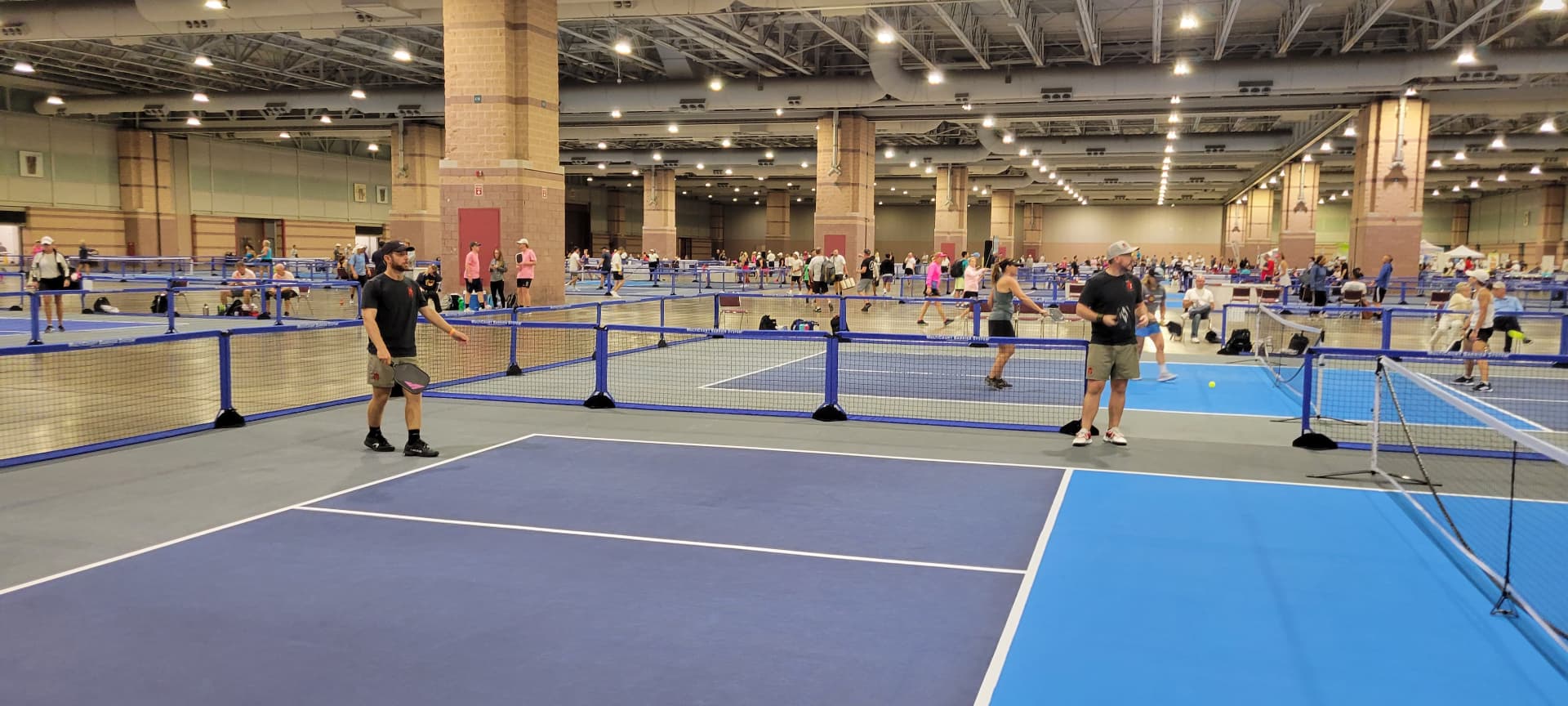
Venue Programming · Hotels, Resorts & Clubs
Recurring pickleball programming for hotels, resorts, and venues
A one-off pickleball activation is a single event day. Recurring programming is a standing weekly, monthly, or seasonal cadence — a clinic, league night, or open-play block — that a hotel, resort, brewery, or club runs on repeat to turn a court into a habit rather than a one-time draw. Properties with a dedicated court see average revenue lifts near $58,970, often recouping a $35,000 build in about seven months, according to Hotel & Leisure Advisors — and it's the ongoing programming, not the court sitting idle, that sustains that number.
What recurring programming looks like in practice
A recurring 60–90 minute instructional session, often priced per player (industry reporting cites roughly $40-per-person intro clinics at resort properties). Low-key, repeatable, and the easiest format to sustain because it doesn't require a bracket or a scorekeeper.
A standing round-robin or ladder league on a set night — think trivia night, but pickleball. Builds a habit and a regular attendee list, which is the actual retention mechanic, not the court itself.
Scheduled hours where guests or residents can drop in and play, with light staff supervision rather than full instruction. Cheapest to run, but generates the least foot traffic without some promotion or a paddle-lending station.
One larger, marketed event (often free-standing, sometimes sponsor-backed) that bookends a season of smaller weekly or monthly programming — the thing that gets covered and photographed while the recurring sessions keep the amenity alive between headlines.
How the build differs from a single event
A one-day activation is scoped once: courts, staff, and logistics for a single date, then teardown. Recurring programming asks a different question — where does the court live between sessions? A venue with room for a semi-permanent or seasonal install gets the lowest cost per session, because the build happens once and only staffing repeats. A venue without that space — a brewery patio doing double duty on weekends, a rotating event lawn — can still run a weekly or monthly series, but each session carries its own delivery and strike, which changes the math and usually points toward a monthly rather than weekly cadence.
The other real difference is consistency of staff. A single event can rotate crew without anyone noticing. A recurring series lives or dies on whether the same instructor shows up week to week — regulars come back partly for the sport and partly for the person running it, and swapping instructors is one of the more common, avoidable reasons attendance drops off a few sessions in.
Scoping a season, not just one day?
Tell us your venue, cadence, and format — we'll price a recurring series or a single flagship event, whichever fits.
When not to commit to a recurring series
Recurring programming works when there's a consistent point of contact promoting it internally — a resident-life coordinator, a hotel activities desk, a taproom manager who mentions it every week. Without that, a weekly clinic with declining turnout does more damage to the amenity's reputation than no programming at all; a court that once had six players and now has one reads as failed, not quiet. If you're not sure demand exists yet, start with a single flagship event — see our sponsor activation ROI guide for how to measure one — and convert to a season only once you've seen real turnout.
Where this fits by venue type
- Hotels & resorts — seasonal guest programming that differentiates the property and drives direct bookings around the amenity.
- Breweries & entertainment venues — a weekly or monthly night that turns a slow evening into a standing draw. See our pickleball for breweries and taprooms guide for patio logistics and the alcohol-and-liability specifics.
- Country clubs & private clubs — member leagues and guest-day programming layered onto an existing or converted court.
- Our active adult & 55+ communities guide — resident clinics and league nights that outdraw traditional clubhouse programming.
- Multifamily & apartment communities — a standing seasonal cadence for portfolios that find single-day resident events aren't enough on their own.
- Resort destinations working with a DMC on repeat incentive-travel business — see our incentive travel and DMC programs guide for how a standing court supports multiple client programs across a season rather than a one-off build.
Budgeting a season works differently than budgeting one day — see the activation cost guide for how single-event pricing is built, then share your cadence with us so we can price a series instead of a one-off. And whatever the format, staffing is the part that makes or breaks a recurring program — the event staffing guide covers the roles and ratios that keep a weekly session running smoothly. If the math above has you weighing a capital court build against staying on a rental series indefinitely, our permanent court vs. event rental comparison breaks down the construction cost ranges and breakeven math in more depth.