Brand Activations · National Programs
Planning a national multi-city pickleball activation tour
Brands are increasingly moving from one-off activations to multi-city touring builds, amortizing a single branded court investment across 10, 20, or more stops instead of building fresh for each market. Large-scale national tours can run from the low hundreds of thousands to $1 million or moreacross a full season, but the format scales down for a smaller regional run too. The planning that makes it work isn't the court itself — it's the routing, staffing model, and permit lead time across every city on the list.
Why brands are moving to the touring model
The shift toward multi-city touring activations over single events is one of the bigger structural changes in experiential marketing recently — brands are spreading fabrication and equipment cost across a season of stops instead of a single day. The appeal shows up in the participation numbers, too: research on experiential campaigns points to strong purchase intent and repeat-purchase behavior after someone participates in a branded activation, well above passive advertising exposure, and most attendees create social content on the spot — which is exactly the kind of organic reach a single-market event can't generate on its own.
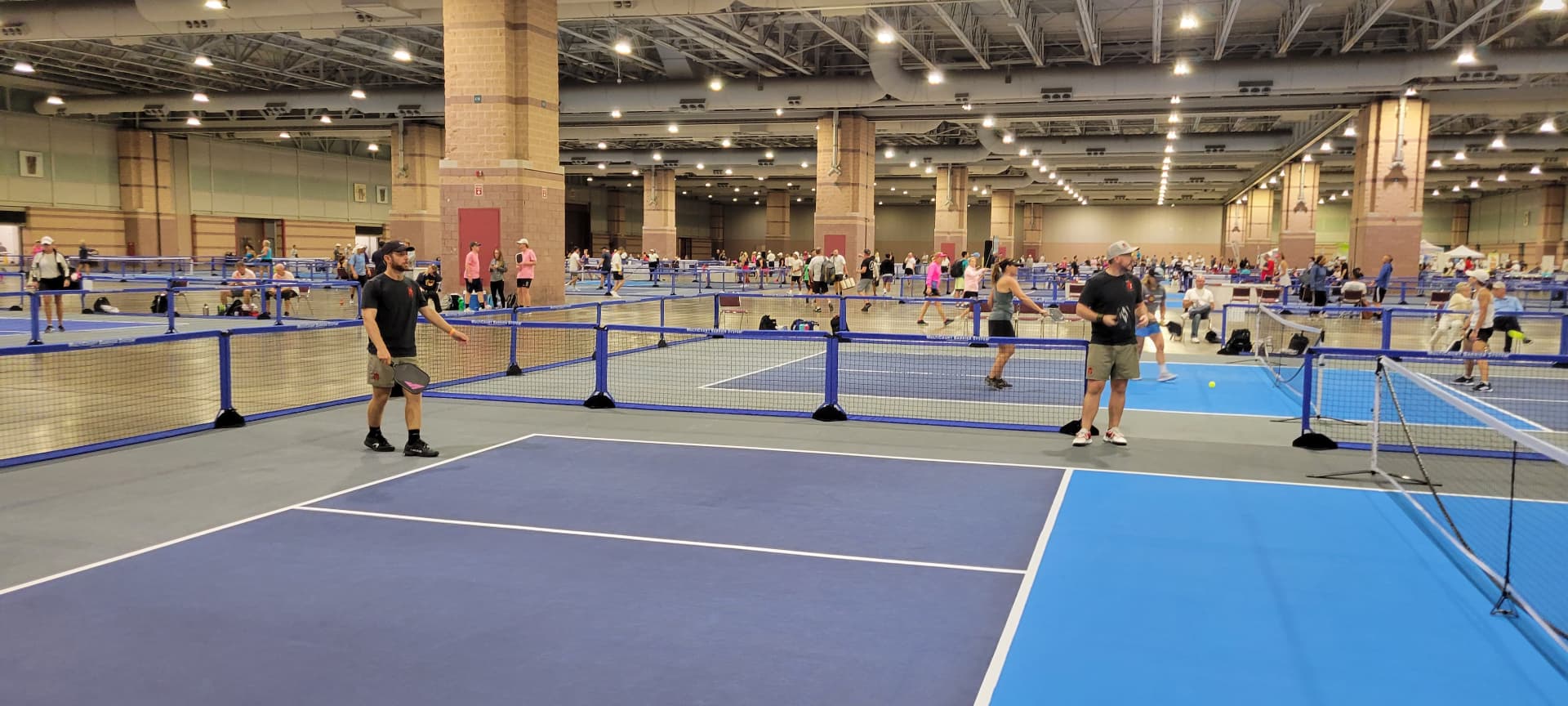
Pickleball fits that model well for a specific reason: the court itself is the draw. Unlike a booth or a sampling station, a branded court gets people playing, not just walking past — which is what turns a stop into content and word-of-mouth instead of a line for free swag.
What changes when you scale from one event to a tour
The same branded courts, nets, and signage travel city to city — rollout courts are built to pack down and reinstall on almost any surface, which is what makes reuse across stops possible in the first place.
A traveling crew keeps branding and play quality consistent but adds travel and lodging cost; local staffing per city is cheaper but needs tighter training and coordination to stay consistent.
Sequencing consecutive, geographically close cities cuts transport cost and dead time between stops — a scattered city list without a route plan quietly inflates the budget.
Every city and venue resets the clock — permit lead times and insurance certificate requirements don't carry over just because the equipment is the same.
Typical tour budget ranges
Large-scale national experiential tours — custom fabrication, full staffing, multi-week routing across many markets — can run from the low hundreds of thousands of dollars into $1 million or more for a full season, depending on scope, city count, and measurement requirements. That figure covers everything from court branding and logistics to city-by-city permits and staff. A smaller, regional tour — a handful of cities over a few weeks, simpler branding — scales down from there; we build the budget around your actual city list and format rather than a single number.
Mapping out a tour route?
Send us your target markets and timeline — we'll help you sequence it and price it as one program, not one-off events.
Building your city list
Convention and corporate-event density is a useful filter for a first tour, since those markets already have the venue infrastructure, foot traffic, and hospitality partners a touring activation depends on — cities like Austin, Denver, Nashville, Miami, Charleston, and Midwest hubs like St. Louis show up often on first-tour lists for exactly that reason. A route that clusters two or three of those in the same region on one leg of the tour is almost always cheaper to run than the same stops scattered across the map.
Not every stop needs to be a standalone build, either. Some of the most efficient tour legs land a stop inside a city's existing downtown street fest or public festival instead of sourcing a venue from scratch — the city has already handled permitting and foot traffic, and your crew just needs to build the branded footprint. Other stops work better as a freestanding product-launch pop-up timed to a local press or retail moment rather than tied to someone else's event calendar. A good route usually mixes both.
Start with one market, prove the format, then scale
- Run a single-city pilot first, ideally at a venue similar to what later tour stops will look like, so attendance and content results are a fair preview of the full tour.
- Lock your staffing model (traveling crew vs. local hire) before you build the full budget — it's the single biggest swing factor in per-stop cost.
- Sequence cities geographically wherever the marketing calendar allows, rather than chasing dates in whatever order they get approved.
- Start permit and insurance requests for every city as soon as the route is set, not city by city as you arrive — lead times vary and some jurisdictions move slowly.
Measuring a tour, not just a stop
A single event's success metrics — foot traffic, dwell time, leads captured — still matter at every stop, but a tour needs a second layer of measurement on top of that: which markets outperformed, whether a traveling crew or local staff produced better engagement, and whether the content generated at each stop is actually being reused across the tour's marketing rather than living and dying in one city's social feed. Building a simple per-stop scorecard before the tour launches — the same handful of metrics tracked identically at every market — makes it possible to compare cities honestly instead of relying on which stop happened to have the best weather.
It's also worth deciding upfront whether you're optimizing for a single best-performing flagship stop (worth extra budget and press push) or consistent performance across every market on the list — those are different tours with different staffing and marketing plans, and conflating them mid-route is a common way a tour's budget gets spent without a clear read on what worked.
A tour is still, at its core, a series of individual activations, so the fundamentals still apply — see our cost guide for how a single stop is priced, and our permits and insurance guides for what to expect city to city. If you're weighing pickleball against a trade-show booth format instead of a street or venue tour, our trade show booth activation guide covers that version, and our sponsor activation ROI page covers how to measure results once the tour is running — worth setting up before stop one, not after the season ends.