Planning Guide · Multi-Day Events
Pickleball programming for multi-day conferences and trade shows
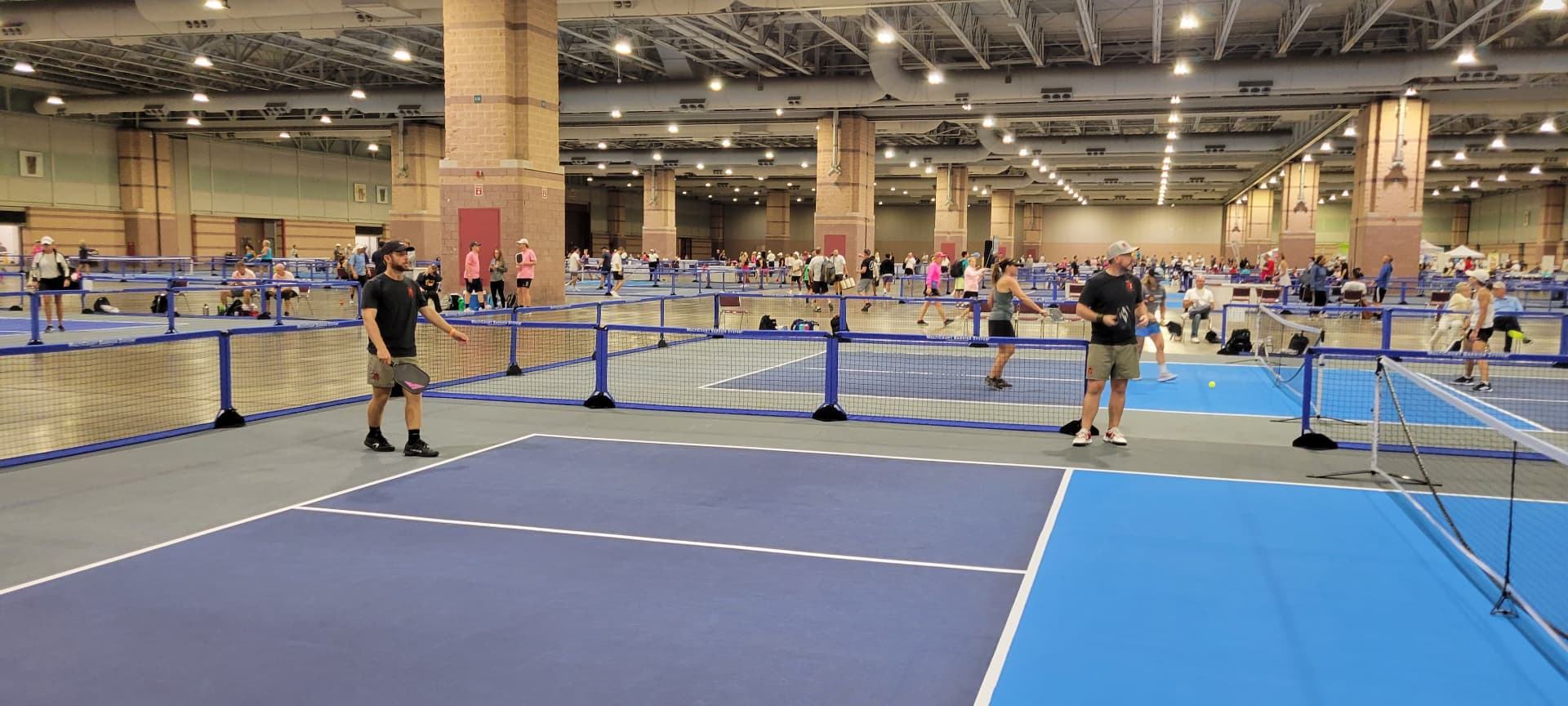
A conference running three to five days needs pickleball scheduled as a series of short blocks that repeat with variation — a low-pressure welcome-night session, short windows during lunch or afternoon breaks, a higher-energy evening social block, and a closing bracket — rather than one long run of show built for a single event day. Getting this wrong usually means the court either sits empty during a keynote or turns into an all-day staffing commitment nobody scoped for.
Why a multi-day event needs a different plan
A single-day corporate event or team-building day has one job: fill a defined block of hours with a good experience. A multi-day conference or trade show has a full agenda already competing for attention — keynotes, breakout tracks, exhibitor hours, and evening receptions — and pickleball has to fit into that agenda rather than stand alone. The planning question changes from "how do we run the day" to "which windows across three or four days is a court actually worth staffing, and which windows should it stay quiet." Our day-of run of show template still applies inside each of those windows — this guide is about the layer above it, deciding when those windows happen across the full event.
The four blocks that repeat across most multi-day events
Not every conference uses all four, but most multi-day programs we build draw from this same set of windows, adjusted for the agenda.
Low-pressure open play with a host running quick, mixed-skill rallies while attendees are still meeting each other. This is a mingling tool, not a competition — keep formats loose and let people drift in and out.
Short, staffed sessions during lunch or the afternoon break between general-session blocks. Attendees have 45-60 minutes; the format needs to let someone play a few points and leave without feeling like they interrupted a match.
The highest-energy window of a multi-day event — after sessions end and before or alongside a happy hour. This is where a round-robin or a light bracket works, because people have more time and want to actually compete.
A structured tournament on the last morning or afternoon, timed so winners can be recognized before people start leaving for flights. Announce the format on day one so people can decide whether to enter early.
Association annual meetings and franchise conferences are the two event types where this pattern shows up most often, because both run multi-day agendas with a mix of business sessions and social programming built in from the start. Our association annual meetings guide and franchise conferences guide cover how each typically slots pickleball into their specific agenda structure.
Have a multi-day agenda to fit this into?
Send us the schedule and we'll map the blocks that make sense — usually within 24 hours.
Staffing across multiple days, not just one
- Rotating staff shifts across the full run of the event, not one crew working every hour — a host who's fresh at 7pm on day three runs a better room than one who's been on since day one.
- A sign-up or badge-scan system for anything structured (brackets, clinics) so the same eight people don't dominate every session across multiple days.
- A decision, made before the event starts, on whether the court stays built overnight (with security or a locked area) or gets partially broken down each night — that changes labor and cost, and venues often have their own rules about what can stay on the floor overnight.
- One point of contact on the planning side who owns the pickleball schedule specifically, separate from the general A/V or general-session producer — a multi-day build has enough moving pieces that it shouldn't be a side task for someone already running the main stage.
The staffing plan for a three-day event isn't the one-day plan run three times — it's a different shape entirely, with rotation, overnight decisions, and a dedicated point of contact that a single event day doesn't need. Our event staffing guide covers roles and ratios in more depth for any single block within the schedule.
Scheduling around the rest of the agenda
- Get the general-session and breakout schedule before you finalize pickleball block times — the goal is to sit in the gaps, not compete with a keynote or a breakout track attendees are also trying to get to.
- Morning blocks before the first general session and slots during the official lunch or afternoon break are the easiest wins — attendees are already free at those times, so you're not asking them to skip something else.
- Avoid scheduling structured tournament play directly opposite an exhibit-hall-only block if your court is meant to also pull traffic through the show floor — the two goals can conflict.
- Build in a buffer block on the final day specifically for weather makeups or schedule slips from earlier in the event — a three- or four-day conference has more chances for something to run long than a single-day activation does.
If the event is also running exhibitor booths, coordinate the pickleball schedule with your show-floor plan so the two don't pull the same crowd in opposite directions at the same time. Our trade show booth activation guide and convention centers and trade halls guide cover load-in windows and floor logistics specific to that setting.
Budgeting for extra days
Court count and staffing drive most of a quote, but days on-site is the variable that moves the most on a multi-day build specifically. Each additional day adds court rental time and staff shifts, and — depending on whether the venue allows equipment to stay in place — either overnight security or a daily rebuild. None of that means a four-day conference costs four times what a one-day event costs; staffing and rental time are usually the only line items that scale directly with days, while delivery, initial build, and teardown stay closer to a single cost. See our full cost guide for the complete list of what drives a quote up or down, or send us your agenda for exact pricing.
When a simpler single block is the right call
Not every multi-day event needs the full four-block pattern. A smaller conference with a tight agenda and limited free time for attendees may only support one well-staffed evening block rather than programming spread across the whole event — trying to fill every day with court time when attendees genuinely don't have the free hours for it just spreads your staff thin across empty windows. Scope the blocks to the agenda's actual gaps, not to a template.