Event Playbook · Conferences
Pickleball for a conference networking reception
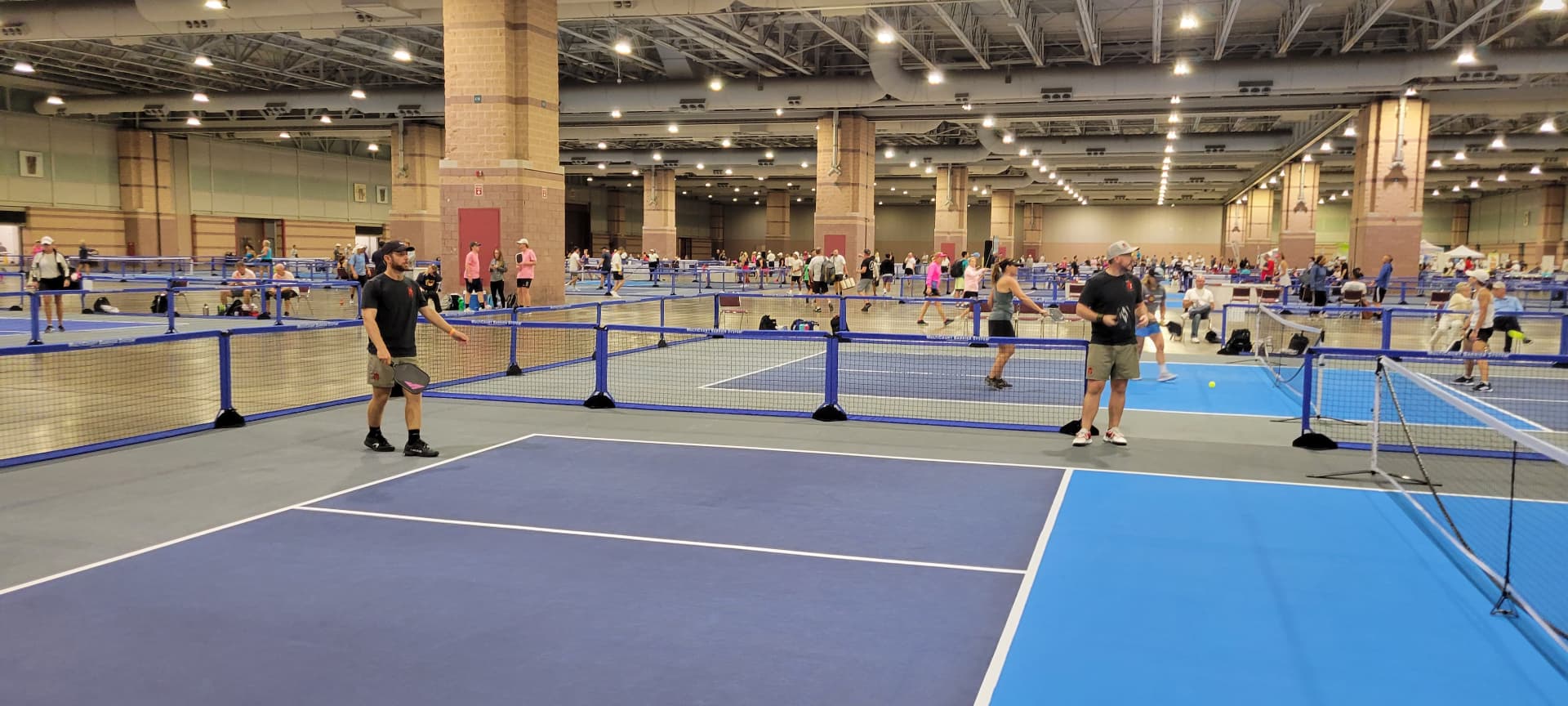
At a conference welcome reception or evening networking event, pickleball works as a casual icebreaker — short, capped rallies that give strangers an easy reason to talk, run during the standard cocktail-hour window rather than a scheduled bracket. It is a different build than a trade show booth activation: no badge scanner required, cocktail-attire-friendly, and positioned near the bar or lounge as one moment among several rather than the evening's anchor. A single-court turnkey activation typically begins around $10,000; multi-court or multi-day builds scale into the mid-five and six figures.
Why a reception needs a different build than a booth
A trade show booth activation runs during show-floor hours and is built around dwell time and lead capture at your exhibitor space — the goal is often a scanned badge. A reception is a different event entirely: an evening, standing, mingling format where the goal is connection between attendees, not a conversion metric. The court equipment can be the same; the format, staffing, and pacing change to fit cocktail attire and a short social window.
| Dimension | Reception icebreaker | Trade show booth |
|---|---|---|
| Goal | Icebreaking and mingling between attendees | Dwell time and lead capture at an exhibitor space |
| Timing | Evening cocktail / welcome window (often 60–90 minutes) | Show-floor hours across one or more days |
| Attire | Cocktail or business-casual; short, soft rallies | Badges and day shoes; can support longer play blocks |
| Metrics | Optional sponsor tracking; photos and social are the default | Badge scans, lead forms, and booth traffic are primary |
If your conference program also includes a show-floor footprint, our trade show booth activation guide covers the daytime, lead-capture version — union labor rules and all.
What makes it work as an icebreaker
Traditional networking rooms announce themselves — and that makes people guarded. A short rally flips the order: shared motion first, titles later. That is why planners reach for an activity that feels optional and social rather than another badge-scanning station.
Name tags and conversation cards still require someone to make the first move. "Want to hit a few?" is a lower bar than approaching a stranger cold at the bar — the rally does the introduction, then the conversation continues off-court.
Receptions are already standing events. A staffed court works like a photo booth or roaming activation: people step in for a few minutes, then step back out without committing the whole evening.
A branded court near the lounge creates natural photo and content moments for the conference recap, association social channels, and exhibitor sponsors without forcing a badge scan.
According to the Sports & Fitness Industry Association (SFIA) 2026 Topline Participation Report, 24.3 million Americans played pickleball in 2025 — up 22.8% year over year. Enough attendees have seen the game that a short walkthrough feels approachable, not exotic.
For participation context, see the SFIA U.S. pickleball participation overview (24.3 million players in 2025). The point for a reception planner is not the headline number alone — it is that enough attendees already recognize the game for a 90-second walkthrough to feel safe.
Pick the reception format before you pick court count
The biggest scoping mistake is copying a daytime tournament or booth build into an evening mixer. Start with when attendees have unstructured time, then choose a format that respects attire, food service, and the rest of the evening program.
Run a 60–90 minute staffed court during the first-evening cocktail window while attendees check in, grab drinks, and meet people they will see all week. Keep rotations short and optional so it never competes with registration, keynote, or dinner.
Useful when day-two energy dips and organizers want something besides another hosted bar. Same casual format, often with a sponsor wrap or association branding so the mixer still feels programmed.
A lighter open-play court after the final session or awards can reset the room. Skip scored brackets; keep glow or soft lighting if the house lights dim for the program. Pair with our glow-in-the-dark guide when night lighting is part of the brief.
For a broader build-vs-outcome framework, see how to add pickleball to your event. If the group actually wants scored heats and standings, that is a different product: our corporate tournament guide.
Planning a welcome reception?
Tell us your venue and attendee count — we'll scope a court that fits the reception window, not takes it over. Clear quotes usually within 24 hours.
Getting the evening logistics right
Indoor hotel and convention builds are the reception default. Weather is off the critical path, the court sits inside the same social room as the bar, and venues already understand temporary flooring. What trips planners is freight logistics, not the sport.
- Plan the staffed court window around the real reception block (often a 6–7 p.m. start), not the full evening program.
- Indoor is the default: hotel ballrooms and convention event floors take professional rollout courts without damaging finishes when coordinated with the house.
- Confirm freight elevators, load-in doors, union labor rules, and overnight teardown before the quote is final — conference hotels book tight windows.
- Measure the pad you can actually give the court (about 30 × 60 ft per court with run-off is comfortable), not brochure square footage that includes stages, bars, and buffet lines.
- Keep the format cocktail-attire-friendly: short capped rallies and a 60–90 second beginner walkthrough, not a competitive game that assumes athletic wear.
- Place the court near the bar or lounge sightline so people wander in between conversations — not in a separate room that forces a destination choice.
Space math and surface choices are covered in our court dimensions for events guide and indoor vs. outdoor rental comparison. Site walk details live in event site assessment.
Attire, staffing, and court placement
A reception court succeeds or fails on social design. Guests will not change into court shoes between sessions. Staff have to make the first rally feel safe, short, and optional.
Attendees arrive from sessions in dresses, heels, loafers, or dress shoes. Staff should expect beginners who will not change. Keep rallies short, soft, and optional — never pressure someone in formalwear onto a competitive point.
Hosts run a quick grip/serve/kitchen walkthrough, then rotate pairs so nobody waits awkwardly. An unstaffed court becomes a prop for the three people who already play; a staffed court becomes the line everyone walks past between drinks.
Like a passport-style sponsor activation, the court works best as something people discover while mingling. Tuck it beside lounge seating or the bar so curiosity does the marketing.
How many courts for a networking window?
Size to the reception dwell time and lounge layout, not total conference registration. Over-building leaves quiet courts that feel like unused décor.
The reception default. With staff running short rotations you can cycle a steady stream through a 60–90 minute cocktail window without looking empty or overwhelming the room.
Makes sense for large association welcome parties, split lounge layouts, or when you want simultaneous beginner and casual open-play lanes. Still keep the format soft — two casual courts beat one competitive bracket.
Rare for a single cocktail hour. More common for multi-hour mixer blocks, outdoor terrace takeovers, or multi-day hospitality lounges. Quote from real dwell time, not badge count alone.
For a deeper court-count framework across event types, see how many pickleball courts do you need.
Sponsor branding, photos, and optional tracking
Association sponsors and title partners often underwrite the welcome reception. Courts, nets, and signage can carry brand wraps without turning the activation into a hard-pitch booth. Soft string lights, branded backdrop panels, or glow paddles keep the court readable in photos if house lights dim for remarks. Power draws and fixture placement belong in the same conversation as AV; see power and lighting requirements and glow-in-the-dark pickleball. If a sponsor needs more than goodwill photos, our activation ROI guide covers how to measure it without killing the icebreaker tone. Promote the reception moment ahead of the date with event marketing so attendance builds before doors open.
Booking timeline, insurance, and what not to do
Treat the court like AV or catering once the welcome reception date and venue are locked. Short-notice builds can still work, but they limit branding, court count, and preferred load-in windows during peak conference weeks.
Send bar placement, stage, buffet, registration spillover, and the pad you can give the court. Surprises on surface, ceiling clearance, or freight path are what shrink an activation the week of the show.
Most hotels and convention venues require a certificate of insurance naming them as additionally insured. A turnkey vendor should carry coverage and issue the COI on your timeline — confirm that in writing when you book the room.
- Do not run a full tournament bracket during a networking reception — it stalls the room and leaves half the guest list watching from the sidelines.
- Do not hide the court in a back foyer with no foot traffic; empty courts photograph poorly and feel like a forgotten add-on.
- Do not treat the reception build like a trade-show booth: badge scanners and hard lead goals change the social tone and often kill the icebreaker effect.
- Do not skip venue COI and load-in confirmation because "it is just a welcome party" — hotels still need insurance paperwork and freight windows.
- Do not size court count to total conference attendance. A 800-person conference with a 75-minute reception often needs one well-staffed court, not four quiet ones.
Insurance and liability detail: event insurance and liability. Lead-time planning: how far in advance to book.
What a reception activation typically costs
A single-court, one-day turnkey activation typically begins around $10,000. Multi-court or multi-day builds move into the mid-five and six figures depending on court count, staffing, travel, surface, branding, and venue rules (including union labor). Every conference is quoted individually — usually within 24 hours — once you share date, city, venue type, and rough headcount. For a broader cost framing across event rentals, see pickleball court rental cost.
Where this fits next to related activations
Client hospitality dinners and hosted lounges are covered in client entertainment and hospitality. Multi-day sales kickoffs that include a welcome reception: pickleball for sales kickoffs. Company holiday parties use a similar cocktail-hour build: corporate holiday parties. Prefer a step-by-step vendor brief? Start with how to add pickleball to your event or how to write an RFP.
The Pickleball Events Co. delivers professional pickleball courts nationwide for conference welcome parties, networking receptions, field days, tournaments, and hotel events — set up, staffed, and removed so your planner stays focused on registration, programming, and the guest experience. Ready for numbers? Get a clear quote — usually within 24 hours.