Event Playbook · Grand Openings
Pickleball for grand openings and ribbon-cutting events
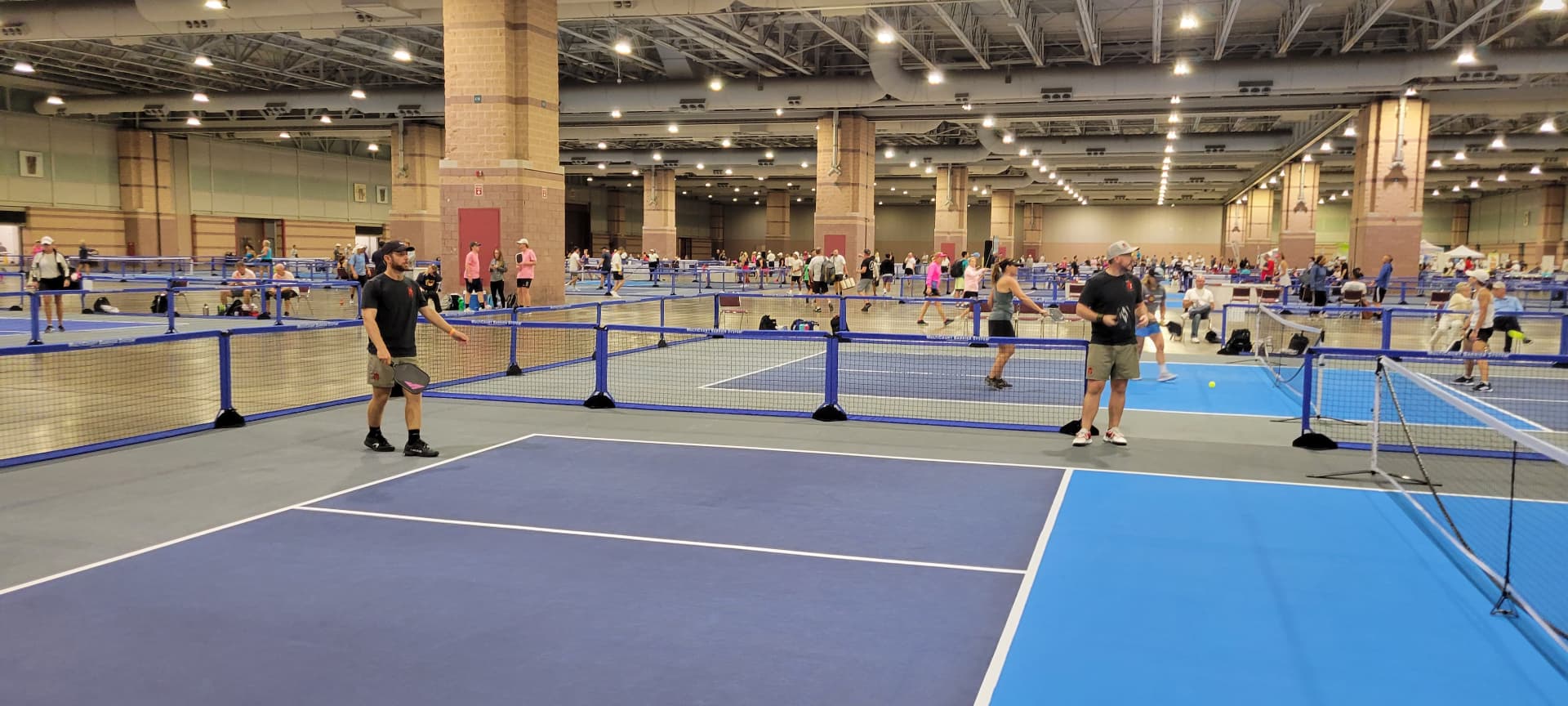
A turnkey pickleball activation gives a business grand opening or chamber-of-commerce ribbon cutting a draw that outlasts the ceremony itself — a live, participatory court in the lot, plaza, or sidewalk closure that pulls in foot traffic before and after the ribbon is cut, not just during a thirty-second photo. It fits retail stores, restaurants, breweries, gyms, dealerships, and community-facing corporate offices, and installs on nearly any parking lot or plaza footprint without needing dedicated event space.
Why a court outperforms a ribbon and a mic
Most grand openings still run the same format: a short program, a few remarks from local officials or the chamber, a ribbon, scissors, a photo. It's a fine ceremony, but it isn't an event — it doesn't give the neighbors and foot traffic walking by a reason to stop, stay, or come back. Grand-opening budgets already run into real money once signage, promotion, and staffing are counted, and a well-planned opening is treated as a multi-week campaign rather than a single-day photo op. An activation that's actually happening — not just being announced — is what turns that spend into a memorable first impression instead of a local write-up nobody outside the neighborhood sees.
What a court adds to the opening
A ribbon cutting is a photo that lasts thirty seconds. A court that's already active when doors open gives foot traffic something to walk toward and watch — or join — well before and after the ceremony itself.
Local news and a chamber write-up cover the ribbon. A branded court with people playing is what gets picked up organically on social by the people actually walking by — the kind of impression a standard ceremony doesn't generate on its own.
A rollout court installs on a parking lot, a plaza, a sidewalk closure, or an adjacent green space, so it fits a retail store, restaurant, gym, brewery taproom, or auto dealership without needing dedicated event space.
Grand openings pull neighbors, families, and local officials, not just an invited guest list. A low-skill-floor sport keeps a wide range of ages and abilities engaged instead of the activation being a spectator-only backdrop for the ribbon.
Opening soon?
Tell us your date and lot or plaza footprint — we'll scope a court that fits the space and the crowd you're expecting.
Where this fits
- Retail store and shopping-center openings, where the court draws shoppers before they'd otherwise walk past the entrance.
- Restaurant, brewery, and taproom launches, pairing the on-site programming these venues already run with a first-day draw.
- Gym, fitness studio, and wellness-brand openings, where a live activation matches the brand better than a folding table of brochures.
- Auto dealership and showroom openings, where a court in the lot gives visitors something to do while they walk the floor.
- Corporate office and headquarters ribbon cuttings, especially for employers positioning the opening as a community or civic moment, not just a real-estate milestone.
Where it doesn't
Not every kind of opening benefits from a livelier format, and we'd rather point you to the right page than force a fit:
- A quiet, credential-driven opening — a law firm, accounting practice, or medical office where a lively activation would clash with the tone the brand wants.
- A residential real-estate launch — model-home openings and new-community sales events have their own build; see our model-home launch guide instead.
- A property developer's amenity unveiling for an existing community, which is closer to a resident event than a public-facing grand opening; see our real estate and multifamily activation pages instead.
Planning the day
- Loop in your local chamber of commerce early if they're running the ribbon-cutting ceremony — most chambers are glad to help promote a livelier-than-usual opening to their member list and calendar.
- Plan the court's footprint into the same 4–6 week promotional runway as the rest of the opening, not as an afterthought added the week of — city permits for a sidewalk or lot closure often need that lead time anyway.
- Schedule the activation to run before and after the ribbon-cutting moment itself, not just during it, so the court is already drawing a crowd when officials and press arrive, and keeps drawing one after they leave.
- Staff the court to also work as a soft brand introduction — a quick clinic or rally works as an icebreaker between your team and first-time visitors the same way it does at any other activation.
Once the date is set
If you need city or landlord sign-off for a lot or sidewalk closure, our event permits and permissions guide covers what most local jurisdictions ask for. Opening in a shopping center or downtown block? Our shopping centers and downtown districts guide covers that property-side angle specifically — including how a one-time launch differs from an ongoing foot-traffic pop-up. And if the opening is really a real-estate or residential launch rather than a public storefront, see our model-home launch guide or the real estate and property launches page for the build made for that use case instead.
Measuring whether the activation earned its spot on opening day
A grand opening isn't a trade show booth, so the metrics that matter are simpler and more visible in the moment: did people stop who otherwise would have walked past, did they stay longer than a ribbon-cutting photo takes, and did anyone post about it without being asked to. Staff running the court can informally track a rough headcount of players and spectators across the day — not a scientific number, but enough to tell you whether the format is worth repeating at your next location opening.
If the opening is part of a multi-location rollout — a regional retailer or franchise opening several storefronts a year — that rough read from location to location becomes useful comparison data, even without formal attribution. Ask your team the same three questions after every opening: did the court draw a crowd before the ceremony, did it hold people after, and did anyone tag the business online without prompting. Three consistent yeses across several openings is a better case for repeating the format than any single flashy photo.