Event Playbook · Parks, Recreation & Municipal Government
Pickleball for parks and recreation departments and municipal events
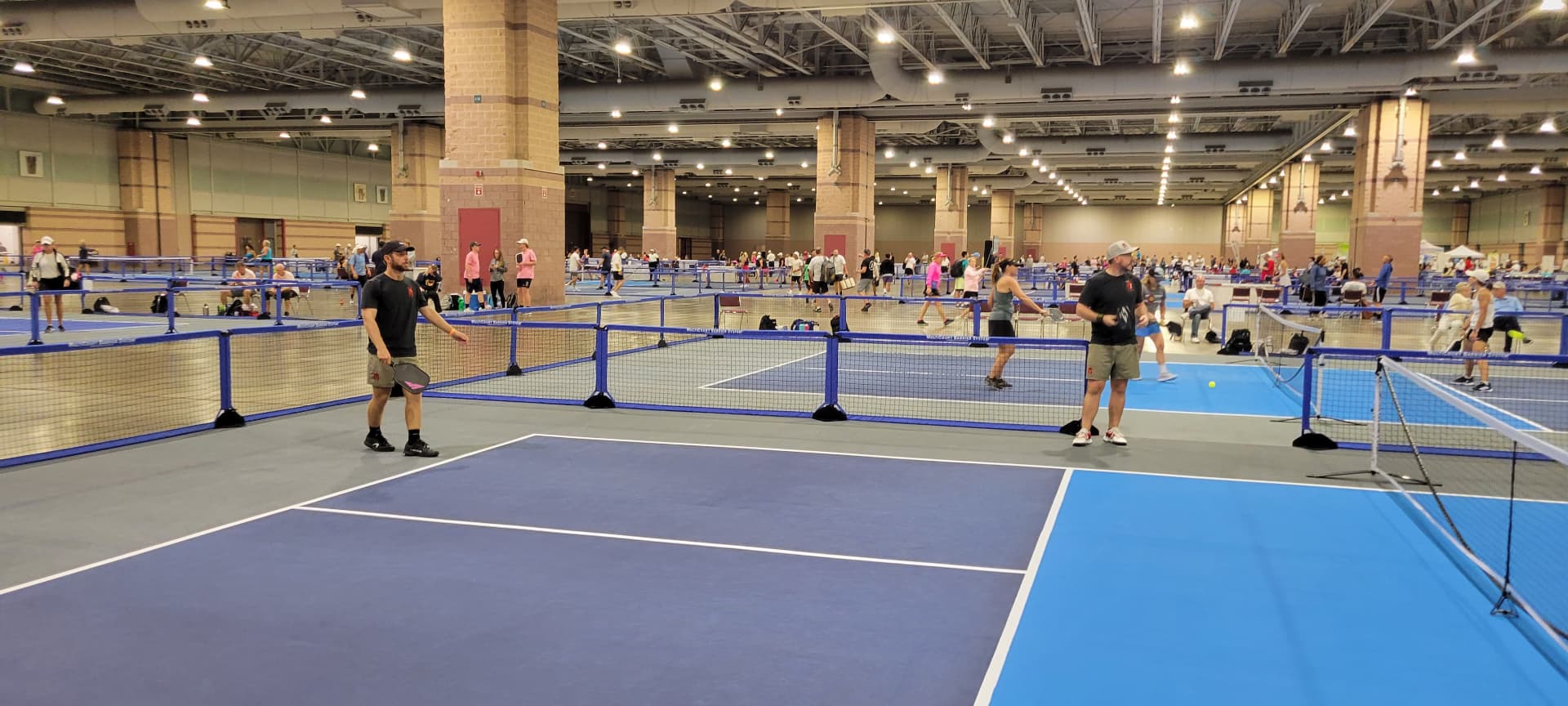
A turnkey pickleball activationgives a parks and recreation department an event-ready centerpiece for a new-court grand opening, a National Pickleball Day or Parks & Recreation Month program, a senior or adaptive-recreation clinic, a multi-park demand-testing tour, or a foundation fundraiser tournament. Courts, professional staff, and teardown are handled as one line item with a certificate of insurance available for the city, county, or parks authority — so a small rec staff can run a public event without becoming equipment operators on top of everything else on the calendar.
Why parks and rec departments are adding pickleball events
Municipal recreation calendars are already full: youth leagues, senior programming, community festivals, and whatever a council member asked for last budget cycle. Pickleball has earned a spot on that calendar because it draws a crowd fast, works across age groups, and — when courts are grant-funded — comes with a built-in reason to invite the public and the funder back for a launch moment.
USA Pickleball's Play It Forward grant program has funded court construction and renovation projects, and state-level tools like Land and Water Conservation Fund dollars and programs such as Illinois' OSLAD have put real public money behind new municipal courts. A department that just cut a ribbon on grant-funded courts has a natural moment to invite the community, press, and funders back for a launch event — not just a quiet opening.
Pickleball participation reached roughly 24.3 million Americans in 2025, up about 23% in a single year, according to Sports & Fitness Industry Association research. That demand shows up as waitlists for lessons, crowded open-play windows, and residents asking for more tournaments than a small rec staff can run alongside everything else on the calendar.
Parks and rec programming has to serve seniors, teens, families, and adaptive-recreation participants with one line item, not five. Pickleball's underhand serve and smaller court make it one of the few activities a senior center group and a middle-school after-school program can both play well. See our ADA accessibility guide for adaptive-format specifics.
Departments are used to scoping a vendor by deliverable, insurance, and price — not building an event from parts. A turnkey activation quote (courts, staff, and teardown as one line item with a certificate of insurance naming the city or county) drops into a standard purchase order or small-dollar bid process instead of requiring five separate rentals.
Formats municipal planners book most
Pick the occasion first, then the format. A ribbon-cutting crowd behaves differently than a senior center group or a foundation gala audience, and the run-of-show should match.
The most common ask: a department just finished building or resurfacing courts and wants a launch event with a beginner clinic, an exhibition or demo match, and a short community tournament to get the courts on the local news and on residents' calendars. We can also bring temporary courts to the site before construction finishes, so the department can promote the amenity and start a waitlist early.
USA Pickleball promotes National Pickleball Day each August, and many departments already run July Parks & Recreation Month activities. A staffed pop-up court gives a department a ready-made centerpiece for either date without building a program from scratch — clinics in the morning, open play at lunch, a short tournament in the evening.
Senior centers and adaptive-recreation divisions consistently ask for low-impact, social programming. A staffed beginner clinic with modified formats keeps the session welcoming for first-time players and wheelchair or mobility-limited participants alike. Pair this with our ADA accessibility guide when writing the program description or grant report.
Some departments want to test demand at three or four parks before committing capital to permanent courts at any one of them. A rotating pop-up court — one afternoon per site over a few weeks — gives planning staff real attendance data to bring to a budget or bond conversation, without pouring concrete first.
Parks foundations and 'friends of parks' nonprofits often run a signature fundraiser. A branded pickleball tournament — round robin so no team sits out early — gives sponsors visible signage and gives the foundation a repeatable annual event. See our nonprofit fundraisers guide and sponsorship packages guide for structuring sponsor tiers.
If the brief is closer to a downtown or citywide festival than a parks department program specifically, compare our city festivals and street fairs guide. If you're building the case for a grand-opening budget line, our grand openings and ribbon-cuttings guide covers the format generally across industries.
Planning a grand opening or community pickleball day?
Tell us the park, dates, and expected attendance — we'll scope courts, staff, and a certificate of insurance that fits your procurement process.
What to do (and what to skip) when you brief a municipal event
Do
- Loop in facilities, risk management, and whoever holds the city's insurance requirements before you promise a date — most municipalities require a certificate of insurance naming the city or county as additional insured.
- Confirm whether the event needs a special-use or public-assembly permit even on parks department property; some cities require it for any organized event over a set attendance threshold.
- Scope court count to expected concurrent players, not total attendance — a grand-opening crowd of 300 residents rarely needs more than 2–4 active courts if staff run tight rotations.
- Decide branding early: department logo only, city seal, foundation or sponsor co-brand, or a mix. Print and signage lead times should be locked when the date is locked.
- Ask about ADA and adaptive-format needs up front so staff bring the right equipment and can run a modified clinic alongside standard play.
Don't
- Do not assume a public park automatically waives permit or insurance requirements — confirm with your risk management office, not just parks staff.
- Do not size court count off total park visitors; size it to how many people you expect to actually pick up a paddle in the event window.
- Do not leave courts unstaffed at a public event — unhosted equipment at an open community event invites both safety issues and uneven access.
- Do not promise a specific grant, bond, or budget timeline on the invite before it's actually approved — frame launch events around confirmed funding, not funding in progress.
- Do not treat this like a permanent-court construction quote — a turnkey activation is an event line item, not a capital project. If you're also evaluating permanent courts, see our permanent court vs event rental comparison.
Logistics municipal staff ask about first
City and county events carry paperwork that a private company event usually doesn't — permits, additional insured requirements, and procurement rules chief among them. Plan for those from the first conversation, not the week of the event.
Most municipalities require a certificate of insurance naming the city, county, or parks authority as additional insured before an outside vendor sets up on public property — even for a single afternoon. Many also require a special-event or public-assembly permit above a certain attendance size. Build both into your timeline; see our insurance and liability guide and permits and permissions guide for what's typically required and how far ahead to start the paperwork.
Municipal budgets run on fiscal-year and grant-cycle timing, not corporate quarter timing. If the event is tied to a grant milestone (like a Play It Forward or LWCF-funded court), confirm the grant's reporting deadline before you set the date — some grant programs expect documented public use or a community event as part of the award. A turnkey quote with a clear scope of work also makes it easier to route through a purchase-order or small-dollar-bid process instead of a formal RFP; if your procurement office requires a full RFP, see our RFP guide.
New or resurfaced pickleball courts, existing tennis courts, a gymnasium floor, a park pavilion pad, or open grass near a community center can all host a turnkey activation. USA Pickleball's construction guidance puts the regulation playing area at 20×44 feet, with a recommended minimum total play area around 30×60 feet. Confirm which surface you're working with before promising a court count on flyers.
Parks and rec events often touch facilities, marketing/PIO, risk management, and sometimes a police or fire liaison for road closures or crowd size. A single turnkey vendor with one point of contact reduces the number of moving pieces your staff has to coordinate on event day — see our vendor checklist for the questions to ask before booking.
Attendance to court count
One court supports four players at a time. Size the build to how many people you expect actively playing during the event window — not total park visitors or projected foot traffic.
One court with a strong host is usually enough — prioritize a beginner walkthrough so first-time players aren't intimidated by regulars showing up early.
2–4 courts covers most launch events, with a mix of clinics, open play, and a short bracket or round robin for the more competitive residents.
Scale court count to concurrent players across the event window, not total festival attendance — most visitors browse, not everyone plays at once.
For a fuller sizing walkthrough that applies across event types, see how many pickleball courts you need, and for format choices see round robin vs. bracket vs. open play.
Grant-funded courts and the launch-event connection
A growing share of new municipal pickleball courts are funded in part through public grant programs. USA Pickleball's Play It Forward grant program has awarded funding toward court construction and renovation projects, and broader tools like the federal Land and Water Conservation Fund and state-level programs (Illinois' OSLAD, for example) have backed park and recreation facility projects, including pickleball courts, in multiple states. If your courts were funded this way, check whether the grant expects documentation of public use or a community event — a grand-opening tournament is often a clean way to satisfy that requirement while also building local excitement for the new amenity.
That funding context matters for a different reason too: a department that used grant or bond dollars for permanent courts is a different buyer than one renting a temporary activation for a single event day. If you're weighing both paths — a permanent build versus a one-day turnkey event — our permanent court vs. event rental guide breaks down when each makes sense, and our court installation page covers permanent builds specifically.
Pricing honesty for municipal planners
We quote turnkey municipal activations the same way we quote any other event — as a scoped line item based on court count, staffing hours, and travel, not a published per-resident menu. A single-court, one-day event typically begins around $10,000; multi-court grand openings, citywide festival builds, and multi-park series scale up from there depending on scope. See our pickleball court rental cost guide for the full breakdown of what moves a quote, then request a quote with your park, dates, and expected attendance so we can return an exact number, usually within 24 hours.
How to brief us (what we need in the first email)
A clean first brief shortens quote turnaround, especially when your city's procurement office needs a scope of work fast.
- Park or venue name, city, and whether the event is at an existing court, a new construction site, a gym, or open grass or pavement.
- Event date(s) and the type of occasion — grand opening, National Pickleball Day, senior clinic, pop-up demand test, foundation fundraiser, or a mix.
- Expected attendance and how many you expect actively playing at once.
- Whether you need a certificate of insurance naming a specific city, county, or authority — and the exact language your risk office requires.
- Branding needs: department logo, city seal, foundation or sponsor co-brand.
- Any known permit requirements, road-closure needs, or budget/grant-cycle deadlines tied to the event.
If your city requires a formal request for proposal, use how to write an RFP for a pickleball event so vendor quotes come back comparable. Before you sign with anyone, our vendor checklist covers the questions that separate a real turnkey build from a facility renting out a truck.