Retail & Downtown Activations
Pickleball pop-ups for shopping centers and downtown business districts
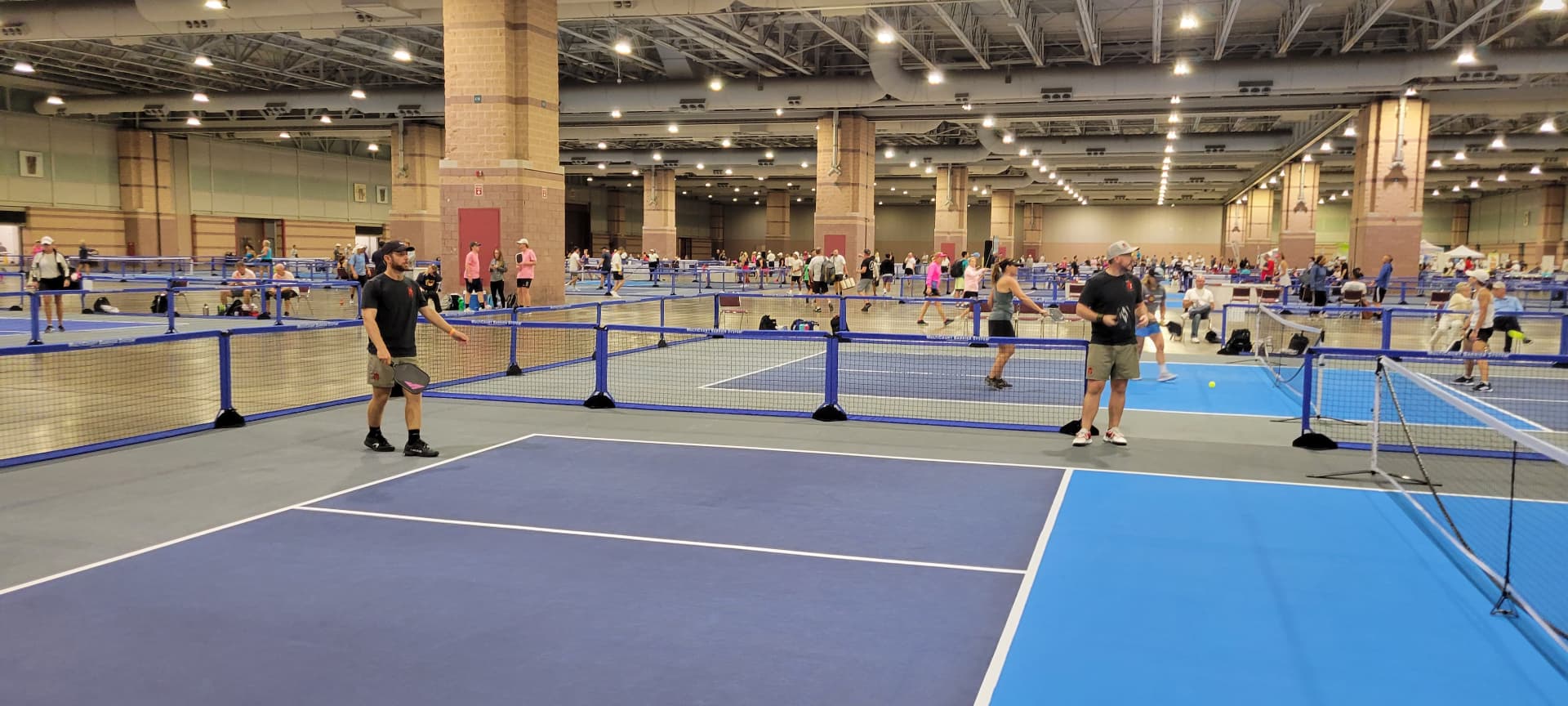
A turnkey pickleball pop-up — courts delivered, staffed, and removed the same day or over a weekend — gives a shopping center, retail property, or downtown business district a low-commitment way to drive foot trafficto a lot, plaza, or block without a capital project. It installs directly on parking-lot asphalt, a center plaza, or a closed downtown street, and it's a different, far smaller commitment than the permanent indoor pickleball facilities now leasing space in vacant anchor stores nationally.
Why retail and downtown properties are adding it
Pickleball reads as a mainstream draw now, not a niche one. According to the Sports & Fitness Industry Association, 24.3 million Americans played in 2025, and the sport has been the fastest-growing sport in the country for four consecutive years. Commercial real estate reporting has tracked landlords and property owners leaning into that growth directly — vacant big-box and anchor spaces across the country are being leased to full-time pickleball operators specifically because the draw brings, in the words of that same reporting, foot traffic from people with real spending power.
That's the permanent-facility side of the trend, and it's a real estate leasing decision most property teams aren't ready to make on a single event's evidence. A turnkey pop-up is the version of that same draw scaled down to an afternoon or a weekend: same crowd appeal, none of the buildout, lease commitment, or operating risk. It's a way to put the idea in front of shoppers, tenants, and leadership before anyone signs anything.
Where it actually goes on your property
A section of surface parking that sits half-empty on weekends is often the easiest footprint on the whole property — no tenant disruption, plenty of room for multiple courts, and visible from the road.
The open gathering space many shopping centers already built for seasonal markets and events works as-is for a pop-up court, with foot traffic already walking past.
A dark former anchor space or pad site awaiting a new tenant can host a temporary court to keep the property active and photographed while leasing plays out — without committing to a buildout.
A Main Street or business-district block temporarily closed for a market day or festival converts to courts the same way a parking lot does, coordinated with your city's street-closure permit.
Have a lot, plaza, or block in mind?
Tell us the footprint and the date — we'll recommend a court count and come back with pricing, usually within 24 hours.
Pop-up event vs. a permanent retail conversion
It's worth being precise about which product you actually want, because they solve different problems. A permanent conversion — the trend behind malls turning vacant anchor stores into full-time indoor facilities — is a leasing and construction decision with a long runway and real capital behind it. A turnkey pop-up, what this page covers, is a single-day or short-series activation: courts, nets, and staff arrive, run the event, and leave, with no square footage committed afterward. Plenty of property teams run a pop-up first specifically to gauge shopper and tenant response before any conversation about a permanent build goes to leadership. If that longer path is actually where you're headed, our permanent court vs. event rental comparison breaks down the cost and decision math, and we also handle court installation for properties ready to commit a pad.
Who typically books this
The request usually comes from someone who owns a piece of property performance, not an events calendar. That distinction matters, because it means the conversation starts with square footage and dwell time rather than a guest list.
- Retail property and asset managers looking to reactivate a lot, plaza, or vacant pad without a capital project
- Shopping center marketing directors adding a weekend draw to an existing market, festival, or seasonal event
- Downtown business improvement districts (BIDs) and Main Street organizations programming a street or block for foot traffic
- Leasing teams who want an activated, photographed property while a space sits between tenants
Budget, staffing, and how it's typically booked
A retail or downtown pop-up is priced the same way any activation is — court count, days on-site, staffing, travel, and branding — and it tends to land toward the smaller end of that range rather than the larger end, since most lots and plazas support one to four courts rather than a convention-floor build. A single-court, one-day pop-up typically starts around $10,000; a branded, multi-day weekend series across a shopping center's peak season scales up from there. See our full cost guide for the drivers behind that number.
Staffing follows the format. A one-day pop-up gets a crew sized to run open play, a beginner clinic, and light programming for the day, then tears down. A property that likes the results and wants to run it monthly or seasonally — a Saturday market pairing, a summer-long weekend series — is a different conversation about recurring programming rather than a repeated one-off booking; our recurring programming guide covers how that cadence and cost typically work, even though it's written primarily for hotels and clubs rather than retail properties specifically.
Booking itself usually runs through whoever owns the marketing or leasing budget for the property — a shopping center's marketing director, an asset manager, or a downtown BID's executive director — rather than a formal RFP process, though larger portfolio owners sometimes do run one across multiple properties at once. Either way, the lead time is the same as any activation: the earlier you lock a date relative to your peak season or existing event calendar, the more control you have over court count and any custom branding.
What a turnkey retail or downtown build includes
The build is the same as any activation: professional rollout courts, nets, and paddles installed directly on your lot's asphalt or a plaza's pavers, staffed with pros who run open play, clinics, and a light tournament format so shoppers and residents actually play rather than just watch. Branding is optional but common here — a court wrapped in your property or district's colors and signage doubles as marketing collateral for however long it's up. Everything is delivered, built, and struck on one invoice, so a property or marketing team isn't managing rental logistics on top of the rest of the event.
Running it alongside an existing market, festival, or seasonal event is the most common pattern, because the crowd is already there — the court becomes a reason to stay rather than the reason to show up in the first place. Our city festivals and street fairs guide covers how that pairing typically comes together, and if the goal is closer to a single flagship launch moment than ongoing foot traffic, our grand openings and ribbon-cuttings guide covers that format instead.
A downtown street or lot build usually means a city permit for the closure — our permits and permissions guide covers what that typically requires and who's responsible for filing. If branding and audience engagement are the main goal rather than a leasing test, see our brand activations guide for how a fully branded build is scoped. And once you're ready to talk numbers, our cost guide covers what drives pricing for a lot or plaza-sized build specifically.