Event Playbook · Real Estate
Pickleball courts for model home & community launch events
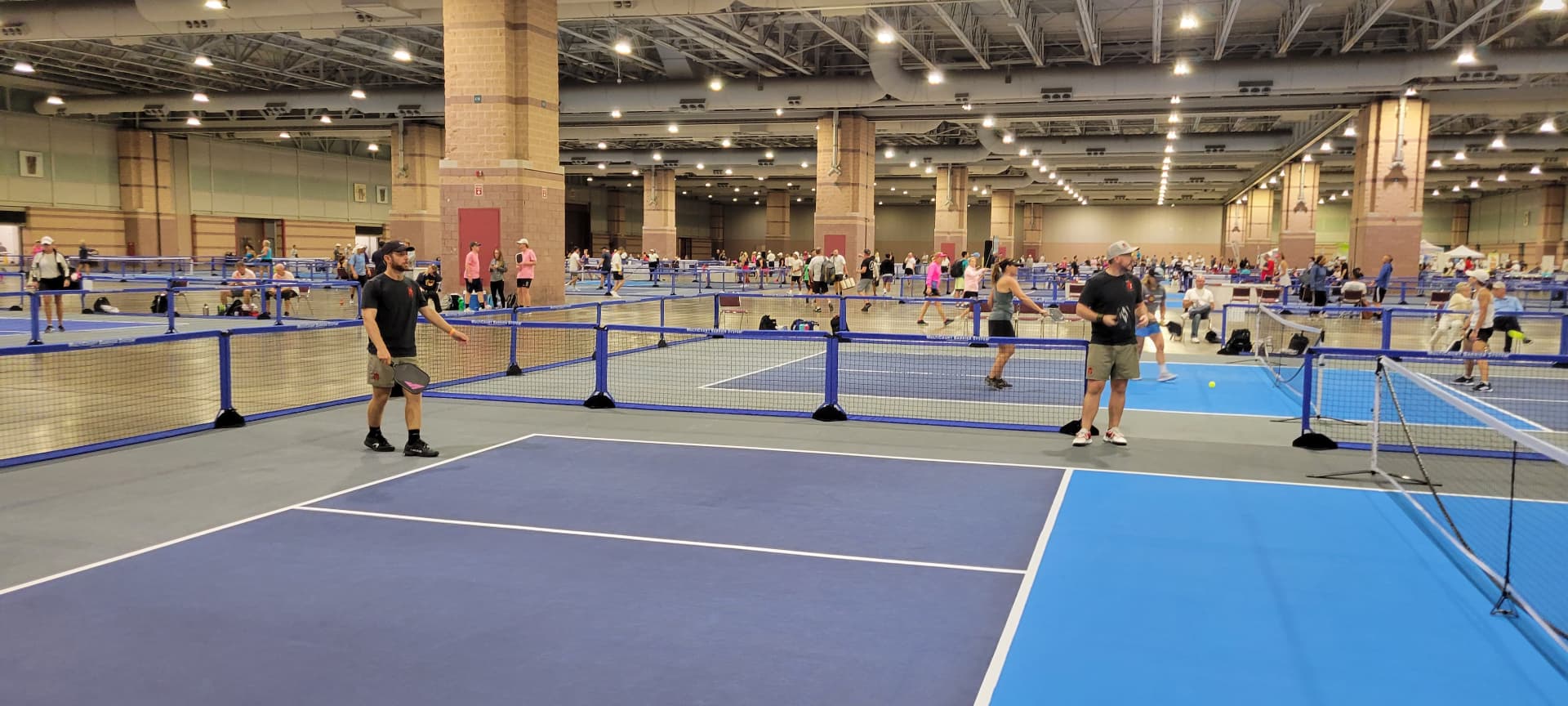
A pop-up pickleball court for a model-home opening or launch weekend installs and tears down the same day — a few hours on the lawn, sales-pavilion plaza, or amenity deck, with nothing left overnight unless you planned a multi-day hold. Staffed open play keeps prospects on the lot long enough for a real sales conversation, gives lukewarm buyers a reason to come back next weekend, and photographs better than another table of brochures. For planning, a single-court one-day activation typically begins around $10,000; multi-weekend or multi-court programs scale from there after we see your site.
Why a court beats another canapé table
Launch weekends compete for the same drive-by traffic on the same corridor. Most communities answer with the same toolkit: balloons, a sign-in sheet, snacks, and a sales office tour. That toolkit does not create dwell time. A staffed court does — because playing is more interesting than standing, and standing next to people who are playing is more interesting than reading a floor-plan binder alone.
A prospect who plays even one short game stays on the lot long enough for a real conversation — floor plans, incentives, and next-step appointments — instead of grabbing a flyer and leaving. That extra time is the sales asset; the court is just the reason they stay.
Model-home traffic is heaviest the first couple of weekends and fades fast. A recurring activation — pickleball Saturdays through the launch month — gives lukewarm prospects a calendar reason to return instead of drifting to the next community down the road.
Every other new-home community has a rendering and a sales office. A branded court on the lawn or amenity plaza is something prospects photograph and share themselves. That user-generated content is hard to buy with print ads and easy to miss when the launch only offers snacks and a sign-in sheet.
For multifamily and master-planned communities, a temporary court during lease-up or phase-one sales is a live test of whether residents actually use pickleball before you commit capital to a permanent pad. You learn preference with real play, not a survey checkbox.
Who this page is for
This is a B2B activation for teams selling homes, leases, or a lifestyle — not a consumer "find a court to play" listing. If you are planning any of the following, you are in the right place:
- Homebuilders and developer marketing teams running model-home openings, phase launches, and grand openings
- Multifamily owners and property managers leasing a new community or refreshing amenities during lease-up
- Active-adult and 55+ community launches where lifestyle amenities are the product
- Brokerages and listing teams hosting high-traffic open-house weekends on large lots or community greens
- Experiential agencies hired to make a real-estate launch feel different from the last three communities on the same corridor
For the broader vertical overview — branding options, program shapes beyond a single weekend, and how launch activations fit a longer marketing calendar — see real estate & property launches. Multifamily lease-up formats live in the apartment & multifamily resident events guide. Age-restricted grand openings are covered in active adult & 55+ communities.
A same-day launch timeline
| When | What happens |
|---|---|
| Morning of | Crew arrives and builds the court on the model-home lawn, sales-pavilion plaza, parking pad, or amenity deck. A single-court hardscape or plaza install is typically a same-day, few-hour build. Grass or turf adds a subfloor step and a little more clock time. |
| Open-house hours | Staffed open play or a light clinic runs alongside sales office hours. The court stays visible from the street or community entrance so drive-by traffic sees activity, not empty equipment. |
| End of day | Full teardown before the site closes — no overnight storage on the lot unless you planned a multi-day hold. Grass and hardscape underneath return to normal once the court is removed. |
That is the pace for a single-court, single-day pop-up. Multi-day or multi-weekend launch programs stretch the same build across your open-house calendar instead of tearing down and rebuilding each time. The setup and teardown timeline guide breaks down build-time math by surface. If you are still choosing indoor vs outdoor for a sales pavilion or amenity hall, start with indoor vs outdoor rental.
Planning a launch weekend?
Tell us your site, date, court count guess, and whether it is a single opening or a multi-weekend program. We scope and quote in about 24 hours.
Where it fits on your site
A regulation singles court needs roughly a 20×44 ft playing surface, plus runoff. Most launch sites can find that footprint; the constraint is usually grade, irrigation, or gate width — not "we do not have room for pickleball."
Highest street visibility — drivers see play before they park. Confirm irrigation timing with the builder so the lawn is not wet at install, and mark sprinkler heads so the crew does not pin through them.
Asphalt, concrete, or pavers usually install directly with no subfloor. Keeps the activation next to where prospects already sign in, which is where agents want conversations to start.
For a multifamily or active-adult launch, an amenity-area install doubles as a lifestyle preview, not just a marketing stunt bolted onto a sales weekend. Pair it with resident-event formats if lease-up continues after the grand opening.
Workable with a subfloor system so the court plays true. Do not commit a soft or uneven lawn to the plan until someone has walked the grade — see our surface and subfloor guide before you lock the location on the site map.
Not sure the lot will work? A quick site assessment before you print the flyer saves a scramble. Court dimensions and runoff for event layouts are also in the court dimensions for events guide.
Formats that actually help sales
The default for most launch weekends. A host keeps paddles moving, pairs mixed-skill players, and gives agents a natural reason to talk to someone who was not planning to stop at the sales desk.
Short beginner lessons on a schedule (e.g. every hour on the hour) create appointment-like moments without feeling like a hard sell. Works especially well when the guest list includes families with kids who have never played.
Same court footprint across several Saturdays, or a semi-permanent amenity install that stays up through the launch window instead of building and tearing down each time. Better when traffic is spread across a month rather than one opening day.
Court wraps, logo nets, and a photographer or social kit turn the activation into assets for the builder's listing pages and paid social. Branding has print lead time — raise it early if the creative team needs wrapped courts in photos.
The common failure mode is an unstaffed court with paddles in a bin and a handwritten "please play" sign. Prospects treat that like furniture. Staffing and a light format turn the same square footage into a conversation machine. If you are comparing pickleball to other launch entertainment, the activity comparison guide and how many courts you need help size the footprint to expected weekend traffic.
What drives the quote (and what does not)
Confirmed planning ranges for The Pickleball Events Co.: a single-court one-day activation typically begins around $10,000; multi-court or multi-day programs move into the mid-five and six figures depending on scope. Those are planning floors and bands, not a menu of fixed SKUs — every launch lot is different.
What usually moves the number for model-home and community launches:
- Court count and days — one Saturday vs four Saturdays vs a court that stays on the amenity lawn for a month.
- Staffing hours — open-house blocks with hosts vs equipment-only.
- Surface and subfloor — plaza asphalt is simpler than soft grass with a subfloor.
- Travel and access — gated communities, narrow load-in, elevator-only amenity decks, and union or venue labor rules.
- Branding lead time — wrapped courts and logo nets for listing photography need print time.
Full cost drivers and scenario bands live in the pickleball court rental cost guide. Permanent backyard or HOA installs are a different product — that conversation starts on pickleball court installation and permanent court vs event rental.
Insurance, HOA, and neighbor optics
Launch sites sit next to finished homes, sales offices, and sometimes public streets. Expect someone to ask about insurance, noise, and parking before they approve the build. We can issue a certificate of insurance naming the builder, HOA, or property manager you designate. For the paperwork path and what underwriters usually look for, see the insurance and liability guide. If the community is already sensitive about sound, read noise levels and neighbor considerations before you put the court on the street-facing lawn.
Permits and permissions vary by city and by whether the activation is on private property only. Flag municipal or HOA requirements early — the permits and permissions guide outlines the usual questions.
When NOT to add a court to your launch
It is not the right call for every community. A high-end or ultra-luxury launch built around a quiet, curated tour can find a pop-up court out of tone with the brand — pickleball reads as energetic and social, not hushed and exclusive. A tiny lot with no realistic space for a playable footprint (even with reduced runoff) is a hard no without relocating to a nearby common area. And a soft-launch open house with a handful of scheduled appointments rather than open walk-in traffic may not have enough foot traffic to justify the build — this tool earns its cost at volume, on a weekend where dozens of prospects are moving through, not a by-appointment showing for three families.
If the goal is a permanent amenity rather than a launch weekend, do not force an event rental into that job. Quote a permanent or seasonal install path instead, or use a temporary court only as a demand test before you pour.
How to brief us so the quote is useful
Send the site address or a simple site map, preferred dates and open-house hours, expected weekend traffic (even a rough number), surface notes (lawn vs plaza vs amenity deck), whether you need branding wraps, and who must be named on the COI. If an agency or builder marketing team is coordinating, say who owns load-in access the morning of. The same intake works whether you are comparing us to another experiential vendor or replacing a bounce-house package that no longer fits the brand.
Prefer a formal RFP? Use how to write an RFP for a pickleball event and how far in advance to book. Broader "how do we add this to our calendar" planning is in how to add pickleball to your event.