Event Playbook · Franchise & Multi-Unit
Pickleball for franchise conferences and franchisee conventions
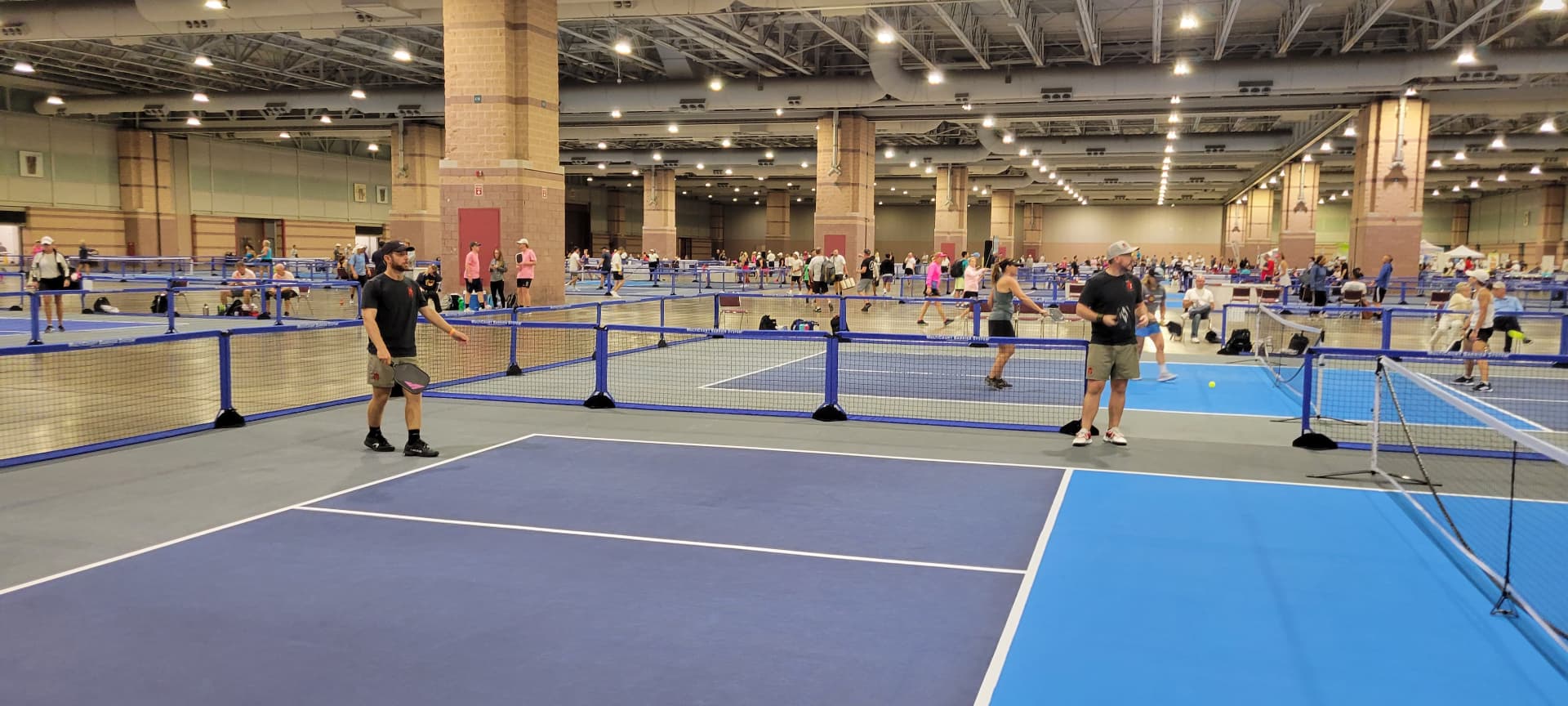
A turnkey pickleball activation gives a franchise conference or franchisee convention a physical, social networking block — typically as an opening-night reception court, an awards-night companion, or an afternoon energy reset between sessions. Rollout courts install indoors at hotels and convention centers, so weather does not cancel the window. Franchise event value is repeatedly framed around relationships and memorable shared experiences; a staffed, branded court is one practical way to create those moments without rewriting the general-session agenda.
Why franchise conference planners care about shared experiences
Franchise conferences and brand conventions are expensive, high-stakes gatherings of operators who already live inside the same system but rarely share a room. Industry voices keep stressing the same pattern: the formal agenda gets people into the building, and the informal moments — receptions, lounges, hallway conversations — determine whether the week produces relationships worth following up on. The International Franchise Association has published guidance that frames industry events as catalysts when leaders show up prepared and follow up within 48 hours. Separate IFA networking guidance emphasizes building dedicated time for conversation before and after programming, and notes that informal gatherings often create stronger connections than formal sessions alone. That is the planning problem a court activation is built to solve: give people a shared activity that creates those informal minutes on purpose.
Franchisee-convention planning guidance on Franchising.com makes a related point for brand-hosted meetings: franchisees come for strategy and networking, but they also come for reaffirmation — special moments that happen only at the convention, whether that is entertainment, awards, or a group outing. Food and space to decompress still matter. A staffed pickleball court sits in that same category of memorable programming: optional, social, photogenic, and distinct from another breakout room.
Franchise conference value lives in hallway conversations, lounge introductions, and evening receptions — not only the general session. International Franchise Association guidance on industry events and networking gatherings keeps returning to the same point: lasting connections form in informal, shared moments, and follow-up within 48 hours is where ROI shows up.
Franchisee conventions exist to reaffirm the brand, align on strategy, and give operators a reason to come back next year. Franchising.com planning guidance calls for special moments that happen only at the convention — entertainment, awards, or group outings — so the week is remembered for more than the product roadmap deck.
Owner-operators skew mixed ages and fitness levels. Pickleball's low skill floor keeps a branded court usable for a first-time franchisee and a multi-unit veteran in the same rotation — important when the activation is supposed to build culture, not quietly highlight who played college sports.
A branded court gives corporate marketing and franchisee social accounts the same photogenic asset: logo wraps, short rally clips, awards-night photos. That is harder to get from another seated dinner or trade-show aisle selfie.
Where a court fits the franchise convention run-of-show
Do not copy a daytime corporate tournament into an awards banquet and hope for the best. Pick the networking window first, then choose a format that respects attire, food service, and the brand program.
Run a staffed court for 60–120 minutes while franchisees arrive and reconnect. Short, hosted rotations beat a scored bracket — people are still checking in, finding friends from other markets, and catching up with field staff. This is the default when the goal is icebreaking across territories.
Pair a lighter court block with President's Club, top-unit awards, or supplier recognition. Keep scored play optional and short so the program still owns the night. Branding can echo the awards theme without turning the court into a second stage.
Multi-day conventions stack breakouts and general sessions. A 90-minute court window after lunch resets attention before the next keynote — the same role a good outdoor outing used to play, without leaving the hotel footprint.
Some brands run smaller regional franchisee meetings instead of (or in addition to) one national convention. The same rollout court package can tour with the roadshow so each market gets a consistent branded experience without permanent installs.
If the brief is closer to a cocktail-hour mixer than a franchisee awards night, compare our conference networking reception guide. If leadership wants scored heats and a winner, that is a different product — see corporate pickleball tournament. For a sales-org kickoff rather than a franchisee convention, use pickleball for sales kickoffs.
Planning this year's franchise convention?
Tell us the host hotel or convention center, dates, and approximate badge count — we'll scope courts, staffing, and branding that fit the networking window, not take over the general session.
What to do (and what to skip) when you brief the activation
Do
- Scope court count to concurrent players you want active — not total badge count. A 400-person franchisee convention does not need ten courts if only 40 people will rotate through a reception window.
- Put the court on the social edge of the room: near the lounge or bar path, not blocking registration, buffet, or the awards stage sightline.
- Brief staff to run beginner walkthroughs every rotation. Many franchisees have never played; a two-minute rules intro keeps the format from stalling.
- Decide branding (court wrap, net band, backdrop) when you lock dates so print and freight lead times do not collide with convention load-in.
- Loop hotel convention services early on floor protection, freight elevators, and union or house-rule constraints — same conversation you already have for general-session production.
Don't
- Do not drop a full bracket into the middle of the CEO or founder keynote.
- Do not assume outdoor-only — most franchise conventions are hotel or convention-center based and need an indoor backup.
- Do not invent per-franchisee pricing on the invite; quote the activation as a turnkey line item with court count and staffing clear.
- Do not leave the court unstaffed. Unhosted open play at a franchisee event turns into equipment chaos and uneven wait times fast.
Logistics franchise planners ask about first
The sport is the easy part. The hard parts are freight, floor protection, brand standards, and making sure the court does not fight the awards stage or the buffet path. Treat the activation like any other production vendor on the convention rider.
Hotels and convention centers already understand temporary flooring. Confirm clear dimensions for the playing area plus sideline buffer, freight path from the dock, and whether the court sits on carpet, concrete, or an event lawn. Our court dimensions and indoor vs outdoor guides cover the space math.
Franchise conventions cluster around brand calendars and industry weeks. Book as soon as dates and the host hotel are firm — ideally weeks to a couple of months out — so load-in windows and staffing are locked before the rest of the production calendar fills.
Expect the venue to ask for a certificate of insurance naming the hotel or convention center. Build that into the vendor checklist alongside floor protection and teardown windows. See our insurance and liability guide for what planners usually need to collect.
If preferred suppliers or sponsors are on the floor, decide whether the court is corporate-branded only or can carry a co-branded net band. Keep the hierarchy clear so franchisees see the brand first and any partner second.
Deeper references: court dimensions for events, indoor vs outdoor rental, insurance and liability, event vendor checklist, and how far in advance to book.
Badge count to court count
One court supports four players at a time. Reception throughput comes from short hosted rotations, not from matching court count to every badge in the building. Franchise Business Review's IFA Convention networking notes describe that industry event as a room of 4,000+ people— which is exactly why you size to the networking window, not the full attendance number.
Usually 1–2 courts with strong hosting. Throughput comes from short rallies and a clear queue, not from covering every attendee at once.
2–4 courts for a reception or afternoon window is a common working range when the court is one of several evening options. Scale only if you want a simultaneous tournament feel.
One court is often enough. Prioritize staffing and branding consistency with the national look so regional meetings still feel like the same brand experience.
For a fuller sizing walkthrough, see how many pickleball courts you need. Format choices (round robin vs bracket vs open play) live in event format options.
Pricing honesty for franchise planners
We keep published ranges conservative and specific. A single-court, one-day turnkey activation typically begins around $10,000. Multi-court builds for a full evening reception, multi-day convention coverage, heavy branding, travel crews, or national multi-city tours move into mid-five figures and can reach six figures for large programs. Those are planning anchors — not a menu of invented per-franchisee fees. Final quotes depend on venue rules, court count, staffing hours, brand production, and freight. Compare drivers in our pickleball court rental cost guide, and if you are weighing a temporary activation against pouring permanent amenity courts for corporate campuses or franchisee sites, read permanent court vs event rental.
National convention vs multi-city franchisee tour
Some brands put everything into one annual convention. Others split energy across regional franchisee huddles, area-developer meetings, or a post-convention roadshow. A portable court package can support both models: one larger install for the national week, then a smaller traveling set for regional dates so the brand experience stays consistent. If the brief is literally a tour — same activation, many cities — start with national multi-city activation tour. Incentive trips and DMC-led partner programs are a related brief covered in incentive travel and DMC programs.
Country clubs and private clubs hosting franchisee golf-plus-social days sometimes want courts as a golf-outing alternative or add-on; that playbook is pickleball for country clubs and golf outing alternative.
How to brief us (what we need in the first email)
A clean first brief shortens quote turnaround. Send the items below and we can usually return a scoped option set quickly — without forcing you through a vague discovery call first.
- Host city, venue name, and whether the activation is indoor ballroom, exhibit hall, or outdoor terrace/lawn.
- Convention dates, the exact networking window(s), and whether awards or a keynote must stay clear of the court.
- Approximate badge count and the concurrent players you want active (not the same number).
- Brand standards: corporate-only wrap vs co-branded supplier presence.
- Whether this is a one-city national meeting or a multi-city follow-on tour.
If you are writing a formal RFP for procurement, use how to write an RFP for a pickleball event. For a general add-pickleball framework that is not franchise-specific, see how to add pickleball to your event.
What success looks like after the convention
The court is a means, not the KPI. Franchise event guidance keeps pointing planners back to follow-up: debrief within a couple of days, capture the conversations that mattered, and turn introductions into next steps. Use the activation the same way — collect photo and video assets for franchisee communications, note which regions mixed on court, and give field staff a concrete moment to reference when they follow up. If you need a measurement frame for sponsor-style or brand-activation reporting, our sponsor activation ROI guide outlines what is realistic to track without inventing vanity metrics.