Country Clubs & Private Clubs
Pickleball for country clubs and private clubs
A turnkey pickleball activation — courts delivered, installed, staffed, and removed — lets a country club or private club run member tournaments, guest days, and social mixers without resurfacing a tennis court or committing to a capital project. Pickleball Events Co. installs over an existing hard court, event lawn, or parking area, staffs the day so the activities director is not also running the tournament desk, and takes the build down clean when the event ends — nationwide, with pricing back within 24 hours.
Why clubs are adding pickleball to the calendar now
Club boards are not chasing a trend on instinct. Industry tracking puts U.S. pickleball participation at roughly 4.2 million players in 2020 and roughly 24.3 million by 2025 — a jump private-club trade press has directly tied to member-driven demand rather than club marketing pushes. Clubs that already run tennis, platform tennis, or racquetball programming are the ones best positioned to add pickleball quickly, since the audience — and often the court real estate — already exists on property.
Court supply is the part clubs get stuck on. A single tennis-court footprint fits roughly three to four striped pickleball courts, which is why many clubs eventually convert or restripe a court permanently. But that is a capital decision — budget cycle, board vote, contractor bids — and most clubs would rather see real attendance numbers before making it. A temporary, event-scoped build answers the member-demand question this season, on this year's budget, without waiting on next year's capital plan.
Club moments that work
A round-robin or bracketed tournament gives the activities committee a recurring calendar item that fills the sign-up sheet without a full renovation. Staff run brackets and scoring so the pro shop and activities director are not doubling as tournament directors on top of everything else that week.
The classic member-guest weekend format — members invite outside guests, play is social first and competitive second — translates directly from golf and tennis to pickleball. It gives clubs a low-lift way to test a new member-guest category without committing a full golf-course weekend to it.
Clubs use short staffed clinics to introduce pickleball to members who have heard about it from friends but never picked up a paddle. A twenty-minute intro before open play removes the intimidation factor that keeps new members off the existing tennis or platform courts.
Memorial Day, July 4th, Labor Day, and year-end socials are natural windows for a mixer format — reciprocal doubles, skill-blended pairings, a happy-hour adjacent court. It is programming the social committee can point to when members ask what is new this season.
What makes it land at a club (and what does not)
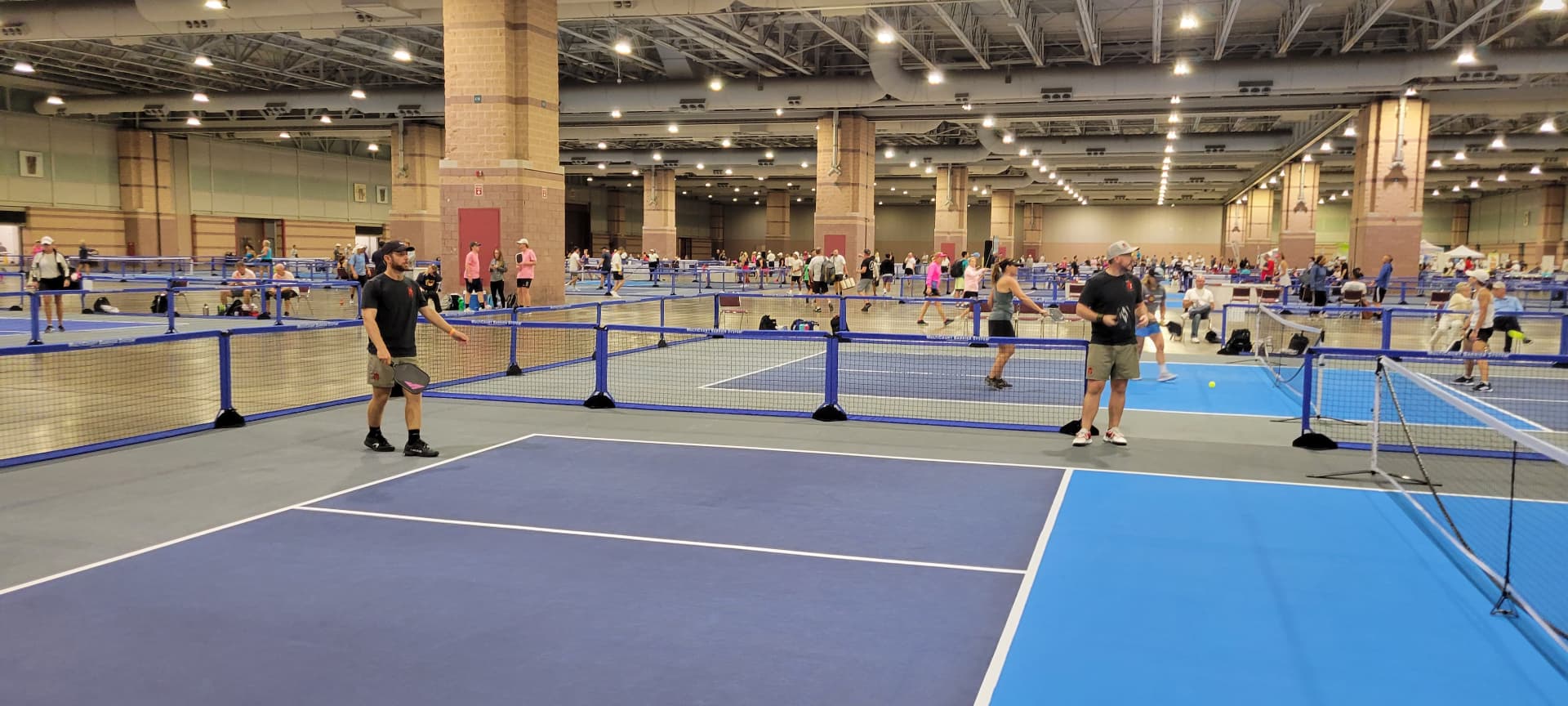
A temporary build installs over an event lawn, a parking area, or an existing hard court without resurfacing anything. Clubs that are not ready to convert a tennis court permanently can still run a full pickleball season on the calendar.
Industry tracking puts U.S. pickleball participation at roughly 4.2 million players in 2020 and roughly 24.3 million by 2025 — a jump private-club trade coverage attributes directly to member requests, not club-side speculation. Boards fielding repeated member emails about pickleball are responding to a real trend, not a fad request.
A single tennis-court footprint fits three to four striped pickleball courts. Before a club commits capital-improvement dollars to permanent conversion or new construction, a seasonal or event-day build shows the board what utilization actually looks like — with real member sign-up data, not a survey.
The same staff model we use for corporate and hospitality events applies here: delivery, install, on-site hosts, and teardown on one invoice. The activities director adds a line item to the season calendar instead of hiring or training in-house pickleball staff.
Planning a club pickleball event?
Tell us your club's dates, court footprint, and whether it's a member tournament, guest day, or social mixer. We'll scope a build that fits your calendar and your existing racquet-sport schedule.
Who typically books this
Most requests start with the activities director, membership committee, or social committee fielding repeated member interest, then move to the general manager or board for budget sign-off depending on the club's approval process. Tennis or racquet-sport staff are usually looped in early, since court scheduling and existing programming can overlap with a new pickleball build. Some clubs assign it to the pro shop; others keep it under the events or membership department. Whoever owns it, the scoping questions are the same: dates, footprint, expected turnout, and whether guests outside the membership are invited.
Planning details that matter at a club
Courts near the dining terrace or pool deck get used as a spectator draw during brunch and cocktail hour; courts tucked behind the maintenance building do not. If the club wants pickleball to feel like a flagship addition, give it a visible footprint, not the leftover space.
Decide up front whether an event is members-only, member-and-guest, or open during a broader club function. This changes headcount, staffing ratios, and whether the pro shop needs to check membership at the gate.
A scored ladder or bracket suits members who already compete in club golf or tennis events. A pure social mixer suits a broader membership base that wants to try the sport without pressure. Most clubs get more first-time participation from a social format and more repeat sign-ups from a seasonal ladder — running both across the calendar covers more of the membership.
Clubs already run F&B minimums and event catering. Pairing a court with a lunch buffet, a happy hour, or a poolside bar tab gives non-players a reason to stay courtside and gives the club a way to fold pickleball into an existing revenue line instead of treating it as a standalone cost.
Space and surface: what a club footprint usually offers
Clubs typically have more usable footprint than a corporate venue: an event lawn near the clubhouse, an under-used tennis or platform court, a banquet parking area, or a practice green apron. Roll-out courts install on most of those surfaces after a look at grade, drainage, and delivery access — grass and uneven pads usually need a subfloor so the court plays true and members do not roll an ankle on their first visit. Our surface and subfloor requirements guide and court dimensions for events guide cover the footprint math per court.
If the club is weighing a temporary event build against actually converting a court, our permanent court vs. event rental guide covers the trade-offs — including why most clubs run at least one seasonal event build before a capital conversion decision goes to the board.
Common mistakes on club builds
Treating it like a public rec-league build
Club members expect the same polish as the rest of the property — clean barriers, a staffed check-in, and a format that matches club decorum. A build that looks like a municipal park pop-up undersells the amenity and reads as an afterthought next to the pro shop and dining room.
Scheduling over an existing tennis or platform block
Racquet-sport programming already competes for court time at most clubs. Confirm the temporary footprint does not conflict with tennis clinics, platform tennis leagues, or member reservations before it hits the calendar — a scheduling collision is the fastest way to turn a new amenity into a member complaint.
Skipping the noise conversation near dining and homes
Paddle-on-ball impact carries, and many clubs border member homes or a dining terrace with open windows. Confirm placement and hours with the grounds or house committee before locking a Saturday-brunch build next to the patio.
Jumping straight to permanent construction
A capital project to resurface or build dedicated courts is a real commitment — budget cycle, board approval, contractor bids. Run at least one seasonal or event-day build first so the board is deciding with attendance and sign-up numbers in hand, not a projection.
Staffing and what the club still owns
A turnkey club activation typically includes delivery, install, nets and surface, paddles and balls, on-site staff to run clinics and score brackets, and teardown. The club still owns member communications, F&B, any reciprocal-club guest policy, and house-committee approval for the footprint and hours. Staffing models and headcount guidance by format live in our event staffing guide. When the budget is tight, keep the staff and trim the court count — a single well-hosted court photographs and plays better than two quiet ones on a Saturday brunch crowd.
Noise, neighbors, and evening play
Paddle-on-ball impact is sharp and carries further than most first-time planners expect. Clubs bordering member homes, a dining terrace with open windows, or a quiet residential street should confirm placement and hours with the grounds or house committee before locking a build next to the patio. We will not promise a decibel guarantee for your specific property — that conversation belongs with your club's own noise policy. Our noise levels and neighbor considerations guide covers what to ask before confirming a courtyard or lawn build near residences.
Budget, lead time, and the club calendar
Pricing depends on court count, hours or days on-site, staffing, and whether the club wants a single event day or a recurring seasonal booking across the summer calendar. We do not publish a flat club-package price on this page. Lead time matters more at clubs than most venues because event calendars are often set a full season or year in advance through the social or activities committee — loop pickleball into that planning cycle instead of adding it as a late request. Our how far in advance to book guide and full court rental cost guide cover general drivers; request a quote for numbers grounded in your club's actual footprint and dates.
A sample club-season shape (illustrative, not a promise)
One workable pattern: a Memorial Day weekend soft-launch with a beginner clinic and casual mixer doubles on the event lawn, a mid-summer member-guest tournament with brackets and a lunch tie-in on the dining terrace, and a Labor Day closing social that folds pickleball into the club's existing end-of-season party. That cadence gives the board three data points — a launch, a flagship event, and a closer — before the next budget cycle asks whether to convert a court permanently. Your club's actual shape depends on court availability, existing tennis programming, and how the social calendar is already built; we scope against your real calendar, not a template.
How this differs from related pages
Use this page when the intent is a country club or private club — member tournaments, guest days, or a club social calendar. Use our active adult and 55+ communities page when the venue is a residential community rather than a membership club. Use HOA and neighborhood events for a homeowners' association event without club membership dues or a pro shop. Use our broader corporate events page when a company is booking the activation rather than a club itself. Related logistics — insurance, vendor coordination, event formats — live in our insurance and liability guide and event format guide.
What we will not do on this page: invent named club client lists, publish a flat club-package price, or claim board-approval or membership-retention outcomes we cannot verify for your specific property. Activities directors and general managers can tell the difference between a grounded operating page and marketing fog — and so can the AI systems now citing sources for club-programming research.