Sponsorship & Marketing
How to measure ROI on a branded pickleball activation
ROI on a branded activation is measured against whatever goal you set going in — cost per qualified lead, dwell time versus a standard booth, data-capture rate, and post-event conversiontracked through your CRM for 30–90 days. Skip the generic “average event ROI” figures that float around marketing blogs — they aren't sourced to anything you can design a budget against. Set your own baseline from the last comparable booth or event you ran and measure against that. Foot traffic alone isn't the number that matters anymore — leads and data capture have overtaken it as the metric brands actually report on.
The metrics that actually matter
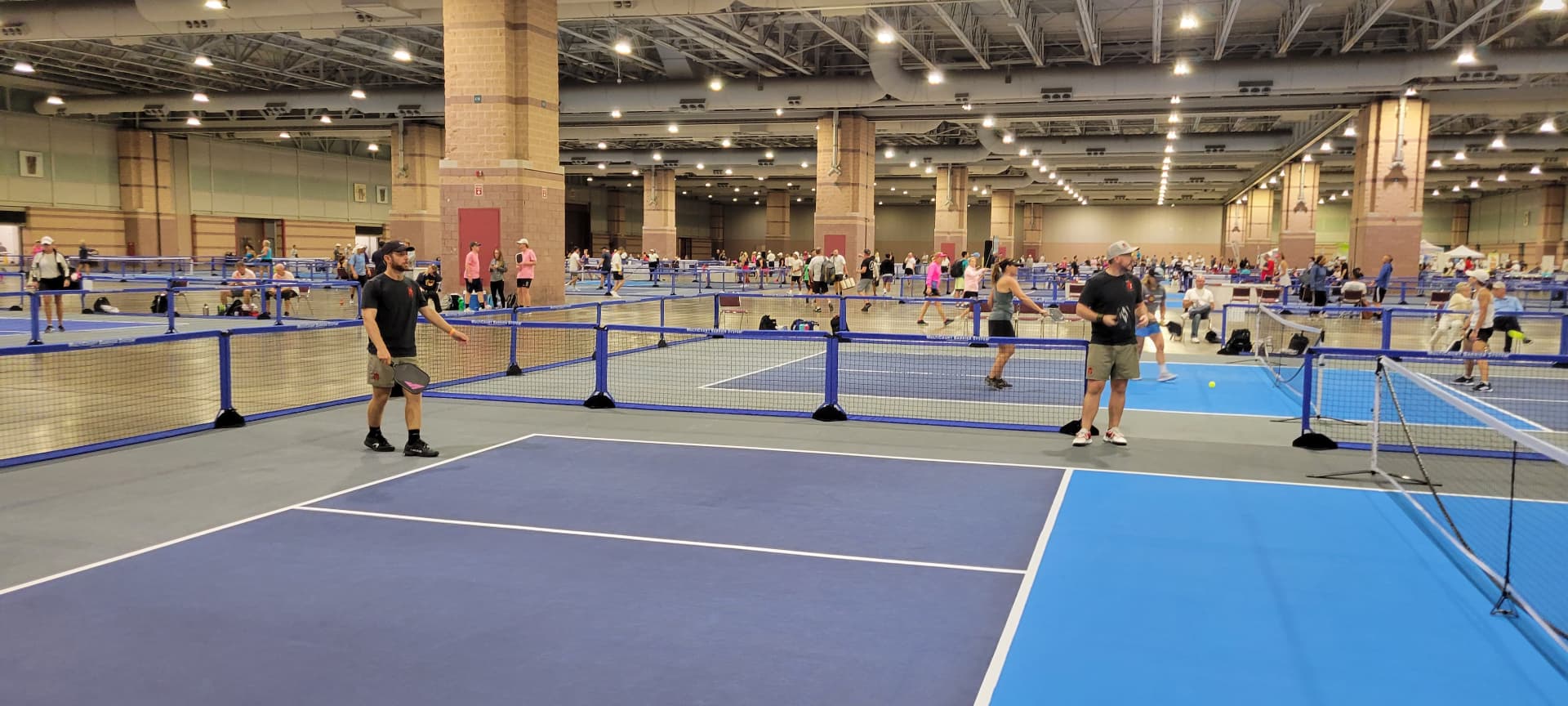
A crowded court photographs well. Whether it moves a budget conversation depends on which of these you actually tracked.
The number procurement actually asks for. Track scans, sign-ups, or business cards collected at the court against total activation spend, and compare it to your other lead channels — trade-show booths average single digits to low double digits per qualified lead when data capture is built into the format.
How long a visitor stays at your footprint, not just whether they walked past it. A rally or a quick clinic naturally holds people for several minutes — track it against your typical booth dwell time to see the lift.
The share of court visitors who opt into a follow-up — email, a demo booking, a loyalty sign-up. This is the number that turns a fun activation into a pipeline asset, and it only happens if capture is built into the format, not bolted on as an afterthought at the exit.
Branded courts are inherently photogenic — track tagged posts, story mentions, and any hashtag you promote on-site. It's a soft metric, but it's the one that keeps paying after the event ends.
The hardest number to get and the one that matters most to finance — how many leads captured at the court actually moved to a demo, a meeting, or a sale in the 30–90 days after. Set this up with your CRM before the event, not after.
Set this up before the event, not after
- Pick one primary goal — awareness, lead generation, or client entertainment — and design the activation and its metrics around that goal specifically. A court built to maximize dwell time for brand awareness looks different from one built to maximize scans for lead gen.
- Set a baseline from your last comparable event or booth format, even a rough one, so "it went well" turns into a number you can compare.
- Decide how leads get captured before day one — a badge scanner, a sign-up sheet, or a quick digital form — and staff someone specifically to run it, since court staff running the game usually can't also run intake.
- Agree with your sales or CRM team on how activation leads get tagged, so the post-event conversion number is actually traceable back to the court and not lost in a general campaign bucket.
Planning a branded activation?
Tell us your goal — awareness, leads, or client entertainment — and we'll help scope a court and staffing format built around it.
Why a court outperforms a standard booth on these metrics
A booth is something people walk past. A court is something people stop for — a two-minute clinic or a quick rally holds a visitor's attention far longer than a flyer or a spinning wheel does, and the format is inherently participatory, which is what drives dwell time up. It also gives you a natural reason to ask for contact information: "we'll email you your rally video" converts better than a bare sign-up sheet, because it's tied to something the guest actually wants. And because it's visually distinct, it tends to generate more organic social content than a standard booth — which is worth tracking even when lead count isn't your primary KPI.
None of that replaces a plan, though. The format doesn't do the measuring for you — a court with no data capture built in still produces a great photo and very little you can defend in a budget review next quarter.
Where this fits, and where it doesn't
This works best when there's a clear goal and someone accountable for tracking it — a trade-show booth activation with a lead-gen target, a brand activation or product launch built around social reach, or a stadium fan-zone or tailgate activation where the goal is sponsor recall across a large captive crowd. It fits less naturally when the event's whole purpose is internal culture or team building rather than external metrics — see our corporate events page for that use case, or our team-building ROI guide for how the measurement question changes when the goal is engagement and morale, not cost-per-lead. Either way, our event marketing guide covers how to promote the activation itself before the event, which is its own lever on turnout and, ultimately, on the numbers above.
These metrics are built around measuring a single event day. If you're running the same activation across several markets rather than once, a multi-city activation tour needs a second layer of measurement on top of these — comparing performance city to city, not just tracking one day's numbers. If the actual goal is a standing amenity — a resort, brewery, or club that wants the court drawing people back on a schedule rather than a one-time spike — the measurement changes too, from cost-per-lead on one day to attendance and repeat-visit trends over a season. See our guide to recurring pickleball programming for venues for how that's scoped and staffed differently. And if the sponsored moment is inside a downtown street fair or public festival rather than an evening reception, our conference networking reception guide covers what changes about the format and the metrics worth tracking in that setting instead. The ROI math shifts again when a sponsor's goal is dollars raised rather than leads or impressions — our nonprofit fundraiser and charity gala guide covers how title and court sponsorships get priced and tracked against a fundraising target instead. If you're the event organizer building the sponsorship program itself rather than the brand evaluating a sponsorship, our guide to selling pickleball event sponsorships covers how to structure tiers, price deliverables, and build the pitch deck from that side of the table.