Active Adult & 55+ Communities
Pickleball for active adult and 55+ communities
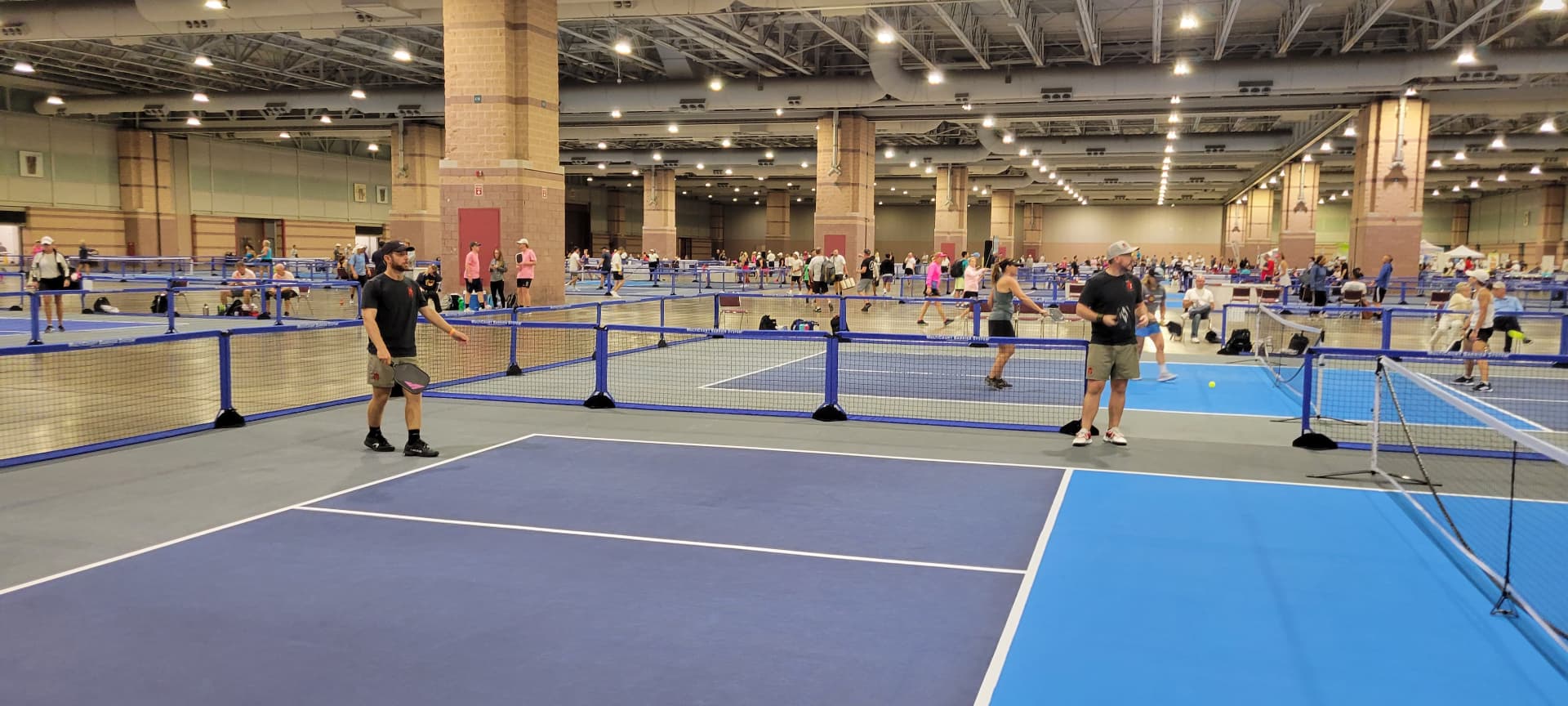
A turnkey pickleball event day is one of the highest-turnout amenity activations an active adult or 55+ community can run — professional rollout courts delivered to your clubhouse lawn, an existing tennis court, or a common amenity space, staffed with clinics and skill-divided play, then removed the same day. No board vote on a capital project, no permanent construction — it books like any other resident event, and it lets a developer or HOA see real turnout before anyone commits to striping a permanent court.
Why this is showing up on so many community calendars
Pickleball didn't creep into active adult housing quietly. Participation grew roughly 311% over the three years through 2024, and it has been the fastest-growing sport in the country for four consecutive years. Homebuilders noticed first: most newly built active adult communities now break ground with multiple dedicated courts as a standard amenity rather than an afterthought, and a growing number of established communities are converting an underused tennis court to pickleball lines to keep pace with resident demand. Buyer research on the active adult segment tells a related story — for a growing share of prospective residents, the events calendar and club programming now weigh almost as heavily in a purchase decision as unit size or finishes.
That shift creates an obvious opening for a staffed event rather than a construction project. A community that hasn't committed to permanent courts yet — or one that has a single court and wants to know whether demand justifies a second — can run a rental event, watch who actually shows up, and make the capital decision with real numbers instead of a guess based on a newsletter survey.
Formats that fit a 55+ resident roster
Grand-opening amenity day
Timed to a new phase release or clubhouse ribbon-cutting, with a staffed court running clinics and casual doubles so prospective buyers see the lifestyle in motion, not just a brochure rendering. Pairs naturally with a broader launch program — see our model-home and community-launch playbook for how builders typically stage the rest of the day.
Resident round-robin tournament
Skill-divided round robins keep a first-time player and a longtime club competitor both on the court instead of one side sitting out early. Works as a standalone Saturday event or as the anchor activity inside a larger community festival.
Beginner clinic series
A 45–60 minute instructional session aimed squarely at residents who've heard about pickleball but never picked up a paddle. This is usually the highest-turnout format for a first event, because it removes the intimidation factor that keeps non-players away from an open tournament.
Multi-generational family day
Grandkids visiting for a holiday weekend or school break give some communities a reason to run a lighter, mixed-age open-play afternoon instead of a competitive bracket — a different crowd than the weekday resident base, and worth planning for separately.
Why it works for this age group specifically
Pickleball participation grew roughly 311% over the three years through 2024, the fastest-growing sport in the country for four years running. Most newly built active adult communities now break ground with multiple dedicated courts, and a lot of established communities are restriping an underused tennis court to keep up — a resident event is the fastest way to show demand before anyone commits to that capital project.
A 55+ roster can span three decades and a wide range of mobility levels. Pickleball's smaller court and slower ball speed keep a recent knee-replacement patient and a longtime tennis player in the same match, which is a harder trick to pull off with pickup basketball or a 5K fun run.
Buyer research on active adult housing increasingly points to the same shift: programming, clubs, and a real activity calendar now weigh as much in a purchase decision as square footage or finishes. A staffed court on a sales-tour day gives prospects something to watch — or join — that a rendering of a clubhouse never does.
A one-day rental is an event-budget line, not a capital request. Communities can run it as many times as they want to gauge real turnout before a developer or HOA board decides whether a permanent court belongs in next year's budget.
Planning a resident or launch event?
Tell us your community, date, and expected turnout — we'll scope a court setup that fits your amenity space and budget.
Planning around the roster you actually have
Older players are more heat-sensitive than a typical corporate crowd. Mid-morning or early-evening slots outperform a midday July booking in warm-climate markets — our weather contingency guide covers the backup plan if forecasts shift late.
A chunk of any 55+ roster has never played. Opening with a short clinic before opening the court to a bracket gets more residents actually swinging a paddle than posting a tournament sign-up sheet and hoping.
Walkways, ramps, and seating for spectators who use mobility aids matter more here than at a corporate field day. Our ADA accessibility guide covers what event planners are typically asked to confirm before a build.
HOA boards and property managers routinely ask for a certificate of insurance before approving any outside vendor on community property — resolve this before the week of the event, not the morning of.
When a full tournament format is the wrong call
An open elimination bracket looks like the obvious format, but it's usually the wrong first event for a community that hasn't run one before. It rewards residents who already play and can leave first-timers standing on the sideline after one quick loss — the opposite of what most activities directors are trying to accomplish. A beginner clinic followed by skill-divided round robins gets more residents actually on the court for their first event, and a full bracket tournament works much better as a second or third event, once there's an established group of regular players who want the competition. If your community genuinely already has an active playing group and the ask is a proper club tournament, our tournament format guide covers bracket structure and court math in more depth than this page needs to.
Who typically books this
Developers and builders staging a grand-opening or new-phase amenity day to show prospects the lifestyle in motion before units are even finished.
Lifestyle and activities directors at established communities building a resident events calendar around a proven, high-turnout draw instead of another bingo night.
HOA boards and property management companies testing resident demand before deciding whether a permanent court belongs in next year's capital budget.
Event rental vs. a permanent court
It's worth separating the two decisions a board or developer is actually weighing. A one-day event rental is a staffed court for a single day, priced and approved like any other resident-event expense. A permanent court — new construction or restriping an existing tennis or multi-use court — is a capital project that typically needs a board vote, a line item in next year's budget, and ongoing maintenance once it's built. Running one or two rental events first is the cheapest way to find out whether resident demand actually supports that investment; our permanent court vs. event rental comparison breaks down the construction cost ranges and breakeven math for either path, and if your community does move toward a permanent build, we handle court installation in a growing list of metro markets. If you'd rather build toward a standing weekly or seasonal cadence instead of a one-off day, our recurring programming guidecovers what changes when it's a season rather than a single event.
If your property is a mixed-age HOA rather than an age-restricted community, our HOA and neighborhood events guide is the closer match. If it's a leasing or resident-retention event at an apartment or multifamily property instead of a for-sale community, see our apartment and multifamily resident events guide.
Budget and getting it on the calendar
A single-court community event is one of the smaller builds we run, priced by court count, hours on-site, and staffing rather than resident headcount. See our cost guide for typical ranges and our booking timeline guide for how far ahead to lock a date once a board or sales team signs off — spring and early fall tend to book up fastest for community events in most markets. If you're planning around a private amenity lawn rather than an open common area, our private event space guide covers what that setup typically needs.