Multifamily & Apartment Communities
Pickleball for apartment and multifamily resident events
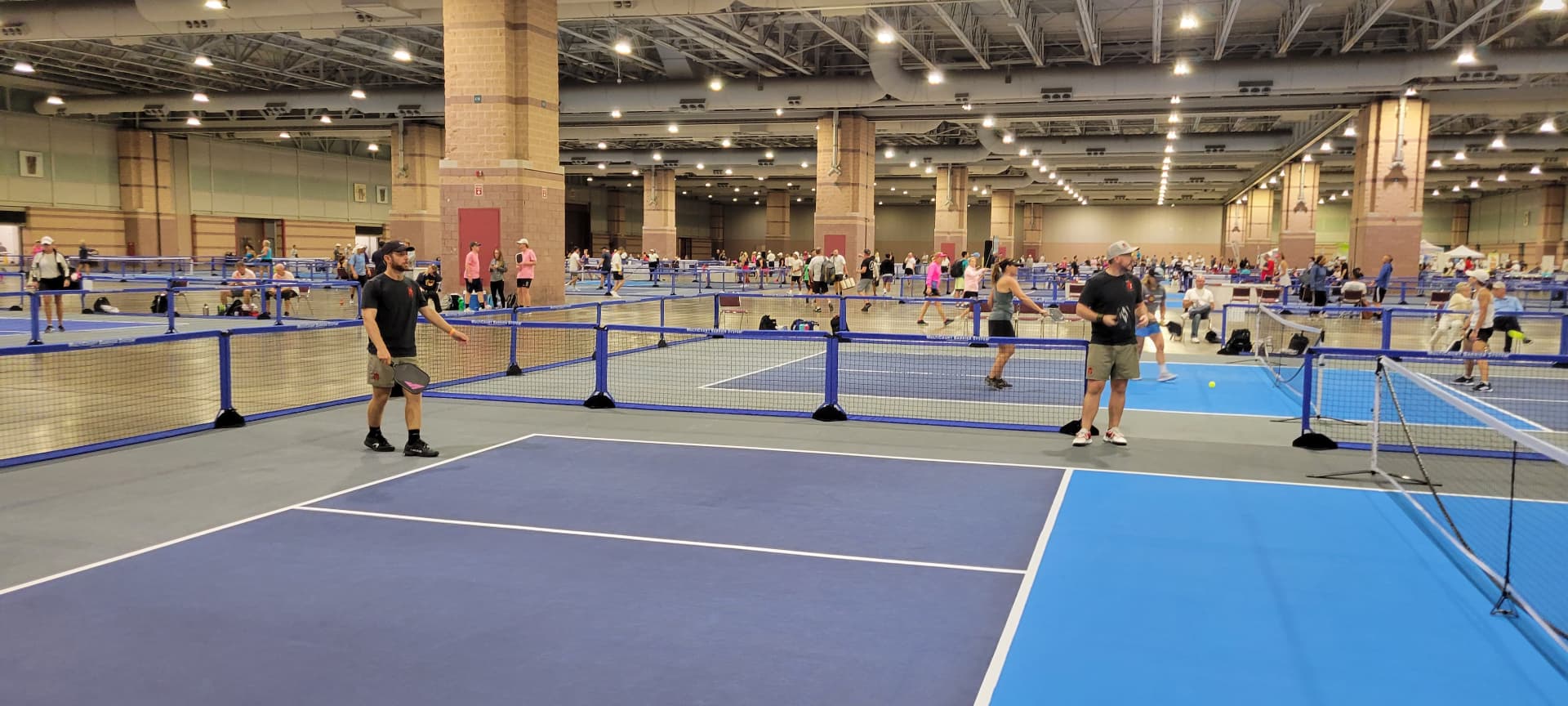
A turnkey pop-up pickleball day gives an apartment or multifamily property a staffed, one-day court on a courtyard, lot, or rooftop — delivered, built, run, and removed the same day, with no permanent construction and no standing noise commitment. It's booked as a resident-retention event, a lease-up amenity day, or a portfolio-wide programming series, priced and approved the same way any other resident event is.
The retention math behind resident events
Interest in pickleball as a multifamily amenity is real — roughly 28% of renters said they'd be interested in having a pickleball court on-site, according to a 2024 renter survey cited by industry publication Apartments.com. But 2026 amenity coverage also flags a real tension: some operators that installed permanent courts have started removing or reconsidering them specifically because of noise complaints from nearby units, even as resident interest in the sport stays high. That's the exact gap a turnkey event fills — you get the draw, the photos, and the resident goodwill of a pickleball day without the standing capital investment, the maintenance line item, or the every-evening noise exposure a permanent court creates.
It also lines up with where multifamily amenity spending is actually heading. With new apartment completions slowing and operators shifting from "add more amenities" to "add the right amenities," 2026 industry coverage points to resident programming and events — not another static amenity space — as one of the highest-ROI retention investments available on a modest budget. A single staffed event day is a low-commitment way to test whether pickleball is the right addition for your specific resident base before deciding anything more permanent.
Two different jobs, one activation
Multifamily teams book this event for two distinct reasons, and it's worth being clear about which one you're solving for. A retention event is aimed at current residents — the goal is renewal, satisfaction scores, and word-of-mouth, so timing around lease-renewal season or a seasonal resident-appreciation slot matters more than foot traffic from outside the property. A lease-up or leasing-tour event is aimed at prospects — the goal is filling units in a new building or a newly delivered phase, so visibility from the leasing office and a court that's active during tour hours matters more than resident-only scheduling. Some properties run both from the same build on different days; a new community launch especially benefits from pairing a leasing-tour activation with the kind of programming our model-home and community-launch guide covers for the broader sales event.
Formats that fit a rent roll, not a club roster
Resident retention & appreciation days
A staffed pop-up court on renewal season, a resident-appreciation day, or a seasonal social calendar slot — the kind of event property management publications increasingly point to as a higher-ROI renewal lever than another gift-card raffle.
Lease-up & grand-opening amenity days
For a new property or a newly delivered phase, a court on the courtyard or amenity deck gives leasing tours something to point at in motion, not just a rendering of a future clubhouse.
"Meet your neighbors" mixers
A lower-key open-play hour aimed at newer residents specifically — a natural, low-pressure way to build community in a building where people otherwise pass each other in the elevator without talking.
Portfolio-wide programming days
Regional property managers running the same event format across several communities on a rotating schedule, sourced through one vendor instead of coordinating separately at each site.
Scoping a resident or leasing event?
Tell us your property, date, and whether it's retention-focused or lease-up-focused — we'll scope a build that fits the space you actually have.
Why an event day beats a permanent court for most properties
A permanent court is a one-way decision: once it's built, residents expect to use it whenever they want, which means whatever noise it generates becomes a standing, every-evening issue for units nearby rather than a scheduled, communicated exception. That's exactly the dynamic behind the properties now pulling permanent courts back out after installing them. A single scheduled event day sidesteps that problem entirely — you can notify residents ahead of time, run it during reasonable daytime hours, and remove it before it becomes an ongoing source of noise tickets to the property office. If your community eventually finds strong enough demand to justify a permanent build anyway, our permanent court vs. event rental comparison covers the construction cost ranges and the breakeven math, and our noise levels and neighbor considerations guide covers the honest decibel numbers worth reviewing before that conversation happens with ownership.
Who typically books this
Resident-experience or lifestyle coordinators at a single large community building out a retention-focused events calendar.
Leasing and marketing directors staging a lease-up or grand-opening amenity day to show prospects the community in action during tours.
Regional property managers sourcing one vendor for a rotating event series across several communities in a portfolio.
Site realities: courtyards, lots, and rooftops
The most common spot — central, visible from multiple buildings, and usually the easiest surface for a rollout court. Confirm irrigation timing and any HOA-style landscaping rules before you commit the space.
Asphalt installs a court directly with no subfloor needed, and a weekend event rarely conflicts with resident parking if you block off a section and communicate ahead of time.
Workable on many properties, but weight limits, access for delivery, and railing clearance need a real site check before you promise residents a rooftop pickleball day in the newsletter.
This is the one factor that kills more multifamily pickleball plans than any other. Courtyards ringed by balconies carry paddle sound differently than a suburban HOA lawn — plan placement, hours, and duration deliberately rather than assuming it'll be fine.
Most multifamily sites don't have a dedicated sport surface sitting empty, which means the court usually lands on grass, pavers, or asphalt that was never built for play. Our surface and subfloor guide covers what each surface needs under a rollout court, and our court dimensions guide covers the footprint math for a courtyard that looked bigger on the site plan than it does in person.
When this isn't the right event
A property with no realistic courtyard, lot, or rooftop space for even a scaled-down footprint is a hard no without borrowing an adjacent common area. A building under a strict, actively enforced quiet-hours policy in a dense urban setting may need to rule out anything beyond a short daytime clinic rather than a full afternoon of open play — that's a conversation worth having honestly with your property manager before residents are promised an event that noise rules end up shrinking. And a property that's already tried a poorly staffed, self-serve court setup and gotten complaints about it should expect skepticism from residents; leading with a clearly staffed, time-boxed event helps rebuild that trust rather than repeating the same unstaffed mistake.
Budget and getting it on the calendar
A single-court resident or leasing event is one of the smaller builds we run, priced by court count, hours on-site, and staffing rather than unit count. See our cost guide for typical ranges and our booking timeline guide for how far ahead to lock a date — peak leasing season in spring and late summer books up fastest in most markets. If your community is a for-sale, age-restricted property rather than a rental portfolio, our active adult and 55+ communities guide is the closer match, and if it's a single-family HOA rather than a multifamily rental property, see our HOA and neighborhood events guide instead.