Venue Playbook · Breweries & Taprooms
Pickleball for breweries and taprooms
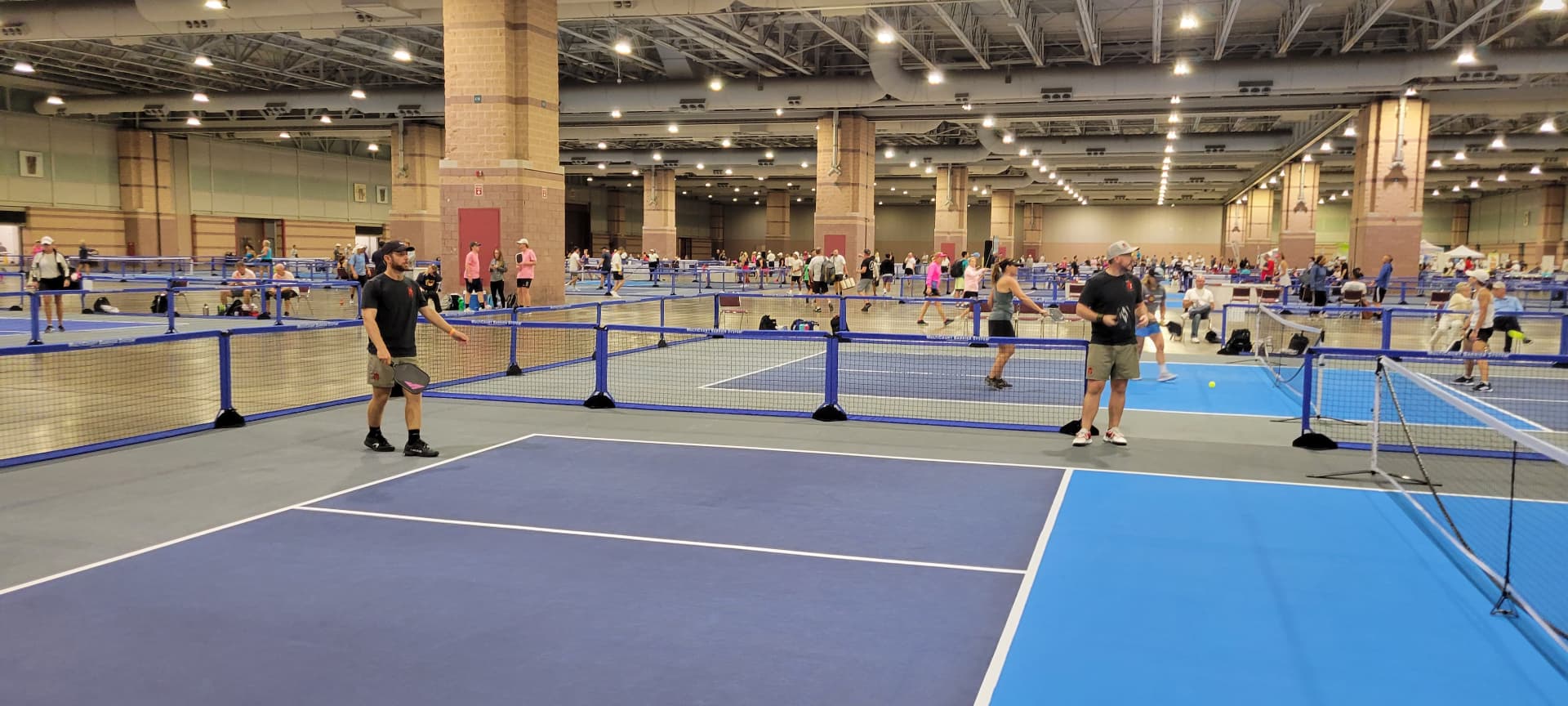
A brewery or taproom adds pickleball with a turnkey pop-up court on the patio, lot, or lawn it already has — delivered, staffed, and torn down the same day, either as a one-off launch event or a weekly league night that turns a slow evening into a standing draw. The format is riding a real trend: OpenTable logged a 46% year-over-year rise in experiential dining bookings from 2024 to 2025, and the sport itself grew to 24.3 million U.S. players in 2025, up 22.8%in a year, per the Sports & Fitness Industry Association.
Why taprooms are adding this now
Pickleball at a brewery isn't a novelty booking — it's a small-scale version of the same "eatertainment" shift showing up at bowling alleys, golf-sim bars, and food halls nationwide.
Most taprooms already have plenty of foot traffic on a Friday or Saturday night. The dead zone is a Tuesday afternoon or a Sunday before football starts — exactly when a staffed court gives people a reason to come in early and stay for a second round.
OpenTable reported a 46% year-over-year rise in experiential dining bookings from 2024 to 2025, with 37% of diners saying they want more of it in 2026. "Eatertainment" — golf simulators, bocce, pickleball — bolted onto food and drink venues is the format that trend is describing.
The Sports & Fitness Industry Association counted 24.3 million pickleball players in the U.S. in 2025, up 22.8% in a single year. A brewery doesn't need every one of them walking in — it needs a fraction of that growth curve discovering the taproom because of the court out back.
Standalone dine-in pickleball clubs are charging $75–$149 a month in membership fees to fund full-time courts and staff. A brewery doesn't need that overhead — a pop-up or seasonal court on existing patio or lot space captures the same draw without the real-estate commitment.
Where the court actually goes
Most taprooms have one of three usable footprints: a paved patio, a gravel or grass overflow lot, or a lawn area next to the building. A regulation court needs roughly 20x44 ft plus run-off space for players to chase a ball without landing in someone's beer. Paved patios and parking areas install a rollout court directly. Gravel and grass typically need a subfloor system underneath so the surface plays true instead of shifting mid-rally — that adds a few hours of build time but isn't a reason to rule out a lawn or lot. Full details on what each surface needs are in our surface and subfloor guide.
Resist the urge to squeeze the court right up against the bar or kitchen door. Leave a buffer for staff carrying trays and for spectators standing around watching — a court that blocks the path to the bathroom creates more friction than it's worth, no matter how good the rally looks.
One-off event vs. weekly league night
This is the first real decision, and it's worth making in the right order — test before you commit.
A single Saturday afternoon build — one court, a staffed clinic block, and open play — to test whether the format draws a crowd before committing to anything recurring. Lowest risk, easiest to greenlight internally.
A standing night (think trivia night, but with paddles) that gives regulars a reason to show up on a specific day. This is where the real retention value shows up — a single event is a nice afternoon, a standing league is a habit tied to your taproom specifically.
A bracket or round-robin timed to a can release, anniversary, or seasonal festival — bigger draw, more staffing, and worth branding the court and paddles if the release has its own identity.
Regional brewery groups running the format across two or three locations to compare turnout before deciding where it becomes permanent programming rather than a one-off experiment.
A single Saturday event tells you whether your regulars actually want this before you build a standing Tuesday-night reputation on it. Skipping straight to a recurring series without that test is the most common mistake we see — a league night with declining week-over-week turnout does more damage to the taproom's reputation than never running one at all. Our recurring programming guide covers the staffing and cost differences between a one-off and a season in more depth.
Have a patio, lot, or lawn in mind?
Tell us your outdoor footprint and preferred date — we'll tell you what fits and what it costs, usually within 24 hours.
Alcohol, liability, and insurance — what actually changes
This is the part that meaningfully separates a brewery activation from a dry corporate event, and it's worth taking seriously rather than treating as boilerplate.
- A brewery serving alcohol next to a physical activity is a different insurance conversation than a dry corporate campus. Your venue's liquor liability policy and the activation's general liability policy are separate things — confirm both name each other as additional insured before anyone signs a waiver.
- Staff running the court should have a simple, enforced rule: no one visibly intoxicated joins live play. This isn't about policing your bar — it's about not being the taproom whose pickleball night ends in an ER visit and a lawsuit.
- Participant waivers matter more here than at a dry office event, precisely because alcohol is present. Build the waiver and sign-in table into the flow before the first serve, not as an afterthought once people are already playing.
- Outdoor patios and lots often sit closer to property lines and neighbors than a corporate campus does. If your taproom has had noise complaints before, review the noise levels guide before you schedule anything past early evening.
None of this should scare a taproom off the idea — thousands of venues run bocce, cornhole, and darts leagues alongside a full bar without incident. It just means the insurance conversation happens before the first event, not after someone gets hurt. Our insurance and liability guide covers certificate requirements and waiver language in more depth.
Getting the day-of logistics right
- Confirm the surface before you promise a date — gravel lots and uneven lawns usually need a subfloor system to play true, while a paved patio or parking area installs directly. See the surface and subfloor guide before you set expectations with your team.
- Keep the footprint to one court unless you already know you'll fill two — an empty second court next to a full one reads as a failed event, not an ambitious one.
- Schedule around your kitchen and bar's actual rush, not just "a nice afternoon." A court that pulls staff attention during your busiest pour hours creates a service problem you didn't have before.
- Decide who owns setup and breakdown labor in the contract — most taprooms want the court gone or stored by open-to-close hours, not lingering as a tripping hazard after last call.
Staffing is what turns a court from a lawn decoration into a reason to show up. A host who runs quick rotations, keeps beginners from feeling intimidated, and mixes strangers into the same game is doing more for your bar tab than the court itself — see our event staffing guide for roles and ratios. If the event is timed around a happy hour crowd specifically, our company happy hour guide covers a closely related after-work format worth comparing notes with.
When a full court isn't the right call
Not every taproom has the footprint for this, and forcing it onto a cramped patio does more harm than good. If your outdoor space genuinely can't clear 20x44 ft plus a walking buffer, a smaller paddle-skills challenge or a mini net setup can capture some of the same energy without blocking foot traffic to the bar. It's also worth skipping a launch event entirely if your patio already has a strong identity built around something else — live music on Fridays, a dog-friendly beer garden vibe — where a pickleball court would compete for the same footprint rather than add to it. Match the activation to what your space is already good at instead of importing a format because a competitor did it first.
Timing matters as much as space. Running the court during your kitchen's dinner rush pulls staff attention exactly when you can least afford it. A mid-afternoon or early-evening window before the dinner crowd arrives almost always outperforms squeezing it into your busiest hours.
What it costs
Pricing follows the same underlying drivers as any turnkey activation — court count, hours on-site, staffing, and whether the surface needs a subfloor — rather than a separate brewery rate card. A single court for a one-day pop-up sits at the low end of the range; a weekly or monthly series is quoted as a standing rate, typically lower per event than booking four one-offs separately. See the full cost guide for the complete breakdown of what drives a quote up or down.
Where this fits alongside other venue types
Breweries share a lot of planning logic with other social venues running pop-up activations — see our breweries & entertainment venues overview for the fuller picture of what we build for taprooms, food halls, and similar spaces. If your brewery is timing this around a street fair or a city festival your taproom is participating in rather than a private event, our city festivals and street fairs guide covers the public-event version of this same idea, including permits.