Corporate Events · Recognition
Pickleball for Employee Appreciation Day
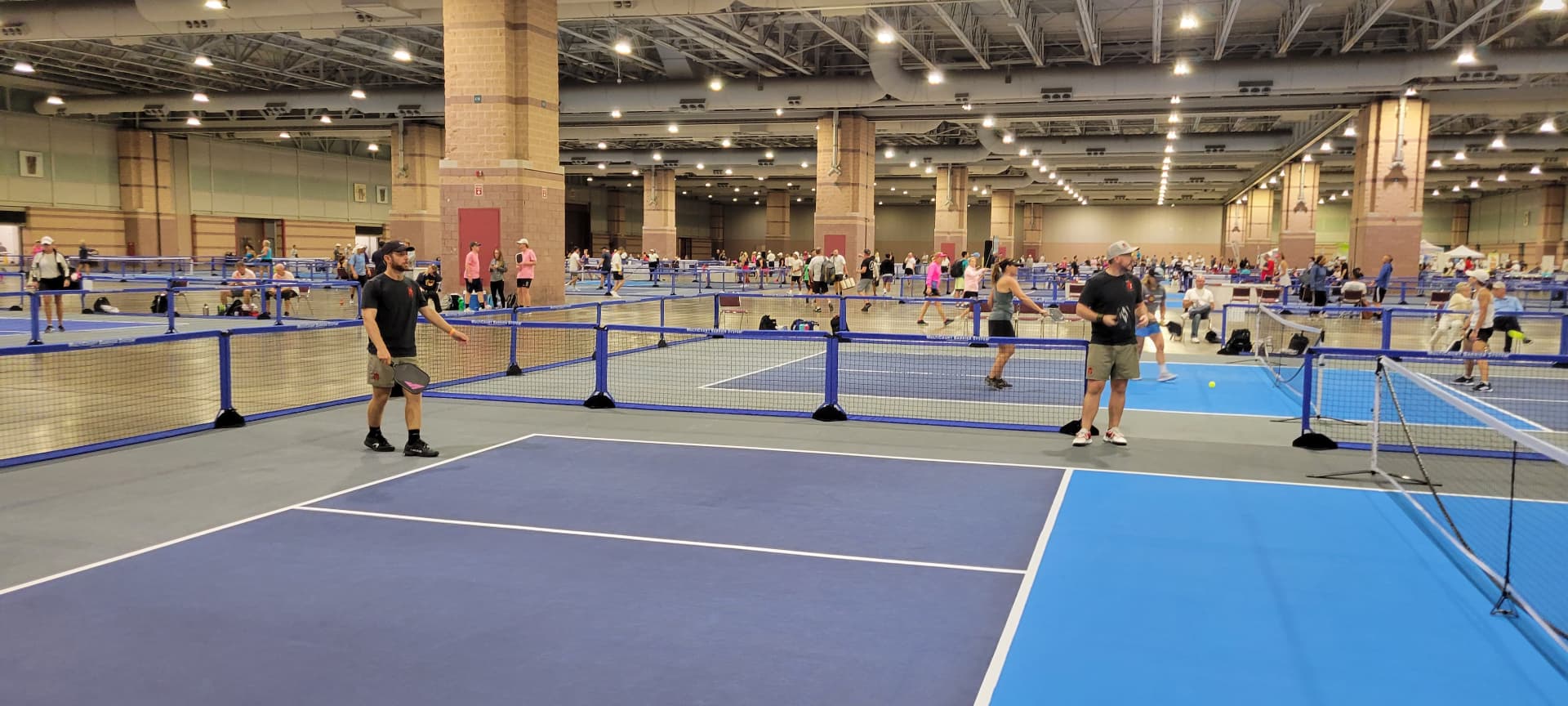
A staffed pickleball court turns Employee Appreciation Day — the first Friday in March — into an activity people actually remember instead of a catered lunch they eat at their desk. Run it as a drop-in half-day build, 3–5 hours, with a beginner clinic up front so non-athletes join as easily as the office regulars. Pricing starts around $10,000 for a single office, single-court build, and scales for multi-building campuses or multi-site companies running the same activation across locations in one week.
Why a court beats another catered lunch
Roughly two-thirds of workers say they went unrecognized in the past year, and a large share of people who quit point to feeling unappreciated as a factor. A day built around an activity people remember does more than an email from leadership, even a well-written one.
Workplace research on recognition consistently finds that employees who feel genuinely appreciated are meaningfully more productive and more likely to stay — the effect shows up in retention numbers, not just survey scores. A single afternoon won't fix a broken recognition culture, but it's a visible, low-risk signal that the culture is trying.
Appreciation Day tends to fail when it's a lunch-and-a-speech format bolted onto a normal Friday. A court in the parking lot or courtyard pulls people physically away from their screens, which is most of what makes the day feel different.
Unlike a golf outing or a 5K, pickleball doesn't sort people by fitness level or tenure. A new hire and a 20-year VP can rally on the same court within five minutes of picking up a paddle, which matters on a day meant to feel inclusive rather than competitive.
What it costs
Appreciation Day activations follow the same pricing logic as any turnkey build — court count, days on-site, and staffing drive the number. See the full cost guide for every variable; the ranges below are the common shapes we see for this specific occasion.
| Scope | Typical range |
|---|---|
| One office · single court · half-day | From ~$10,000 |
| Multi-building campus · 2–4 courts · full day | Mid five figures |
| Multi-site company · courts at several locations, same week | Scales per site — quoted individually |
Planning it around a fixed date
Unlike a summer picnic or a field day, which most companies pick a date for on their own calendar, Employee Appreciation Day is anchored to the first Friday in March — a fixed, predictable occasion that shifts slightly year to year but never sneaks up on anyone who's paying attention. That predictability is worth using. Vendors, venues, and staff availability all get tighter the closer you get to early March, since a meaningful share of companies are trying to book the same week. Locking a court, staff, and location six to eight weeks out — see our booking-lead-time guide for the specifics — gets you better staffing options and avoids paying a rush premium for a date you knew was coming a year in advance.
Location matters more than most planners expect. A parking lot, courtyard, or unused lawn works fine for warm-weather offices; northern offices in early March are often still cold enough that an indoor space — a lobby, gym, or atrium — is the more realistic call. Our indoor vs. outdoor guide walks through the surface and space tradeoffs either way.
Planning next year's Appreciation Day?
Tell us your office size, city, and headcount — we'll scope a court and staffing that fits a half-day build.
Mistakes that turn a good idea into a dud
The fastest way to kill the goodwill is a calendar invite that reads like an obligation. Frame it as optional, drop-in, come-when-you-can — appreciation doesn't work as a compliance exercise.
If the day reads as 'the sporty people's activity,' you've excluded most of the office. Pair the court with a beginner clinic in the first 20–30 minutes so non-players have an easy on-ramp instead of standing on the sideline.
Appreciation Day usually has a fixed date — the first Friday in March, if you're following the national observance — so there's no excuse for booking a vendor at the last minute. Late bookings mean fewer date and staffing options, not a discount.
A single-site court activation naturally favors people in the building that day. If a meaningful share of your company is remote, pair the in-office court with a separate recognition touch — a gift, a video, a virtual shoutout — so the day isn't only for people who happen to be on-site.
A single well-run afternoon reads as thoughtful. A single well-run afternoon that's the only recognition all year reads as compensating for twelve months of silence. Pair it with the smaller, cheaper habits — shoutouts, notes, spot bonuses — that carry the other 364 days.
Running it well: a simple structure
- Open with a 20–30 minute beginner clinic so first-timers have a reason to walk over instead of watching from a distance.
- Run the middle of the window as open play — short, casual rallies, staff rotating people on and off the court so nobody waits long.
- If leadership wants a moment of visible recognition, pair it with the court rather than replacing it — a few minutes of a manager or exec playing a rally with their team reads better than a podium speech.
- Close with something people take with them — a photo moment, a small giveaway, or just letting the court run until the natural end of the day rather than cutting it off on the dot.
How to tell if it actually landed
Most companies never measure whether an appreciation event did anything beyond generate a few photos for the internal newsletter. A simple gut check works fine: did people from outside your usual social circle end up talking, and did the day come up unprompted in the following week's Slack or standup? A recognition event that only reaches the people who were already going to feel appreciated — the high performers, the loud extroverts — hasn't done much. Watching who actually walks over to the court and who doesn't tells you more about your culture than any survey question about the event itself.
If you run a pulse survey afterward, ask about the feeling of being valued generally, not just whether people liked the pickleball court specifically — the activity is the vehicle, not the point. A day that scores well on "did you have fun" but doesn't move the needle on "do you feel appreciated at this company" is a signal to pair the event with the cheaper, more frequent habits — handwritten notes, manager shoutouts, spot recognition — that a once-a-year afternoon can't substitute for on its own.
Where this fits, and where it doesn't
Appreciation Day is a recognition-first occasion — it's a different brief than our employee wellness days and benefits fairs work, which is built around health programming and open-enrollment season rather than a single thank-you day, and different from our holiday party guide, which is an evening, cocktail-attire format. If you want a full-day, multi-activity event rather than a half-day drop-in, corporate field days is the closer match. And if you need to make the internal case for the budget line before you book anything, our team-building ROI guide covers what the engagement research actually supports, separate from the recognition-specific numbers above.
Staffing is worth planning early too — a half-day drop-in format still needs enough court staff to keep lines short during peak lunch and afternoon-break windows. Our event staffing guide covers typical ratios so you're not guessing headcount the week of.