Best Pop-Up Canopy Tents for Outdoor Company Pickleball Events (2026): Wind Ratings & Ballast Compared
By The Pickleball Events Co. team · Updated
The short answer
For check-in, hydration and sponsor tents at an outdoor company pickleball event, buy on published wind guidance and ballast, not looks. TentCraft's MONARCH TENT is the only 10x10 here with a certified rating for the anchored tent (35 mph, no walls or flags, with 208 lb of footplates on pavement). Mastertent has the most sidewall and counter options for a sponsor booth, E-Z UP's Endeavor is the heaviest frame (80 lb), Impact Canopy offers steel and aluminum frame tiers with NFPA 701 fabric, and Caravan's Alumais the lightest at 48 lb. Weight every leg, and decide in advance who takes the tents down when the wind rises. Disclosure: The Pickleball Events Co. is our company and we run staffed pickleball events. We aren't affiliated with any brand here and nobody paid to be included.
Who this is for
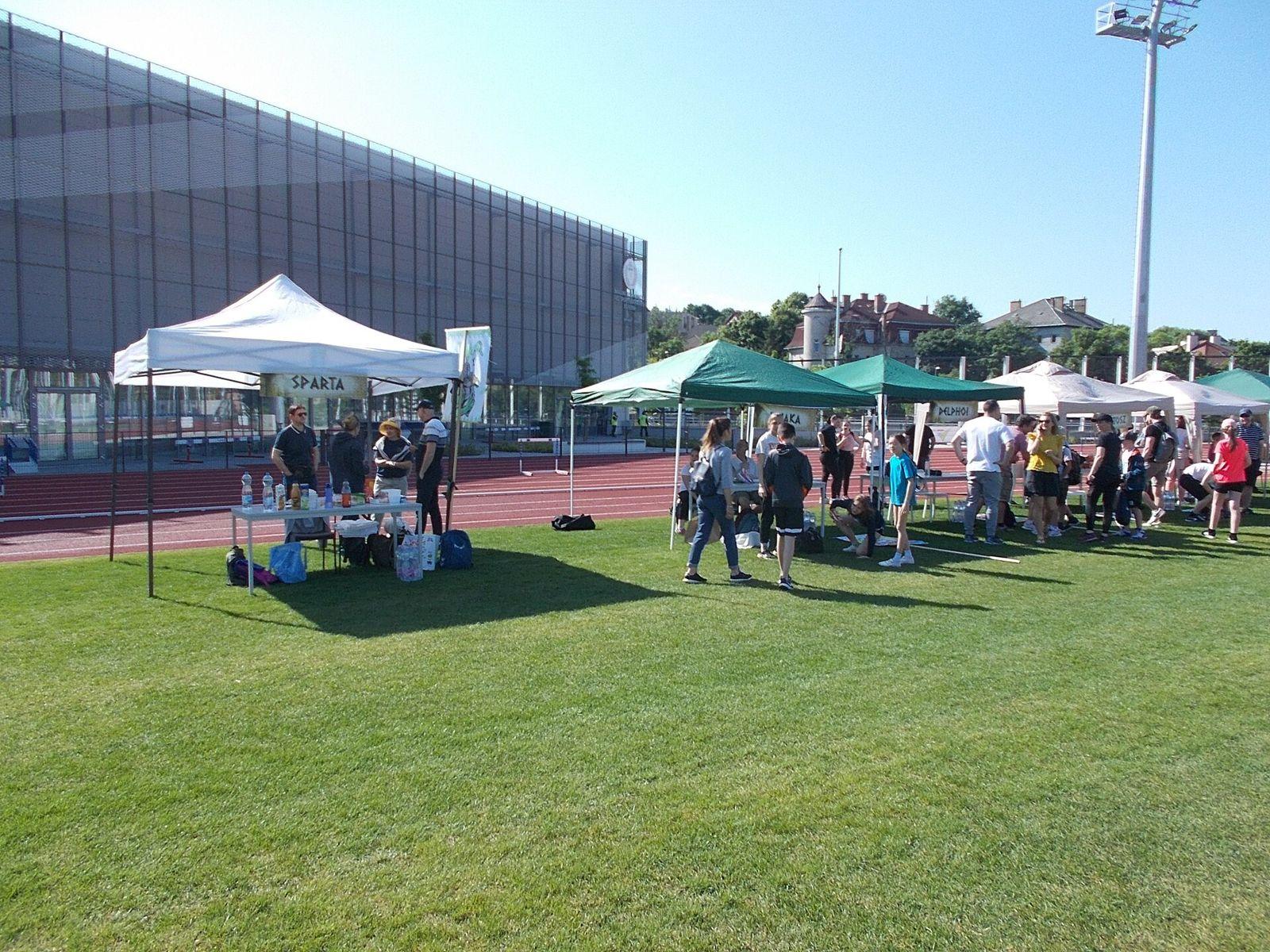
Event agencies, DMCs, incentive planners and in-house teams putting pickleball on a lawn, a parking lot, a rooftop or a campus quad. The courts are only part of an outdoor build. Somebody also needs a tent for check-in and loaner paddles, shade and water for players waiting between games, a sponsor or brand tent, and often a scoring or emcee desk. Those tents are usually 10x10 pop-up canopies, and they are the part of an outdoor pickleball event most likely to move in the wind. This page compares the canopies themselves. For tenting the courts, rain plans and lightning, see our weather contingency plan.
How we compared
- Does the maker publish a wind rating for the anchored tent, and what conditions does it assume (walls, flags, ballast)?
- How much ballast does it need on pavement or a turf field where you can't stake, and does the maker sell plates sized to the leg?
- What does the frame weigh, and can two event staff set it up and strike it without tools?
- Is there a flame-resistance certificate (CPAI-84, NFPA 701) you can hand to a venue or fire official?
- Headroom and clearance for a check-in table, a hydration station or a sponsor counter
- Warranty, and whether it excludes weather damage (most do)
Every fact below comes from the maker's own product page, owner's manual, FAQ or spec summary, read on November 12, 2026. We haven't invented test results or ratings, and we don't reprint prices because they change with size, frame and printing. Every maker page is linked so you can check current pricing.
Comparison table
| Canopy | Wind guidance (maker) | Ballast | Frame and weight | Fire rating | Watch out for |
|---|---|---|---|---|---|
| TentCraft MONARCH TENT 10x10 | Certified 35 mph when properly staked or with four footplates; no walls or peak flags | At least 200 lb on hard surfaces: four 24 kg (about 52 lb) footplates, 208 lb total | Anodized aluminum frame, 72 lb, 600D polyester canopy, 6 ft 8 in head clearance | Lists a California fire certificate on the product page | Rating drops when you add walls; TentCraft says never use it above 40 mph |
| Mastertent Series 1 and Series 2 (10x10) | Frame and fabric wind-tunnel tested up to 60 mph (material strength, not a deployed-tent rating) | Base weights and ballast systems sold as accessories; no minimum published in the 10x10 summary | All-aluminum octagonal legs (43 mm / 2.5 mm on S1, 37 mm / 2.1 mm on S2); 69.8 lb and 60.1 lb | Fabrics certified fire-retardant; fireproof fiberglass fabric option | Don't read 60 mph as a safe operating limit; ask for the anchored rating |
| E-Z UP Endeavor 10x10 | No wind rating published; owner's manual says not to use it in potentially windy weather | Manual says always stake or weigh down with genuine E-Z UP accessories (weight bags, plates, stake kit) | 6061-T6 aluminum, 50 mm octagonal legs, 80 lb, Duralon PRO 500D top, 6 ft 9 in valance clearance | Tops treated to meet CPAI-84 | Warranty excludes damage from wind, rain or other forces of nature |
| Impact Canopy 10x10 (CL heavy-duty steel or ML/M aluminum frames) | Product page: winds over 10 to 15 mph and water pooling on top can destroy the structure | Tie-downs, stakes, weight bags or rubber weights; keep legs at a lower height in wind | Frame tiers from recreational steel (TL) to heavy-duty steel (CL) and commercial or super-duty aluminum (ML, M) | Fabric meets CPAI-84, ULC-S109 and NFPA 701 | Lowest published wind guidance in this group; weather damage not under warranty |
| Caravan Canopy Aluma and Classic (10x10) | No wind rating published; FAQ says canopies should be staked or weighted to avoid sudden wind damage | Tie-down kit and corner rings included; weight bags sold as accessories | Aluma (aluminum) 48 lb or Classic (powder-coated steel) 72 lb, both with 500D top; 5 ft 10 in to 7 ft 1 in clearance | Fire-retardant (FR) rated 500D polyester top | Lightest frames here; 2-year limited warranty; not meant for unattended outdoor use |
Facts as stated on each maker's pages on November 12, 2026. Weights are for the 10x10 frame with top.
Quick picks by job
| If you need | Start with | Why |
|---|---|---|
| A written wind rating for a venue or client | TentCraft MONARCH TENT | 35 mph certified rating, anchored, no walls; ballast spelled out |
| A branded sponsor booth with walls and a counter | Mastertent Series 1 | Widest sidewall, counter and print options; ask for the anchored rating |
| A heavy, tough frame for a full-day check-in tent | E-Z UP Endeavor | 80 lb aluminum frame, CPAI-84 top, weight plates sold to fit |
| Custom printing with frame choices | Impact Canopy CL or M frame | Steel or aluminum tiers; NFPA 701 fabric; plan for a 10 to 15 mph takedown |
| Several light tents for one field day | Caravan Aluma | 48 lb, tie-down kit included; weight every leg |
The canopies, one by one
1. TentCraft MONARCH TENT 10x10
TentCraft is the only maker in this group that publishes a wind rating tied to a deployed tent rather than to a frame or fabric test. On its product page and in its ballast guide, the company says the 10x10 MONARCH TENT is wind-rated by an engineering firm at 35 mph when it is properly staked with the included spiral staking kit, or when all four of its weighted footplates are installed on concrete or another hard surface. Each footplate weighs 24 kg (about 52 pounds), 208 pounds in total, and TentCraft's guidance is that at least 200 pounds is needed to anchor a 10x10 on a hard surface.
The fine print matters for event use. TentCraft says the rating applies only to a tent with no walls and no peak flags, because walls add surface area facing the wind. A check-in tent with a back wall and two sponsor banners is not the tent that was rated. TentCraft also says it doesn't recommend using its tent in winds above 40 mph and that it is safer to take the tent down before winds reach the rated range at all.
The frame is anodized aluminum made in Traverse City, Michigan, the 10x10 weighs 72 pounds, and the canopy is printed 600D polyester. TentCraft lists a lifetime frame warranty and a seven-year canopy warranty, a 3 to 5 day turnaround on custom prints, and a California fire certificate among the product documents. It is the pick when a venue or a client's risk team asks for a written wind rating, and the one to buy if a client wants a branded tent it will reuse across a season of events.
2. Mastertent Series 1 and Series 2 (10x10)
Mastertent is a Zingerle Group brand that sells all-aluminum pop-up tents with a long list of walls, counters and printing options. Its 10x10 product summary compares two frames. Series 1 has 43 mm octagonal legs with a 2.5 mm wall and weighs 69.8 pounds; Series 2 has 37 mm legs with a 2.1 mm wall and weighs 60.1 pounds. Both list a 10 ft 7 in peak height, a 6 ft 7 in entrance height, waterproof fabric, certified fire-retardant fabric and a limited lifetime warranty with a 10-year spare parts service.
The wind claim needs careful reading. Mastertent says it wind-tunnel tests its canopy tents for frame and fabric material strength with performance up to 60 mph. That is a statement about how strong the materials are, not a rating for a tent standing on a lawn with four weights. The same summary lists base weights, ground anchors and ballasting systems as accessories but doesn't publish a minimum ballast for the 10x10. If you are comparing Mastertent with TentCraft for a client, ask Mastertent for the anchored wind rating and the ballast it assumes, in writing.
Where Mastertent stands out is configuration: a-la-carte sidewalls (closed, window, roll-up door, half-height with a counter), corner curtains, LED lights, fans and heaters, and both heat-transfer and full dye-sublimation printing. For a sponsor tent that has to look like a branded booth, that range is useful. Just remember that every wall you add changes how the tent behaves in wind.
3. E-Z UP Endeavor 10x10
E-Z UP calls the Endeavor its toughest canopy and the strongest instant shelter it makes. The product page lists a 6061-T6 aluminum frame with oversized 50 mm octagonal legs, internal frame reinforcements, Nylon 6 fittings, a welded aluminum foot plate, a Duralon PRO 500D polyester top with UPF 50+ protection, five height settings, 6 ft 11 in maximum headroom and 6 ft 9 in valance clearance. The 10x10 weighs 80 pounds and carries a lifetime limited warranty. The cross-brace ceiling has built-in anchor points for lights and banners.
E-Z UP doesn't publish a wind rating for the Endeavor on the product page, and the Endeavor owner's manual is blunt: always stake or weigh down the shelter with genuine E-Z UP accessories, and do not use it in any potentially windy or rainy weather. The warranty in the same manual does not cover damage caused by wind, rain or other forces of nature. E-Z UP sells weight plates, deluxe weight bags, water weight bags and a heavy-duty stake kit for the Endeavor.
In practice the Endeavor is a very solid frame for a full day of check-in, shade and hydration, and the 80-pound weight helps. But plan it the same way the manual does: weighted on every leg from the moment it goes up, and a named person who takes it down when the wind picks up.
4. Impact Canopy 10x10 (CL heavy-duty steel or ML/M aluminum frames)
Impact Canopy sells custom-printed pop-up canopies in several frame tiers. On its 10x10 product page, the heavy-duty steel CL frame is described for pro tournaments and high-wind environments, the ML as commercial aluminum, and the M as super-duty aluminum for the toughest environments. The top is 500 denier fire-retardant, water-resistant, UV-treated polyester, and the company's care page says its fabric meets CPAI-84, ULC-S109 and NFPA 701 flame-resistance specifications.
Impact is also the most direct about limits. The product page says the canopy is designed for temporary shelter, should not be left unattended overnight or in inclement weather, and that winds over 10 to 15 mph and water building up on the top can destroy the structure. Weather damage is not covered by warranty. The care page adds practical setup advice that applies to every brand here: use tie-downs, stakes, weight bags or rubber weights in wind, keep the legs at a lower height setting for stability, and tie rope straps to the frame corners rather than to the top.
That 10 to 15 mph figure is a useful reality check for planners. A breezy afternoon on an open corporate campus can reach it. If you choose Impact for its printing and frame options, build the takedown decision into the run of show.
Maker page: Impact Canopy 10x10 (CL heavy-duty steel or ML/M aluminum frames)
5. Caravan Canopy Aluma and Classic (10x10)
Caravan's FAQ lays out its professional-grade 10x10 frames clearly. The Aluma is aluminum and weighs 48 pounds with a 500 denier top; the Classic is powder-coated steel at 72 pounds. Caravan says its tops are 500 denier reinforced polyester that is water-resistant, fire-retardant and UV-treated, its frames use pull pins instead of push buttons, an adjustable peak pole keeps the top tight, and a tie-down kit with corner rings is included. Clearance runs from 5 ft 10 in to 7 ft 1 in and overall height from 10 ft 3 in to 11 ft 6 in. The warranty is a two-year limited warranty.
On wind, Caravan says its canopies stand on dirt, grass or pavement but should be staked or weighted down to avoid sudden wind damage, are not meant for permanent outdoor use, and should not be left unattended for long periods. It doesn't publish a wind rating. Caravan also notes custom orders take one to two days for a quote and rendering and seven to ten business days to produce.
Caravan fits the planner who needs several plain or lightly branded tents for a single field day and will weight them properly. The 48-pound Aluma is easy for two people to carry; that lightness is also why ballast is not optional.
What the fire code asks for
Chapter 31 of the 2024 International Fire Code covers tents and temporary membrane structures. Three parts matter for event canopies. Section 3103.8 says tents and their appurtenances must be designed and installed to withstand the weather and prevent collapse, and that documentation of structural stability must be furnished to the fire code official. Section 3104.2 says that before a permit is granted, the owner or agent files a manufacturer's certificate showing the tent fabric, sidewalls and drops meet the flame-propagation performance of NFPA 701 Test Method 2. Section 3104.3 requires a permanent label on the tent naming its size and fabric, the manufacturer, and a statement that the material meets 3104.2.
Whether your event needs a tent permit at all depends on size and on the local code. The older wording, still reproduced in city handouts such as Napa's temporary tent permit sheet, requires approval for tents over 400 square feet, with an exception for tents open on all sides that are 700 square feet or less individually and in aggregate when placed side by side, with 12 feet of clearance to structures and other tents. A single 10x10 is 100 square feet. The 2024 edition moved permit thresholds to Sections 105.5 and 105.6, and every city adopts its own version, so ask the venue or fire marshal. A practical rule: keep the flame certificate for every tent in the event folder, whether or not anyone asks.
Venue rules often go further than the code, especially on rooftops, private campuses and public parks. Our event permits guide covers park and street permits, and our site assessment is where we check whether stakes are allowed, where the wind comes from, and how far the ballast has to travel from the truck.
How many tents, and where
| Tent | Typical count | Anchoring | Note |
|---|---|---|---|
| Check-in and paddle station | One 10x10 | Weights on every leg (stake on grass if the venue allows) | Back wall only if needed; walls lower the wind rating |
| Hydration and shade for waiting players | One 10x10 per two to three courts in full sun | Weights or stakes; keep legs at a lower setting | Pair with the cooling plan in our heat safety guide |
| Sponsor or brand activation | One 10x10 or 10x15 | Maker-specified footplates; more ballast on larger sizes | Banners and peak flags add wind load |
| Scoring desk or emcee | One 10x10 near the show court | Weighted; route cables away from the legs | Power and AV covered in our power and lighting guide |
These are planning starting points, not rules. Put tents outside the court run-off space, never between two courts where a player chasing a lob can hit a leg, and keep weight plates and bags out of walking paths. In full sun, shade for waiting players matters more than shade at check-in; our heat safety and hydration guide covers water and cooling, and the power and lighting guide covers cable runs to a scoring or emcee tent.
Mistakes we see with event canopies
Cinder blocks and a bungee. TentCraft notes that concrete blocks commonly weigh under 30 pounds, not enough on a windy day. Use weights made for the leg, and enough of them.
Reading a material test as a safe limit. A frame tested to 60 mph in a wind tunnel is not a tent you leave up in 40 mph gusts. The numbers that matter are the anchored rating and the maker's takedown guidance.
Walls on every side. Walls and banners turn a canopy into a sail. Use one back wall for shade or branding, and take walls off first when the wind rises.
No takedown owner. Pick a wind threshold below the lowest limit among the tents on site and name the person who calls it. Impact's 10 to 15 mph figure is lower than most planners expect.
Water on the roof. Impact warns that water pooling on top can destroy the frame. In rain, lower one corner slightly or clear the roof, and don't leave tents up unattended overnight.
Want courts, tents and a takedown plan in one quote?
Send the date, city, venue, headcount and format. We'll spec the courts, the check-in, hydration and shade tents with their ballast, staff the day and quote it in writing. White-label for agencies is available.
Related: weather contingency plan · pop-up equipment compared · court accessories · equipment rental checklist
Client wants permanent shade at its own courts after the event? Our sister site compares cabana benches and engineered court shade in its guide to pickleball court shade structures.
In partnership with PickleCourt USA.
Sources: TentCraft 10x10 MONARCH TENT and 10x10 ballast guide; Mastertent 10x10 product summary; E-Z UP Endeavor 10x10 and Endeavor owner's manual; Impact Canopy 10x10 and care and precautions; Caravan Canopy FAQ; 2024 International Fire Code, Chapter 31; City of Napa temporary tent permit information. Accessed November 12, 2026.