Wealth Management & Advisory Firms
Pickleball for financial advisor client appreciation events
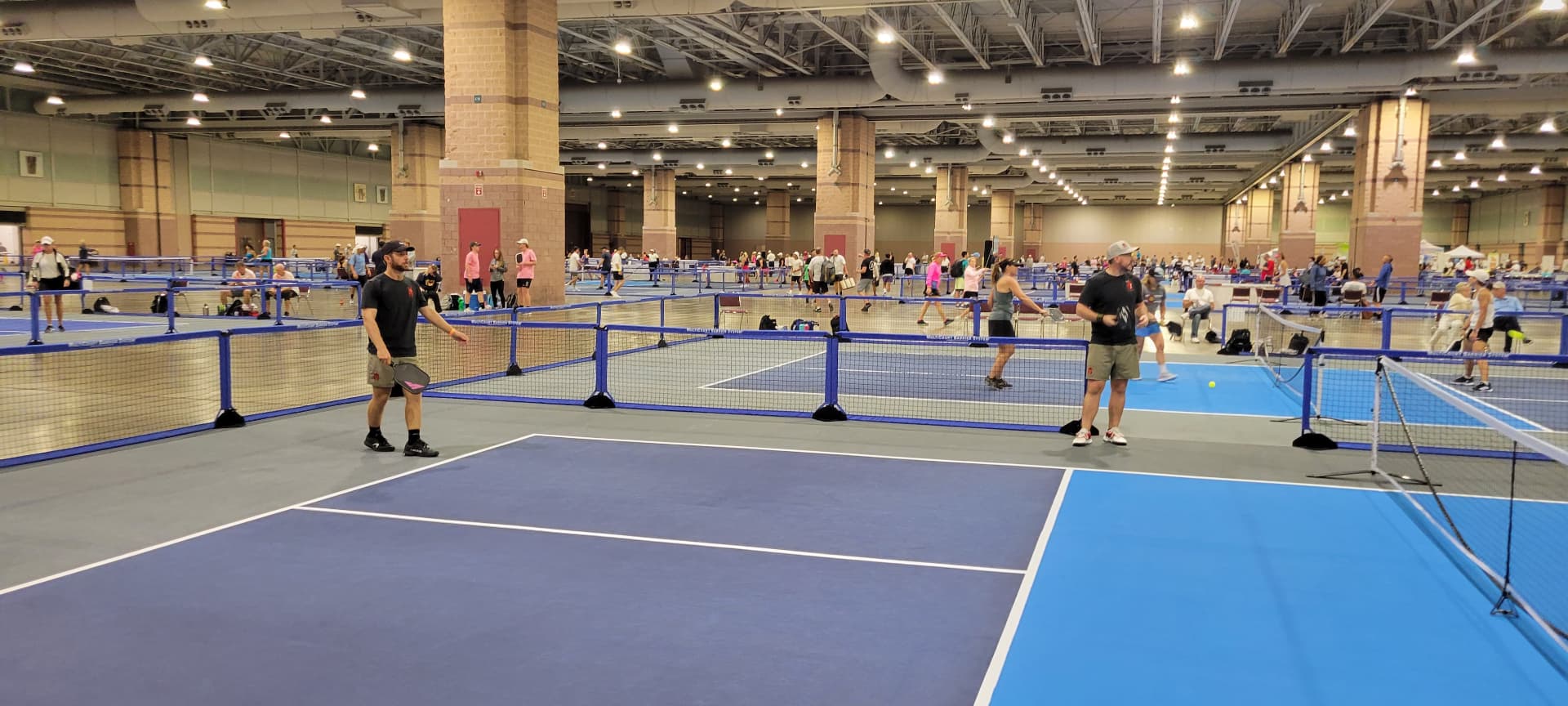
A turnkey pickleball courtgives an advisory team's client appreciation event something better than another steakhouse dinner: an activity clients, spouses, and grown kids can try together, with hosts who make beginners comfortable. We deliver, build, staff, and remove the court at your venue. You hand compliance a clear written scope and invoice, the same as you would for a caterer. This page is for advisors, branch managers, firm marketing teams, and the planners and agencies who produce their events. It isn't a list of places to play.
Why advisor teams are swapping dinners for courts
Client appreciation events exist to deepen relationships and earn introductions. Seated dinners do the first part reasonably well and the second part poorly, because guests talk to the people they arrived with. A court changes the seating chart. Doubles puts a retired engineer and a client's daughter on the same team, gives the advisor a natural reason to circulate, and creates the kind of small shared story (“we lost to your wife twice”) that people bring up at the next review meeting.
The sport's reach helps too. The Sports & Fitness Industry Association's 2026 Pickleball Single Sport Report counted about 24.3 million Americans who played in 2025, and the game draws players across age groups, which matters for books that skew toward pre-retirees and retirees but want to meet the next generation. Our pickleball statistics page has the sourced numbers. Plenty of your clients already play, and the ones who don't have heard enough to be curious.
Formats that fit an advisory calendar
Client appreciation afternoon
The classic: a Saturday or late-weekday window at a club, hotel lawn, or brewery patio where clients bring a spouse or friend. One or two staffed courts run open play with short rotations while food and conversation carry the rest of the event. Nobody has to be a player to enjoy it.
Referral-partner mixer
Advisors who build referrals through CPAs, estate attorneys, and insurance professionals use a court to turn a stiff networking hour into doubles partners. Mixed pairings put people who should know each other on the same side of the net for ten minutes.
Next-generation family day
Firms planning for wealth transfer want to meet clients’ adult children and grandchildren before an inheritance moves. A family-friendly court day is an easier invitation than a seminar, and multigenerational doubles is one of the things pickleball does well.
Prospect or community event
Some teams host a public clinic or a charity round robin to meet new households. Those events usually carry more compliance review than a client-only party because the invitation is a marketing piece to people who are not yet clients.
Many of these sit inside a broader hospitality program. If you also host clients at golf outings or private clubs, compare the trade-offs in our golf outing alternative guide and our client entertainment and hospitality guide.
Scope a client appreciation court
Date, venue, guest mix, and who reviews the plan. We handle delivery, build, staffing, and teardown, and send a written scope your compliance team can read.
Put compliance in the plan from day one
This is the part that separates a smooth advisor event from one that stalls two weeks before the date. We are an event vendor, not a compliance department, so treat what follows as the questions to bring to yours, not as advice.
For broker-dealers and their registered reps, the main rule is FINRA Rule 3220. FINRA raised its gift limit from $100 to $300 per person per year, effective March 30, 2026, and published Regulatory Notice 26-05 with new supplementary material. A few points from that notice matter for event planning:
- The supplementary material says the Gifts Rule does not apply to gifts to individual retail customers. It is aimed at people who receive something in relation to their employer's business, which is why referral partners and institutional contacts deserve a closer look than a household client.
- The cost of a business entertainment event itself isn't included in the value of a gift. Gifts handed out during the event generally are, unless they are personal, de minimis, or promotional or commemorative items.
- Gifts are aggregated per recipient over the year, and tickets to sporting or other events are valued at the higher of cost or face value.
Law-firm commentary on the change also points out that lower limits can still apply under other rules, so the FINRA number isn't the only one your team may use. Registered investment advisers aren't FINRA members and follow SEC rules and their own policies; dual registrants deal with both. Invitations, recap emails, and social posts about the event may count as marketing communications at your firm, which means review before they go out.
What helps on our side: a written scope that says exactly what is being provided (courts, nets, paddles and balls for play, hosts, setup, and teardown), a line-item invoice, and a separate list of anything guests take home. If you want branded paddles or ball sleeves as giveaways, send that list with unit costs to compliance along with the plan. Equipment guests use during play and return isn't a giveaway. Make that clear on the invoice.
Picking a venue clients will actually show up to
Location decides turnout more than the activity does. Advisors tend to do best with a venue clients already know and can reach easily: the country club many of them belong to, a hotel lawn near the office, a brewery or winery patio, or the firm's own parking lot dressed up with a tent. A roll-out court needs a flat, firm pad. USA Pickleball sets the lined court at 20 × 44 feet, and you want room around it for safe play, so measure the clear space after tents, bars, and walkways before you promise a court on the invitation. Our event court dimensions guide covers runoff, and country clubs and private clubs covers working with club staff.
Think about who is coming. A book that skews retired often wants daytime hours, shade, seating close to the court, and restrooms nearby. A family day needs a younger-player plan and a cutoff time before the kids get bored. Heat is a real factor in much of the country for half the year, so look at our heat and hydration planning guide if your event is outdoors in summer.
Running the court so it helps the relationship
The worst version of this event is a court full of the four best players while everyone else watches. The best version keeps the court moving and mixes people on purpose. Our hosts run open play with short games, a 90-second walkthrough for first-timers, and rotations that pair a steady player with a new one. Ask us to seed mixed teams if you want clients to meet referral partners or the next generation to meet each other.
Leave room for the advisor to be a host, not a player. The team's job during the event is to walk the sideline, introduce people, and set up the conversations that matter later. A short welcome, a casual “challenge the advisors” game near the end, and a group photo by the net usually give the event a center without turning it into a tournament. Our staffing guide explains how many hosts we bring for different formats.
What to send for a quote
Event goal and audience
Existing clients only, clients plus guests, referral partners, prospects, or a mix. The audience shapes the court count and the compliance path more than headcount does.
Venue and the clear pad
Photos of the lawn, lot, terrace, or ballroom and the clear rectangle after tents, bars, and walkways. Note grass versus hard surface, slope, and any load-in limits.
Guest profile
Age range, how many first-timers, mobility considerations, and whether children are invited. Retiree-heavy books often want shaded seating and longer breaks between rotations.
Who signs and who reviews
The firm, the branch, a single advisor’s team, or an outside planner, and who in compliance needs to see the plan, the invitation, and any giveaway list before it goes out.
Insurance, contracts, and who holds the venue
Venues usually ask vendors for a certificate of insurance naming them, and some firms ask to be named too. Tell us in the first brief who needs to appear on certificates. Many firms also prefer that guests sign a simple participation waiver at check-in; whether to use one, and what it says, is a decision for the firm and its counsel. We don't invent coverage limits or promise legal outcomes. Our event insurance and liability guide covers the questions to ask.
Cost: quote-based, built from your plan
We don't publish a package price for advisor events, because the number depends on things only your plan can tell us: court count, hours on site, number of hosts, travel to the venue, surface work, and any branding. Headcount matters less than you might expect. Our court rental cost guide walks through what moves the price. Every brief gets its own written quote that you can hand to whoever approves the event budget.
Book early for spring and fall weekends, which is when most client appreciation events land and when outdoor event calendars fill. The booking timeline guide has more on lead times.
Who usually books this
Requests come from an advisor or team lead planning their own client day, a branch or regional manager running an event for several teams, a firm marketing department building a repeatable client-event program, or an outside planner or agency producing the event for the firm. The court is the same for all of them. What changes is who signs, who reviews, and who we talk to on event day. We don't name client firms, publish attendance numbers, or claim results we can't back up.
Ready to plan your client event?
Tell us the date, venue, and guest mix. We'll send a written scope and quote.