Booking · Contract Terms
Pickleball event rental cancellation & rescheduling policy
A deposit at booking secures your date and starts the process of reserving courts, staff, and travel. If plans change, rescheduling with real lead time is usually simple, and cancellation terms scale with notice given— more flexible the further out you are from your event date. Weather-related changes are handled separately from a client-initiated cancellation. Exact deposit percentage, balance due date, and refund tiers are set out in your project agreement, and we'll walk through them with you before you sign anything.
How turnkey activation contracts are typically structured
The moment you book, we start reserving courts, staff, and travel for your date — so a deposit at signing is standard across the events industry, not specific to pickleball activations.
The remaining balance is typically due on a schedule tied to your event date, not on the day itself — this is spelled out in your project agreement, not left as a surprise invoice.
The more lead time you give us to reallocate that date, equipment, and staff, the more flexible the terms — which is why rescheduling 90 days out looks very different from rescheduling 10 days out.
A rained-out event isn't the same as a client-initiated cancellation. See our weather contingency plan for how we handle that scenario on the day itself.
What's typical across the events industry
Turnkey pickleball activations aren't priced or booked all that differently from other event vendors — caterers, venues, and rental companies. Across event contracts generally, vendor deposits commonly land in the 25–50% range at booking, and the fairest cancellation structures are tiered rather than all-or-nothing: a larger refund further from the event date, tapering down as the date approaches, since that reflects the vendor's real lost opportunity cost — labor and equipment already committed to your date that can't always be resold on short notice — rather than a flat penalty.
That's the industry backdrop, not a quote — the specific percentages and notice windows for your event are set in your signed agreement, scaled to the size of the build (a single court is easier to reallocate than a 20-court branded activation with custom fabrication already underway).
Want the terms in writing before you commit?
Ask for deposit, balance, and cancellation terms alongside your quote — we'll send them together, not after.
Rescheduling vs. cancelling — and why the difference matters
- Rescheduling keeps your deposit working for you — it moves to a new date instead of being forfeited, as long as we can rebook the courts, staff, and travel. This is almost always the better outcome if there's any chance you'll still want the activation.
- Cancelling outright ends the booking and triggers whatever refund tier applies at that point in the notice window — which is why raising a possible date change early, even before it's confirmed, almost always leaves you in a better position than waiting.
- Weather cancellations on the day itself are a different situation entirely, usually covered by a rain plan built into your event rather than the booking's cancellation terms — see our weather contingency guide for how that works.
- Venue- or force-majeure-driven cancellations — the convention itself is called off, the venue closes — are also handled differently from a straightforward change of plans on your end, and are worth raising explicitly if your event depends on a third-party venue or show.
Why cancellation risk scales with the size of the build
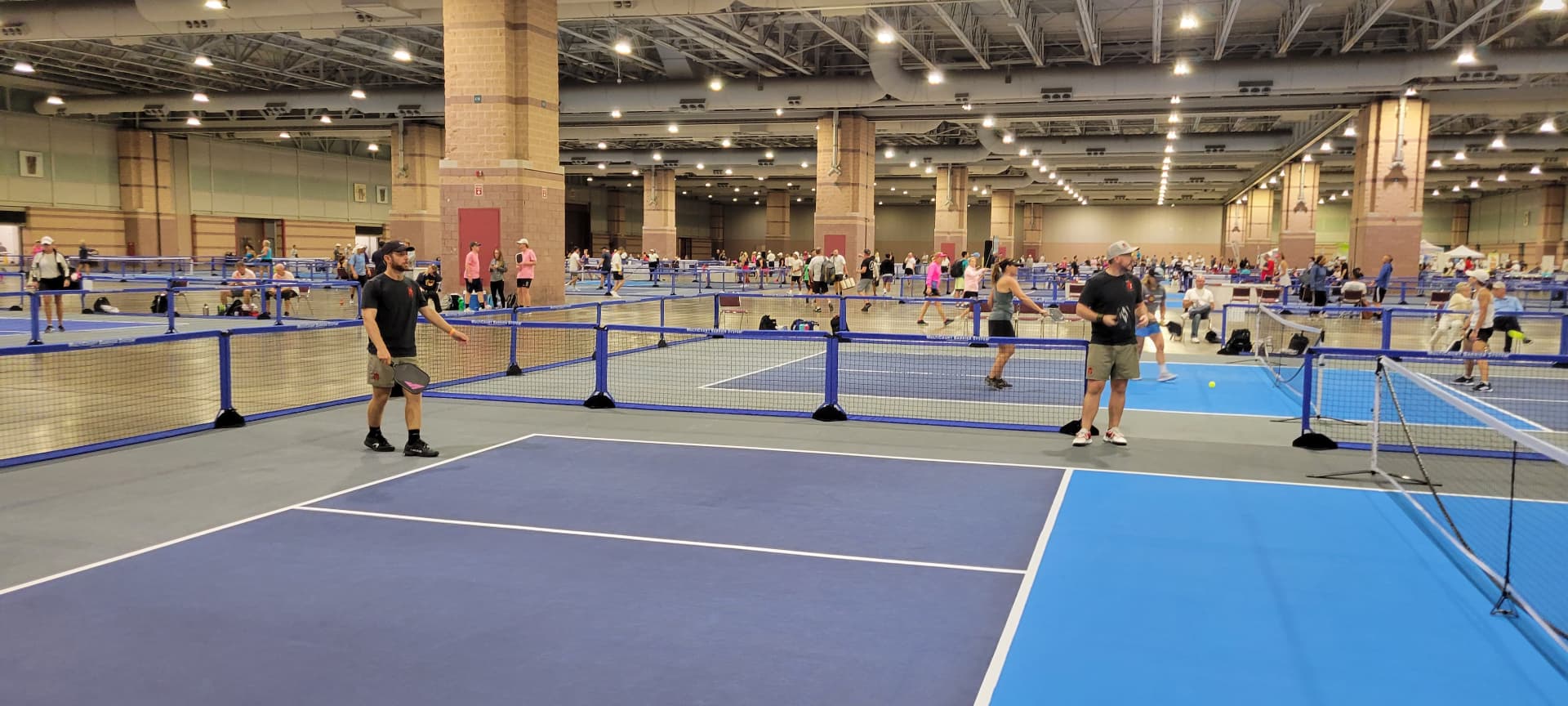
A single-court, one-day activation and a 20-court branded touring build carry very different cancellation exposure, even under the same general policy. A single court is relatively easy to reallocate to another date or another client on short notice — the equipment and staffing commitment is modest. A multi-court build with custom branding is a different story: nets, signage, and wrapped courts are often fabricated specifically for that event, and once fabrication starts, that cost is largely locked in regardless of what happens to the event date.
That's why larger, more customized activations tend to carry tighter cancellation windows and less flexible refund tiers than a simple corporate event day — it's not an arbitrary distinction, it reflects how much of the vendor's cost is already spent before your event ever happens. If you're planning a branded activation with custom fabrication, ask specifically how the cancellation terms differ from a standard event day, since the two often aren't governed by the same schedule.
What to ask beyond the deposit percentage
A deposit percentage is the number planners fixate on, but it isn't the only term worth confirming in writing. Ask what payment methods are accepted for the balance and whether a late balance payment affects the booking itself, not just accrues a fee. Ask whether partial rescheduling is possible on a multi-day or multi-court build — for example, keeping day one and moving day two — or whether the whole booking has to shift together. And if your event depends on a co-vendor, like a venue or a general contractor at a convention center, ask how a delay or change on their end (a load-in window that slips, a show floor that opens late) is handled versus a change that originates with you.
None of this is unusual for an events contract — it's the same due diligence you'd apply to a caterer or a rental company. The reason to ask before you sign rather than after is simple: a vendor who has clear, written answers to these questions before you book is a good sign about how they'll handle a real change if one comes up.
Cancellation terms are one piece of the paperwork that's easy to skip past while you're focused on court count and pricing — but it belongs in the same conversation as insurance and liability, since both usually land on a planner's or procurement team's desk before a contract gets signed. If you're comparing multiple vendors, our vendor checklist includes the questions to ask about deposits and cancellation up front, and if you're running a formal RFP process, our guide on writing an RFP for a pickleball activation shows how to get comparable terms back from every bidder instead of fine print you only notice after signing.