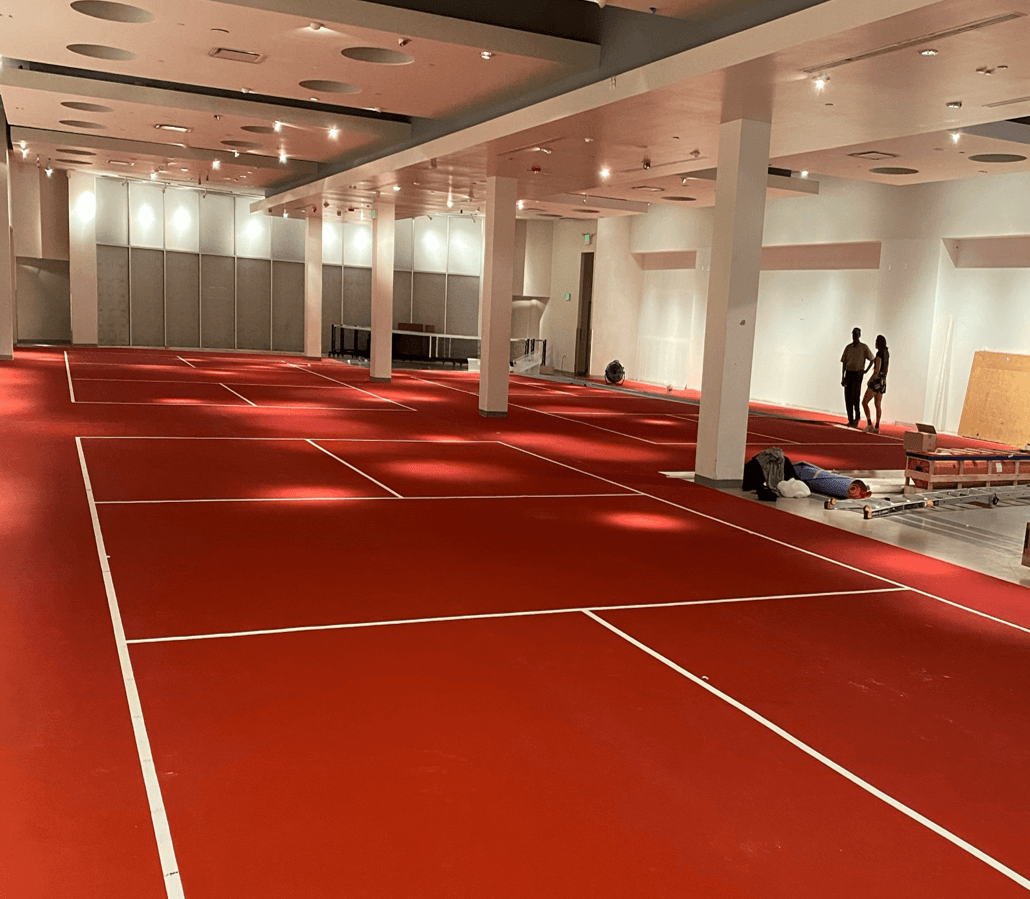
Washington, DC
Pickleball court installation in Washington, D.C.
Rooftop and deck courts in the District, backyard courts in Arlington, McLean, and Bethesda, HOA and condo amenities, and tennis-court conversions across the DC metro — quoted after a site look, usually within 24 hours.
Get a DC-metro quoteBuilding courts across Washington, D.C., Northern Virginia, and Maryland
Washington, D.C. has embraced pickleball as fast as any market in the country — but space in the District is tight, which makes where a court goes as important as the court itself. Rooftops on condo and office buildings, underused parking decks, and repurposed commercial space are often the best sites in the urban core, while the surrounding Virginia and Maryland suburbs have room for full backyard and community courts.
We design and build to fit the site: a rooftop court on a downtown building plays by different rules than a backyard court on a McLean lot or a multi-court amenity for a Bethesda community. We handle the site assessment, surface, and build for each — through our fulfillment partner, Pickleball Management Group, an official USA Pickleball rollout-court partner, whose PickleDeck subfloor system makes rooftop and non-standard surfaces possible.
The search intent behind pickleball court installation in Washington DC is usually one of three jobs: put a court on a building where ground space does not exist, put a private court on a Northern Virginia or Maryland lot, or convert an underused tennis or sport court at a club or HOA. This page is written for those permanent and semi-permanent installs — not for one-day event rentals, which have their own quote path.
Space is the constraint that shapes almost every DC-metro install. Inside the District, ground-level pads are scarce, so the serious conversations are often about rooftops, podiums, and parking decks — sites where a conventional slab pour is not the starting point. The PickleDeck subfloor system is how we put a true-playing court on those non-standard surfaces: concrete, asphalt, rooftops, parking decks, and even grass when the site calls for it. The same partner network has used that system to put a rollout court on grass at the US Open, which is the proof point we point to when a building engineer asks whether a deck can play like a court.
Cross the Potomac or the District line and the problem flips. Arlington, McLean, Great Falls, Bethesda, Chevy Chase, and Potomac have the lot size for a private backyard court, and HOAs and condo associations across those suburbs are adding amenity courts the same way they once added pools and tennis. A wooded McLean lot, a Bethesda community green, and a National Harbor hotel terrace are three different builds — orientation, drainage, fencing, lighting, and access all change — which is why we quote after a site look instead of publishing a fake metro-wide price.
Association meetings, federal-adjacent conferences, university programs, and corporate hospitality still drive a second lane of demand that is not a permanent court at all: one-day and multi-day event activations. If you need courts delivered, staffed, and removed for a program at the Walter E. Washington Convention Center, a National Harbor resort, or a campus green, that is our pickleball court rental for events offer. This page is only for courts that stay.
Design and install are fulfilled through Pickleball Management Group, an official USA Pickleball rollout-court partner. You get one quote path from us — site assessment, surface system, build scope, and timeline — whether the court is going on a downtown deck or a Northern Virginia backyard.
Rooftop and deck courts in the District
A rooftop pickleball court in Washington, D.C. is less about wanting a novelty amenity and more about the only place a court will fit. Condo boards, office landlords, and hotel operators ask the same first questions: Will the deck take the load? How do materials and crew get up there? What do neighbors hear? How is runoff handled? What does the HOA or building management need to approve?
We treat those as the start of the install, not an afterthought. The site assessment looks at access, structure, drainage, windscreen and fencing, and how the court will be used day to day — open play for residents, programmed hours, or private club-style booking. The PickleDeck subfloor is often the right path on decks and non-standard surfaces because it creates a true-playing court without assuming you can pour a new slab on top of an existing building.
Parking decks and podium levels show up in the same conversation. They can work when access and load path check out, and they fail when someone skips that review and tries to force a backyard-style build onto a commercial structure. If your District site is a deck, say so on the quote form — that changes the assessment, not the goal of a court that plays well.
Backyard and community courts in Northern Virginia and Maryland
Outside the District core, the typical install looks more familiar: a private backyard court sized to the lot, or a one- to four-court amenity for an HOA, condo association, or community center. Arlington townhome communities, McLean and Great Falls estates, Bethesda and Chevy Chase neighborhoods, and Potomac properties each bring different lot shapes, tree cover, setbacks, and HOA rules. We size and orient the court to the space you have, then add fencing, lighting, and windscreen when the site and neighbors call for them.
Tennis-court conversions are common at clubs and older communities that already have a pad and fence line. One tennis court often becomes two to four pickleball courts, which is usually a better use of the footprint than leaving a single underused tennis court empty. Resurfacing a worn court is another frequent path when the base is still sound.
Indoor options matter in this metro too — warehouses, gyms, and repurposed commercial space across Northern Virginia and Maryland can host year-round play when outdoor weather, darkness, or HOA noise rules get in the way. The same PickleDeck approach that helps on rooftops helps indoors on a range of existing floors.
What a DC-metro install usually includes
District decks & rooftops
Site assessment first — access, load path, drainage, fencing, and building or HOA process — then a surface system that can play on a non-standard deck.
NOVA & Maryland backyards
Orientation to the lot, grading and base as needed, surface, lines, nets, and the fencing or lighting the property actually needs.
Clubs, HOAs & indoor
Tennis conversions, multi-court amenities, and indoor builds in gyms or warehouses when year-round play is the goal.
Courts we install in the DC metro
Commercial courts
Permanent and temporary courts for offices, campuses, retail, and hospitality — including empty warehouses, big-box retail, and unused facilities repurposed into pickleball venues.
Residential & backyard courts
Design and installation for homeowners who want a private court, sized and surfaced to the space you have.
HOAs & community centers
Amenity courts that raise property value and keep residents on-site — planned around your community's space, budget, and approval process.
Indoor & rooftop builds
Court installation inside ballrooms, gyms, and warehouses, or on top of parking structures and rooftop decks using engineered subfloor systems.
Conversions & resurfacing
Convert an existing tennis, bocce, or sport court to pickleball, or resurface a worn court so it plays true again — often without tearing out what's already there.
Club development
End-to-end design, build, and management for full pickleball facilities of any size — from a few courts to a destination club.
Who we build for in the DC metro
- Rooftop and deck courts on District condo, office, and hotel buildings where ground space is scarce
- Backyard courts in Northern Virginia and Maryland suburbs (Arlington, McLean, Bethesda, Potomac)
- Amenity courts for HOAs, condo associations, and community centers
- Tennis- and sport-court conversions at country and athletic clubs
- Corporate-campus, association, and university courts across the metro
- Indoor courts in gyms, warehouses, and repurposed commercial space for year-round play
Areas we serve around Washington
We install across the greater Washington metro, including Arlington, Alexandria, McLean, Great Falls, Bethesda, Chevy Chase, Potomac, Fairfax, Silver Spring, and National Harbor.
Install on almost any surface
The PickleDeck subfloor system lets us build a true-playing court on concrete, asphalt, rooftops, and even grass — so a DC-metrocourt isn't limited to sites with a perfect existing slab. It's the same engineering used to install a rollout court on grass at the US Open.
That matters more in Washington than in most metros. A permanent backyard slab in Potomac, a semi-permanent amenity court for a Bethesda HOA, and a roll-out system on a District rooftop are three different answers to the same question: where can this court live, and how long should it stay? We match the court type to the site and the use — and we say so plainly on the quote.
How a court installation works
Site assessment
We review your space — indoor or out, surface, drainage, access, and how many courts fit — and confirm what's possible.
Design & surface plan
Court layout, surface system, fencing, nets, and lighting, matched to how the space will be used and your budget.
Base & subfloor
Proper base prep or the PickleDeck subfloor system so the court plays true on concrete, asphalt, rooftops, or even grass.
Surface, lines & equipment
Final playing surface, regulation lines, nets, and accessories installed and inspected — ready to play.
What moves a DC-area quote (without fake price bands)
People searching for pickleball court installation in Washington, D.C. usually want a number first. The honest answer is that the number follows the site. These are the levers that change a quote — not a published price list:
- Court count and layout — one backyard court vs. a multi-court HOA or club pad
- Surface and base path — existing tennis court conversion, new outdoor base, rooftop/deck system, or indoor floor
- Site prep — grading, drainage, access for materials, elevator or crane needs on decks
- Envelope — fencing, windscreen, lighting, and any acoustic or neighbor constraints
- Approvals — HOA, condo board, building management, and local permit path when the scope requires it
Send photos, the address, and how you want to use the court. We come back with clear pricing, usually within 24 hours. We do not invent a metro-wide dollar range that would be wrong for most of those combinations.
Request a DC-metro site look
Rooftop, backyard, HOA, or tennis conversion — share the address and how you want to play. We return a clear install quote, usually within 24 hours.
Need a one-day activation instead? See event court rental or the main installation hub.
Proven installations
USA Pickleball Indoor Championships
Atlantic City Convention Center, NJ
25 rollout courts installed on the convention floor — the scale reference point for what a single indoor build can carry.
US Open Pickleball Championships
Naples, FL
A pop-up court activation that included a court built directly on grass using the PickleDeck subfloor system — a build many thought couldn't be done.
Hawaii Convention Center
Honolulu, HI
Indoor court installation and an inaugural tournament that drew more than 3,500 players and spectators.
HonorHealth Charity Activation
Scottsdale, AZ
Eight rollout courts installed flawlessly on top of a parking garage for a standout charity event.
Pickleball court installation in Washington, D.C.: FAQs
How much does it cost to install a pickleball court in Washington, D.C.?
It depends heavily on the site — a rooftop or structural build in the District is very different from a suburban backyard court, and court count, surface system, fencing, and lighting all move the number. Rather than quote a misleading range, we assess your DC-area site and return exact pricing, usually within 24 hours.
Can you build a rooftop pickleball court in the District?
Yes — rooftop and parking-deck courts are among our most-requested DC-area builds, since ground-level space is scarce in the city. The PickleDeck subfloor system makes a true-playing court possible on decks and non-standard surfaces; we start with a site assessment to confirm the deck, access, and load work for a court before we build.
Do you install backyard courts in Arlington, McLean, or Bethesda?
Yes. Backyard courts across Northern Virginia and Maryland are a big part of what we build in the DC metro. We size and orient the court to your lot, handle the surface, and can add fencing, lighting, and windscreen.
Can you convert a tennis court to pickleball in the DC area?
Yes. Converting a tennis court to two to four pickleball courts, or resurfacing a worn court, is common at DC-area clubs and communities — usually working with the existing base rather than tearing it out.
Do you install indoor pickleball courts near Washington?
Yes — inside warehouses, gyms, and repurposed commercial space across the metro. The PickleDeck subfloor system lets us build a true-playing indoor court on a range of surfaces, so play isn't limited by weather or season.
Do you only install in Washington, D.C. proper?
No — District installs are a big part of the work, but so are Northern Virginia and Maryland backyard, HOA, and club projects. Dedicated coverage on this page includes Arlington, Alexandria, McLean, Great Falls, Bethesda, Chevy Chase, Potomac, Fairfax, Silver Spring, and National Harbor. Other nearby cities are quoted individually on the form.
Do I need a building permit for a pickleball court in Washington, D.C.?
It depends on the site and the scope. A rooftop or structural deck court in the District often involves building management, structural review, and local permitting that a simple suburban backyard resurfacing may not. We flag what the site is likely to need during the assessment and coordinate the build path with your property manager, HOA, or GC when those parties are involved. Always confirm final permit requirements with DCRA or your local Virginia/Maryland jurisdiction — we do not replace that authority.
Can a condo or office building in downtown D.C. really host a rooftop court?
Often yes, when the deck, access, and load path work. Rooftop and parking-deck courts are a common DC-metro request precisely because ground-level space is scarce. We start with a site assessment — access for materials, how the deck is built, drainage, windscreen and fencing needs, and neighbor or HOA rules — before anyone commits to a build.
Which Northern Virginia and Maryland suburbs do you cover for backyard installs?
We regularly quote backyard and community courts across Arlington, Alexandria, McLean, Great Falls, Bethesda, Chevy Chase, Potomac, Fairfax, Silver Spring, and National Harbor, along with nearby neighborhoods in the same metros. If your city is adjacent but not listed, put it on the quote form — installs are quoted by city, not claimed as blanket 50-state coverage.
How much does a DC-area pickleball court installation cost?
There is no honest single number. A rooftop build in the District is a different project from a backyard court in McLean or a tennis-court conversion in Bethesda, and court count, surface system, fencing, lighting, and structural or grading work all move the quote. We assess your site and return clear pricing, usually within 24 hours, instead of publishing a live dollar range that would not fit most properties.
Can you convert a tennis court to pickleball in the DC metro?
Yes. Converting one tennis court into two to four pickleball courts — or resurfacing a worn court — is common at clubs and communities across Northern Virginia and Maryland. We usually work with the existing base rather than tearing it out, which keeps disruption and scope closer to what the site already supports.
What if I only need courts for one conference, association meeting, or brand day?
That is our event activation offer, not a permanent install. Courts are delivered, built, staffed, and removed for the program — common for Walter E. Washington Convention Center programs, National Harbor hotel events, and campus or association days. Start on our pickleball court rental for events page, or tell us on the quote form that you need a one-day activation instead of a court that stays.
Also see our other install cities — or book a one-day DC-area event activation if you need courts that come and go.
See event activationsGet a DC-metro installation quote
Tell us about your space and how you want to use it — we'll come back with clear pricing, usually within 24 hours.